


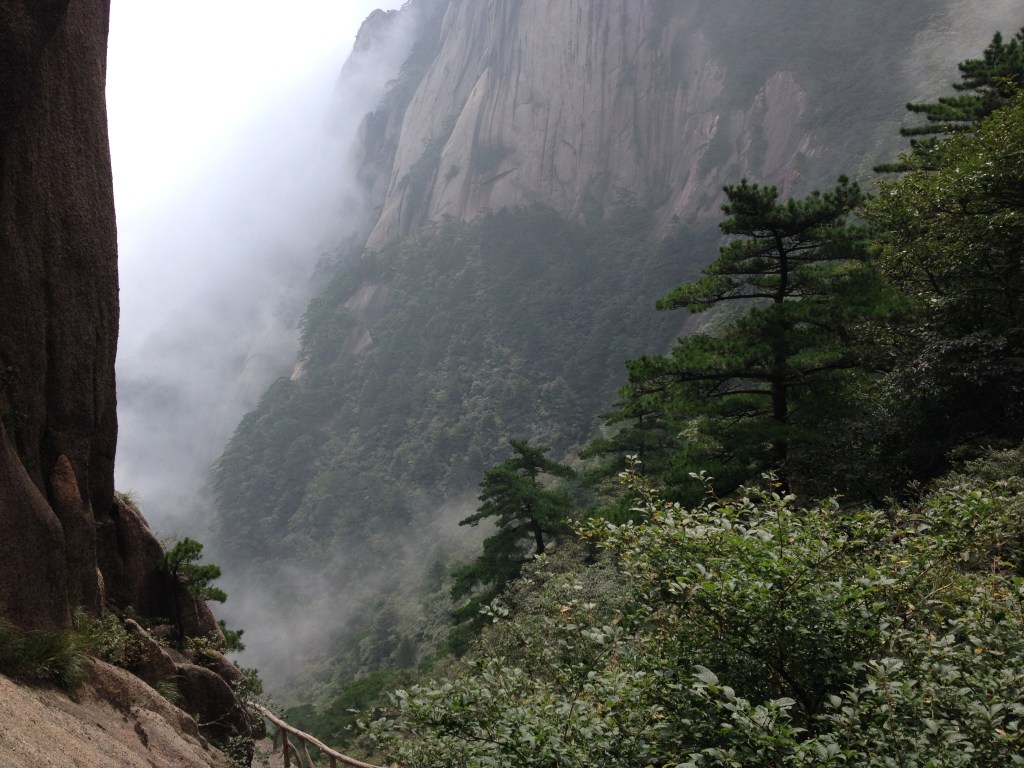

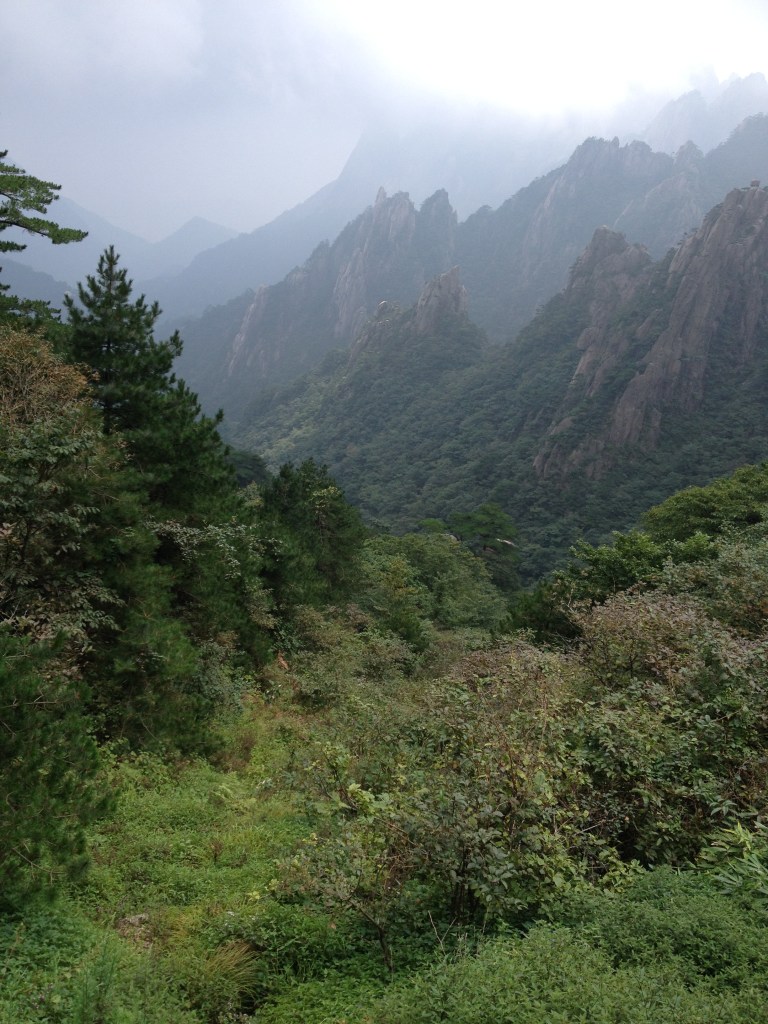
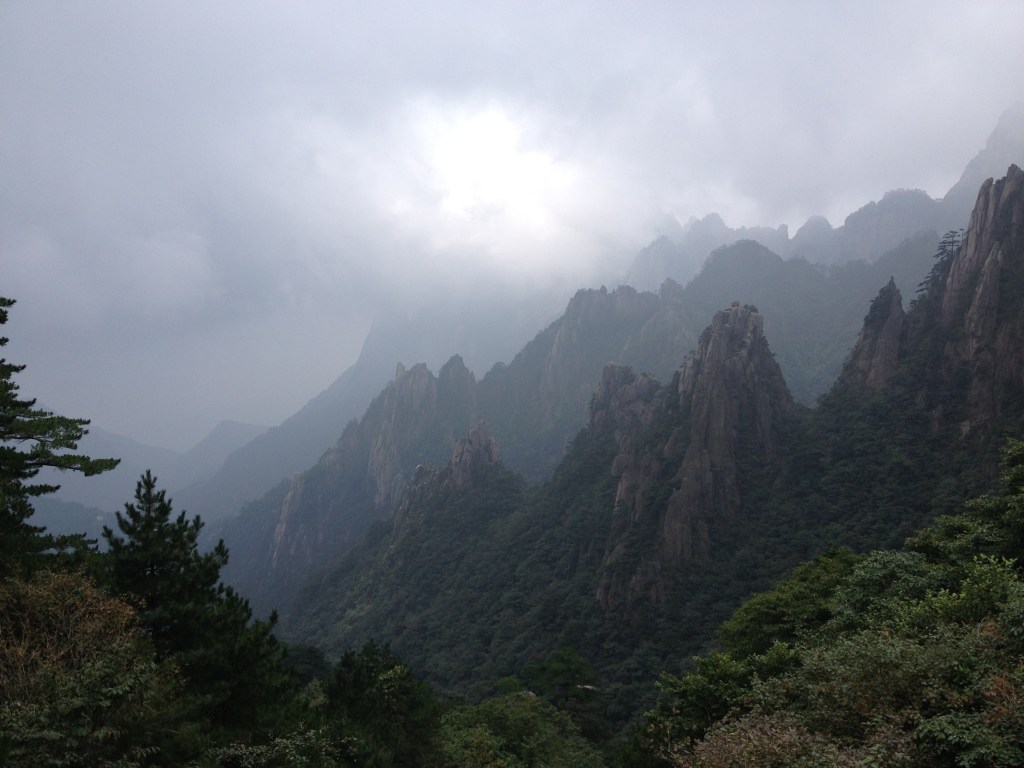
Mt. Huang is 100% worth it to go to. It was one of the places that inspired the scenery for the movie Avatar (although it wasn’t actually shot here). The scenery is some of the most beautiful that you’ll see anywhere in the world and there are monkeys that inhabit the mountain as well. Mt. Huang is one of the most famous mountains in all of China. Mt. Huang is a huge mountain, it is unrealistic to think that it could be hiked (in its entirety) in just one day.
How to get to Mt. Huang?
Taking a train there would be the easiest way to go. The stop is called Huang Shan Bei Zhan (The North Station of Mt. Huang). Once you get out of the train station you will only need to walk about 300 meters to the bus station. The name of the bus station is the Tourist Transportation Hub (you ke yun qu niu). From there the bus ride will take approximately 1 hour to get to the base of Mt. Huang.
A friendly reminder: If you go to Mt. Huang in September of October it will be packed with people. The line for the bus that takes you back to the train station from Mt. Huang may be very long, wait times of 1-2 hours isn’t unusual. This should be taken into account while factoring in the amount of time that it will take you to get back to the train station from Mt. Huang. If you try to cut it too close you will miss your train. Do yourself a favor and give yourself enough time to get back to the train station. The buses depart more or less every thirty minutes.
When should you go to Mt. Huang?
Honestly, any season that you go to Mt. Huang would be well worth it. The most popular time to go to Mt. Huang is the autumn, to see the changing of the leaves and to be able to hike all of the peaks before the first snowfall which would close off some of the peaks for risk of injury. In the autumn the mornings are a bit chilly (so bring a jacket) and the afternoons are warm (not excessively hot).
On the other hand, there have been countless beautiful paintings of Mt. Huang in the winter. The picturesque scenery of Mt. Huang in the winter also makes it well worth the trip to see, even though your hiking of the peaks will have more restrictions, for safety reasons. It will also get very cold on Mt. Huang in the winter. To those who can handle it the scenery will blow you away.
About Mt. Huang
This is a huge mountain and it would really be unfortunate and a very different experience if you started the ascent from the wrong side of the mountain. Mt. Huang will be broken up into two sides the North face of the mountain and the South face of the mountain.
The North side of the mountain has incredible scenery, hotels all over the area and is often the area that has more people. This is for a reason. If you ascend the mountain on the North side you will have much easier access to the scenic views, peaks and you will have a multitude of options of trails to hike. This is the side that I would recommend anyone that plans on staying on the mountain over night (also recommended to stay on Mt. Huang over night) seek lodging. The con about staying on the North side of the mountain is that all of the hotels are more expensive. It’s about 200+ RMB each night, but this is a price that is worth it to pay.
The South side of the mountain is much different from the North side. There isn’t much of anything on the South side of the mountain. There is one trail that takes you past a location called 半山寺 (Ban Shan Si), this is where you can find the only hostel on the South side of the mountain. It is extremely cheap to stay at this hostel, however the expression “you get what you pay for” proves to be true in this case. The price of the hostel is about 50 RMB per night but it is quite possibly the worst lodging that I personally have ever stayed in.

The Hostel at 半山寺 Ban Shan Si
So, to touch upon what the issues were with this hostel to see if anyone reading this has a greater tolerance for these minor inconveniences. Firstly, this is not exactly a hostel that is kept up well, there is only 1 room that can house up to 30 people and 1 bathroom. If there are a lot of people staying for the night, then you may have to wait a bit to use the bathroom. There isn’t any warm water or shower in this bathroom. The bed is basically a sheet put on top of a wooden bed frame, it is just about the same as sleeping on the floor. There is also not any A/C in this hostel, so it is very hot in the day and very cold at night. Speaking about the nights in this hostel, there is nothing to keep the bugs out, so don’t be surprised if you are constantly jolted awake by a bug hitting you in the face. Don’t expect to sleep like a baby while in this hostel, not to mention if there is anyone in the room that snores… you’ll be hearing all of that. Lastly, the hostel is gender neutral, so if you’re a woman that would like a bit of privacy… it might not happen here.
The Location of the Hostel

Moving on to the next reason you should not stay at this hostel and this is equally if not more important than the above mentioned deficiencies, and that is the location of the hostel. It is on the wrong side of the mountain to put it simply. 半山寺 be translated to the temple halfway up the mountain or the halfway point (there is no temple). That being said there is one route up the mountain and it is about an hour to an hour and a half of hiking straight up to get to the first peak which is 天都峰 (Tian Du Feng). Tian Du Feng is know for having about 1400 steps straight up to get to the peak. It is exhausting to say the least.
You have the option of not seeing the Tian Du Feng peak and hiking towards 迎客松 (Yang Ke Song), which is the middle point of Mt. Huang (that will take about 2- 2 1/2 hours from the Ban Shan Si hostel), then you have to go all the way back to the hostel and walk the same trail the next day. Essentially on the second day you’ll need to hike for 2 1/2 hours before you see any new scenery.
天都峰 Tian Du Feng


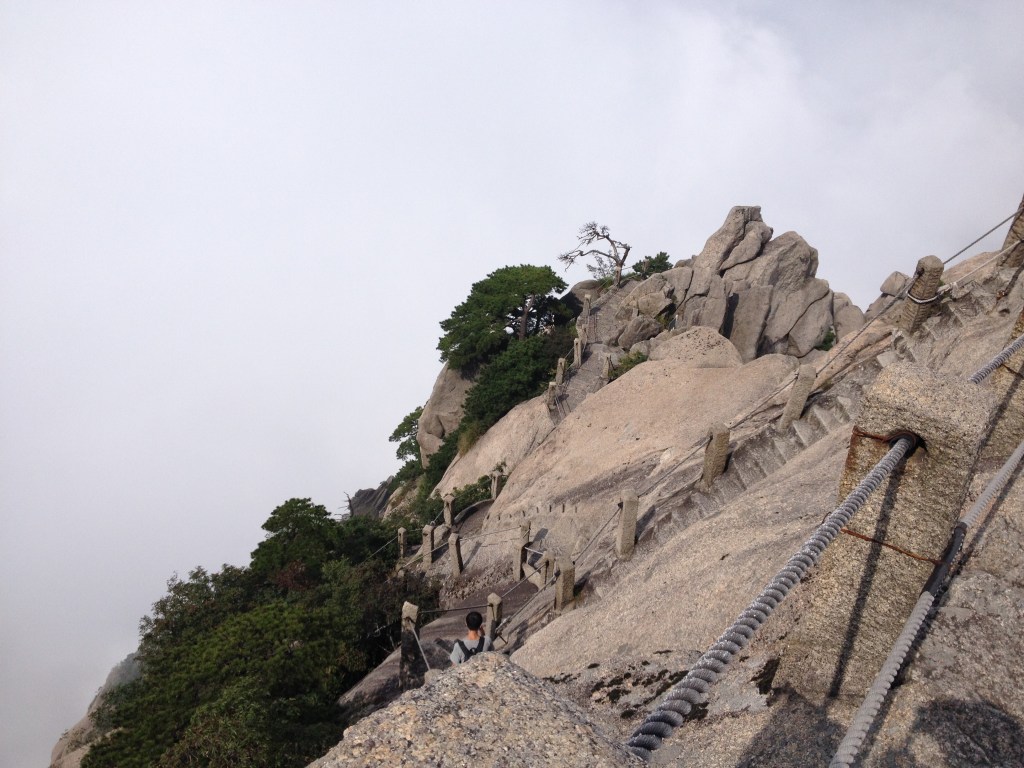
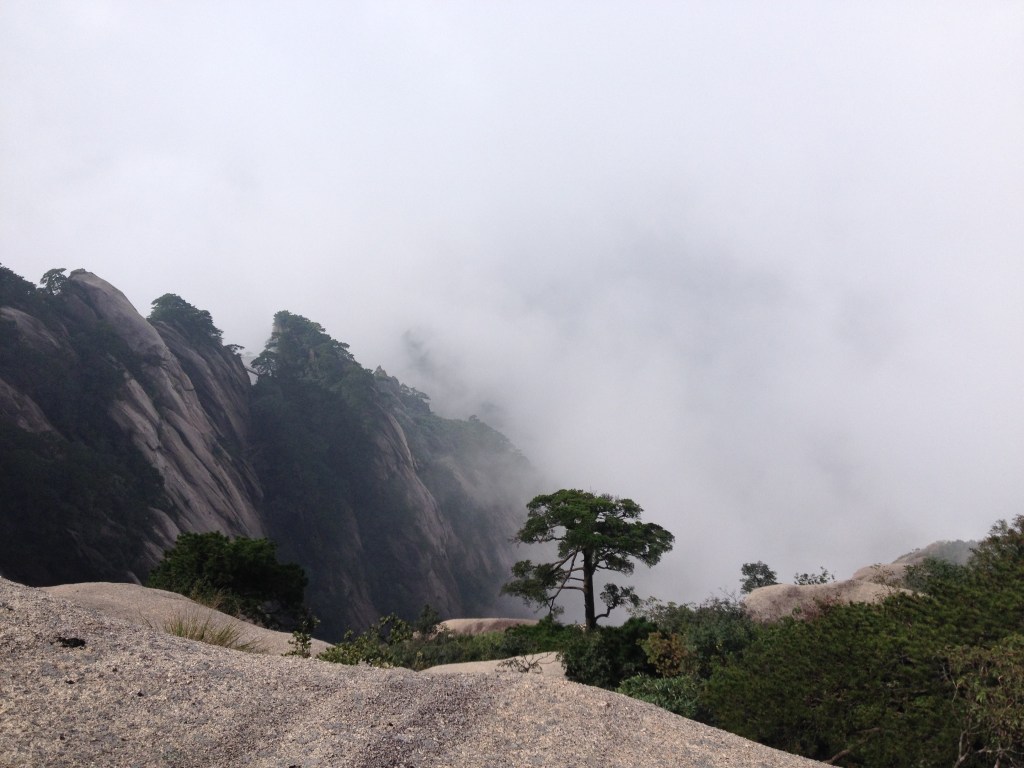
Tian Du Feng is the highest hike-able peak on Mt. Huang. This is the peak with the notorious 1,300 steps that are just about nonstop (not many places to rest other than the steps) that head straight up into the clouds. Now, ordinarily being on a mountain peak above the clouds would be incredible, having a bird’s eye view of the surrounding area would make for great pictures and lasting memories. However, that is not the case with Tian Du Feng. On this peak you are not above the clouds you are in the middle of them. Therefore, the clouds surrounding you at the top only serve to hinder your vision and obstruct any views that you might have had. It was a bit frustrating to be honest, to climb up so many stairs and not be rewarded with any scenic views. The best comparison would be the equivalent to standing in a thick fog. I am sure the cloud conditions vary and change from day to day, so my experience may have been rare. Take it into consideration and with a grain of salt if you’re thinking about hiking the Tian Du Feng Peak.
迎客松 Ying Ke Song
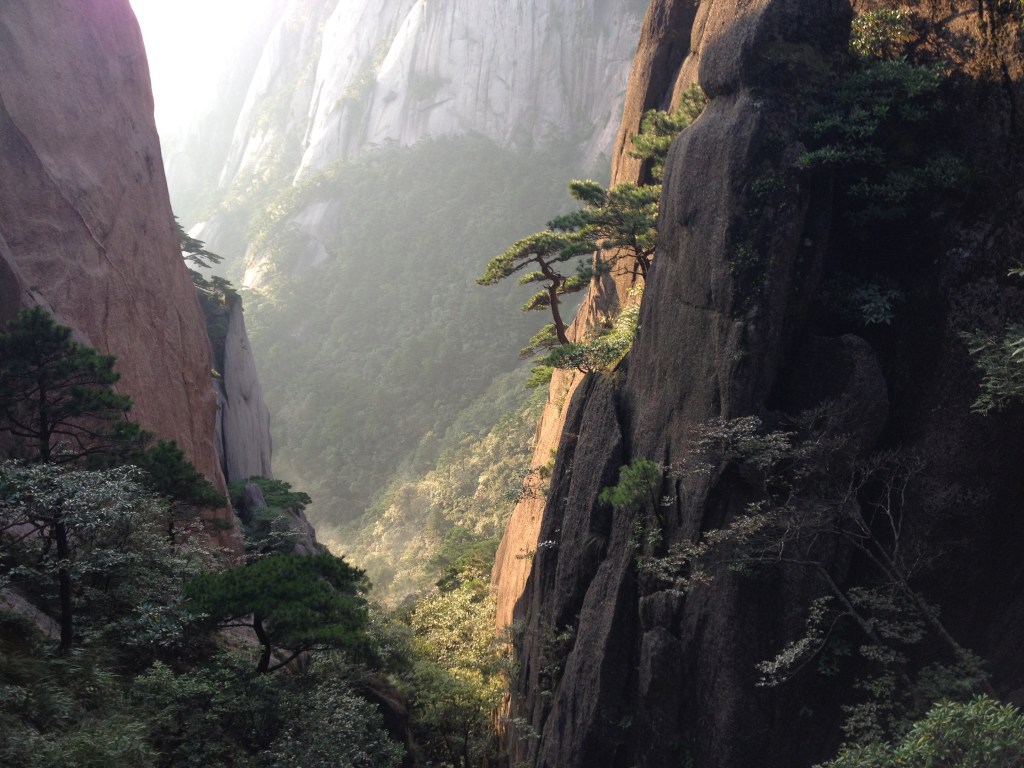

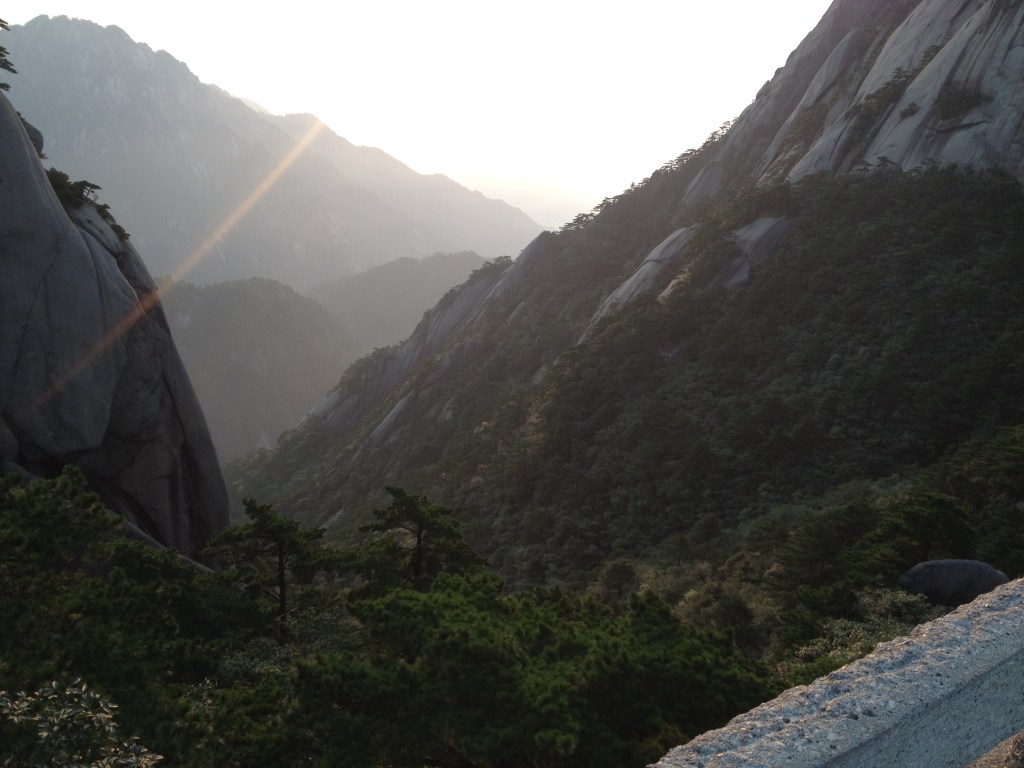
Ying Ke Song is the midpoint between the southern side of Mt. Huang and the northern side. Ying Ke Song is a very beautiful area that is in my opinion the staple of Mt. Huang. There will likely be a lot of people there as Ying Ke Song serves as one of the main intersections for several different hiking paths. Also, this is one of the best places on the mountain to enjoy a sunrise. If you’re lucky you may even see some monkeys playing in the trees while there.
Where to go to view the sunrise?

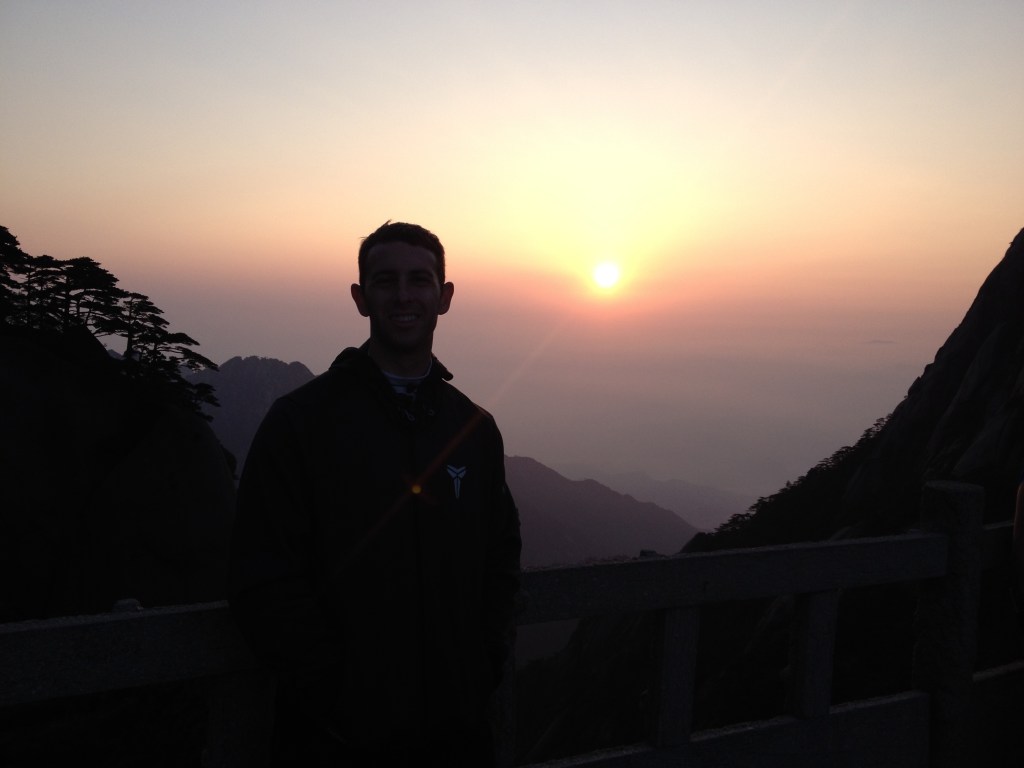
There are two really great places to view the sunrise on Mt. Huang. One of them is Ying Ke Song, which is like the midpoint of the mountain. The other location is called Qing Liang, which is on the north side of the mountain. There are a couple of places (close to Qing Liang) on the north side of the mountain where the views of the sunrise are beautiful.
The Fog
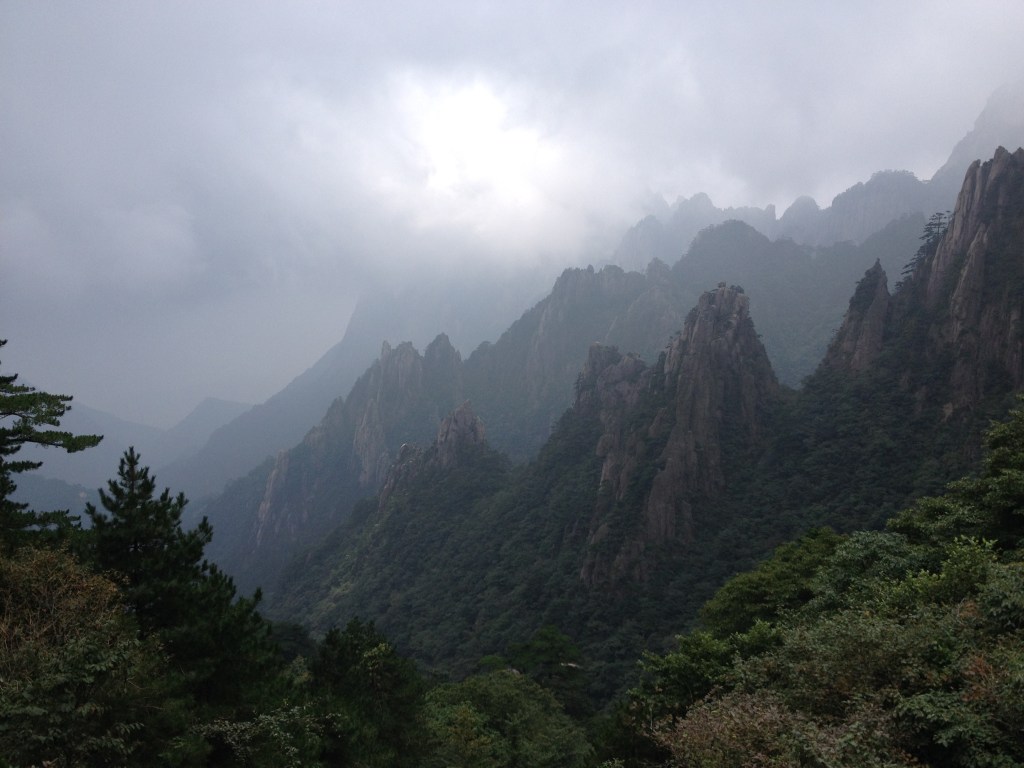


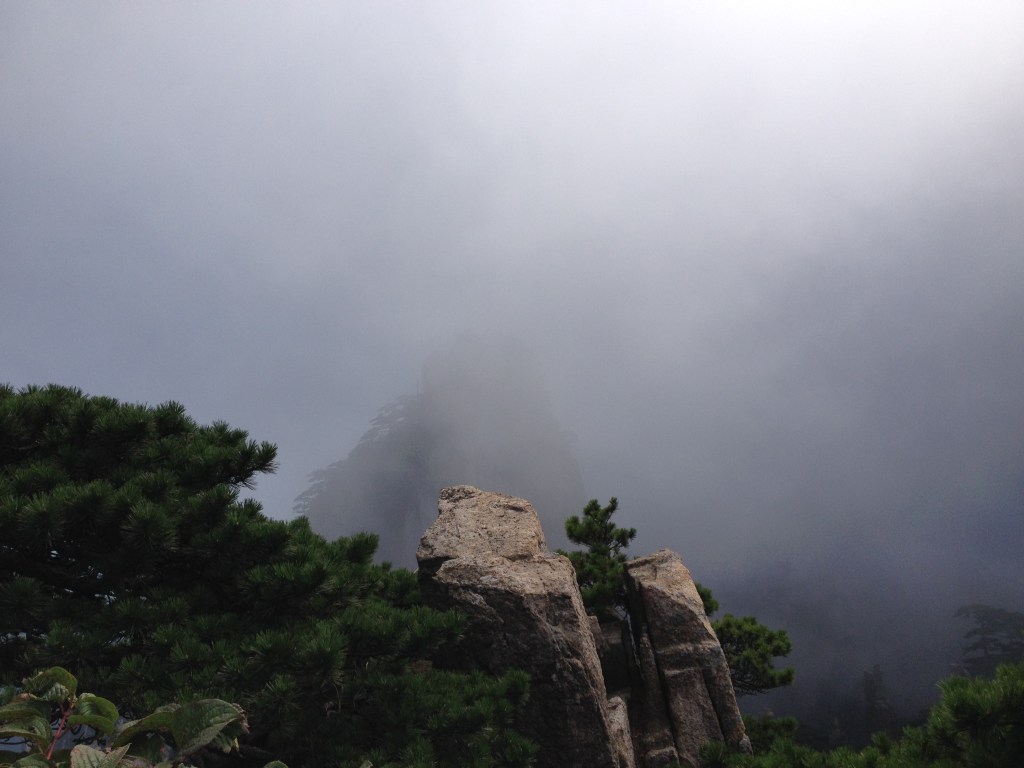
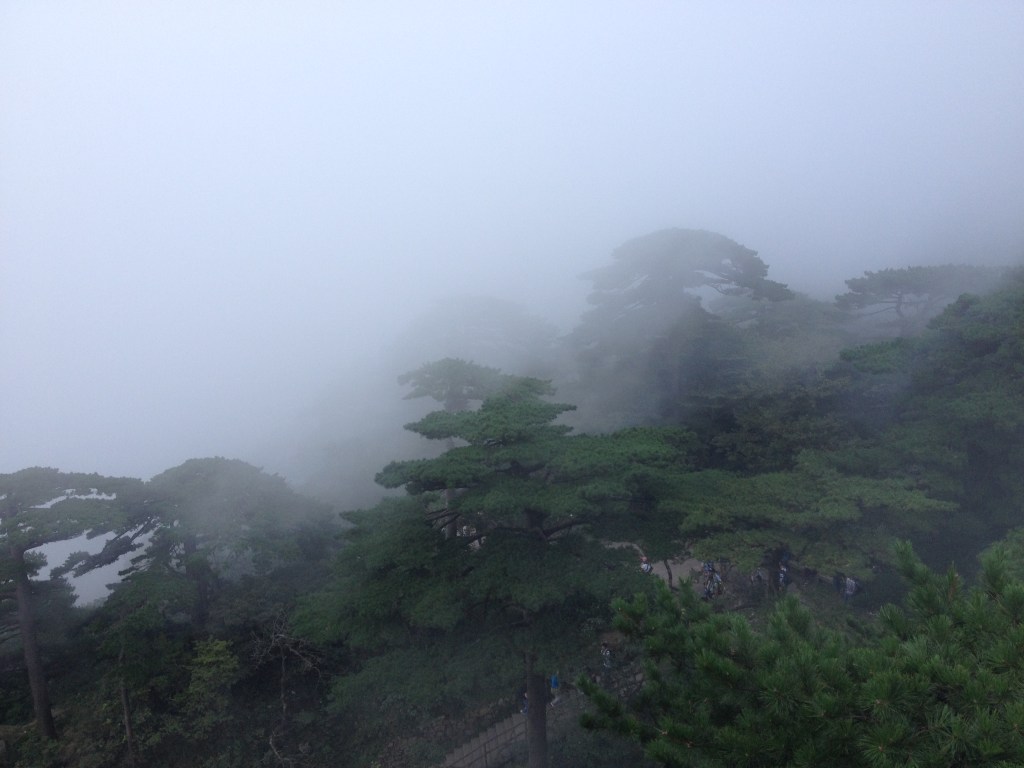
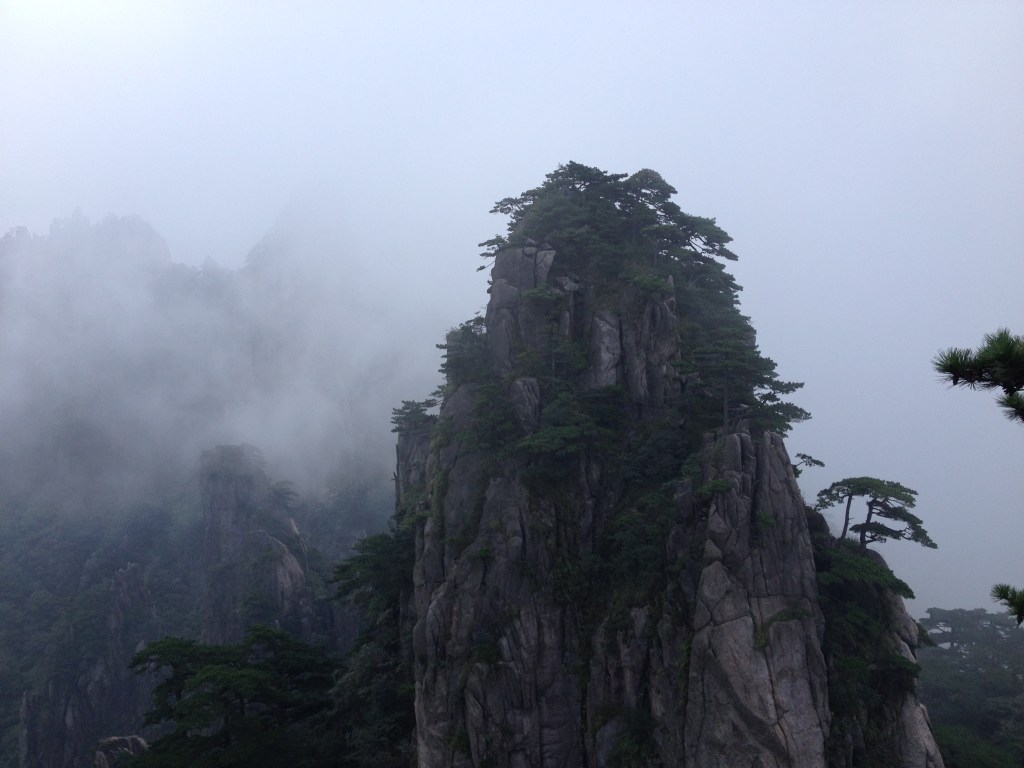
There is one phenomenon that is not distinct to Mt. Huang but it does add to the mysterious atmosphere of the environment, that is the fog. It is not guaranteed that you will see fog while at Mt. Huang but if you are lucky enough to see the fog roll in, it is a very unique experience. The reason is because the fog rolls in thick over there for some meteorological reason that people more studied in weather than me can explain. Nonetheless, it makes the entire scenery of Mt. Huang come alive, giving it an added scenic of mystery and making it look like some of the old traditional paintings of Mt. Huang. Seeing Mt. Huang when the fog rolls in is like looking at something out of a painting in every direction.
How long should you stay at Mt. Huang?
I suggest going to Mt. Huang for 2 days and 2 nights or 2 ½ days and 2 nights. Staying to long on Mt. Huang may prove to be fruitless if you’ve already seen everything that you wanted to see in the first 2 days.
If staying on the north side of the mountain there are two directions that you could go, south or north/east. Going south will take you to Ying Ke Song and Tian Du Feng, while going north/east will take you several other sights and is also the same route that you’ll take to descend from the mountain. So, the time on Mt. Huang could be broken up into, the first day heading south and the second day heading north/east then descending from the mountain.
A Friendly Reminder: The ticket price for Mt. Huang is more than 200RMB. It is my understanding that people will have to pay that amount every time they get on the mountain. So, that is to say if you were staying at a hotel/hostel not on the mountain you may face paying that fee more than once. My recommendation is to lodge on the mountain until you are ready to leave.
Hong Cun 宏村
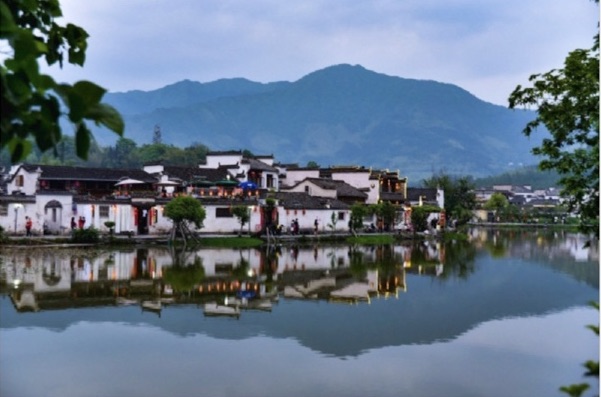

I have heard that Hong Cun is an incredible place that is well worth a visit. It is in the area of Mt. Huang only about an hour or two away. I personally have not had the chance to go there although it is a destination that I am planning to visit. At Hong Cun you can experience the traditions and cuisine of one of China’s minority ethnic groups. Hong Cun is also one of the locations where Crouching Tiger Hidden Dragon was filmed and hosts a beautiful bamboo forest.
 International Kev