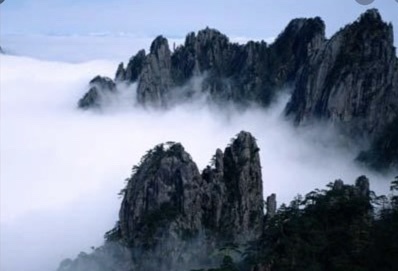
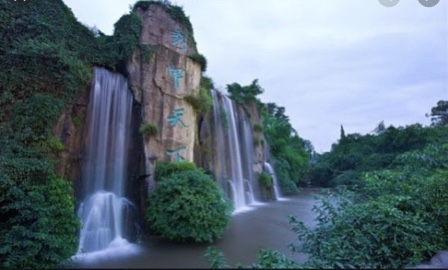
The temples at the top of E Mei Mountain. Some of the scenery of E Mei MountainA waterfall at E Mei Mountain.
I personally haven’t been to E Mei Mountain, however I have heard positive things about this mountain from everyone that has visited. I feel like to not include this mountain in a travel itinerary to Si Chuan Province would be a disservice to anyone planning a trip to Si Chuan Province.
I have heard a few things about this mountain that may peak the interest of some travelers.
One of the things that I have heard is that E Mei Mountain is one of the few places in the world where there have been sightings of pandas in the wild. Now the possibility of this happening is still extremely rare and you should not base your decision as to whether to go to this mountain on the slim chance that you have of seeing wild pandas. That being said anything is possible and if you stay on the mountain for a day or two and get lucky… who knows, it is a possibility.
Another thing that I have heard about E Mei Mountain is that there are several Martial Arts schools/temples on the mountain. So, (if you receive permission from the master) you may be able to see some of the training that the monks undertake. It may be interesting to see the different styles and training methods that they employ. As for the location of these martial arts schools, you’d probably have to find someone who knows the mountain very well and inquire with him/her.
Caution:
There are two things that travelers to E Mei Mountain should be cautious against/prepare for. The mountain is very tall, which makes the altitude very high. You may not be going to the highest point on the mountain but the altitude might still affect you. Be sure not to overexert yourself while hiking the mountain.
The monkeys on E Mei Mountain. Picture taken from Google Images.
The other thing that travelers may want to know before going to E Mei Mountain is that there are monkeys everywhere! The monkeys are not the small cute spider monkey type either. They look more similar to baboons. The reason that I mention these monkeys is because they could (under the right circumstances) potentially be dangerous to hikers.
These monkeys are supposedly all over the path up and down the mountain. DO NOT FEED THESE MONKEYS! What happens is if these Planet of the Apes look alikes see hikers taking food out of their backpack to feed them (or to eat for themselves), they will think that there is more food in the backpack. Then they may try to steal the backpack and all of the stuff in it. Try to stop them in an aggressive manner and you’ll be in a fight with a monkey. To come full circle if you are in front of a monkey on E Mei Mountain don’t take any food out of your bag.
Also, don’t try to scare of the monkeys by swinging a walking stick at them or throwing rocks. They will kick your ass and they run faster than you. Try not to stare them in the eyes either, taking pictures is ok but do not threaten them in any way, for your own safety.
How to get there?
E Mei Mountain is only about 30-40 minutes down the road from Le Shan. So, it’ll take anywhere from 2 1/2 to 3 hours to get there by bus from Cheng Du.
The Worlds Largest Buddha.The World’s Largest Buddha.The World’s Largest Buddha.One of the other Buddhist Statues in the temple.One of the buddhist statues in the temple.One of the halls filled with incredible depictions of the Buddha and other significant buddhist figures.Some of the Buddhist statues outside the temple.The Chinese character for Buddha. “The Buddhist capital of the East” (written).
The main attraction in the city of Le Shan is the world’s largest Buddha. The world’s largest buddha is outside of a very large buddhist temple, the are more closely resembles a grotto or a park (or some combination of the two). The entire area is unbelievable from the grottoes to the statues that have been partially eroded outside. This temple is teeming with historical and religious significance that radiates from every statue and wall carving you set your eyes on.
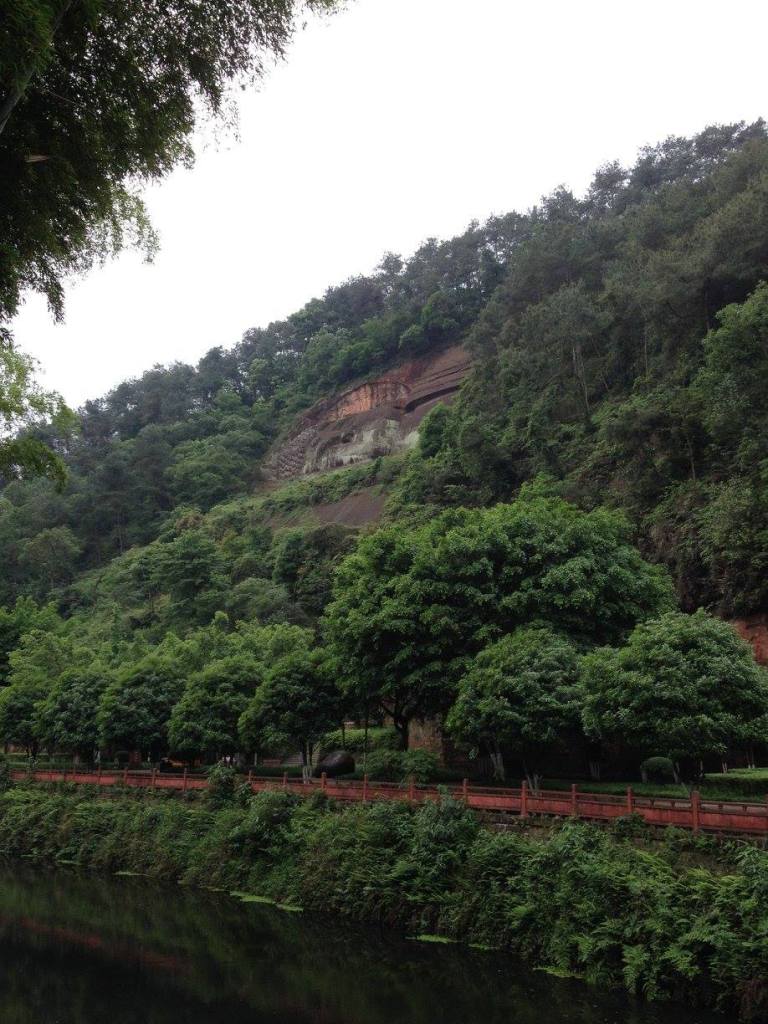
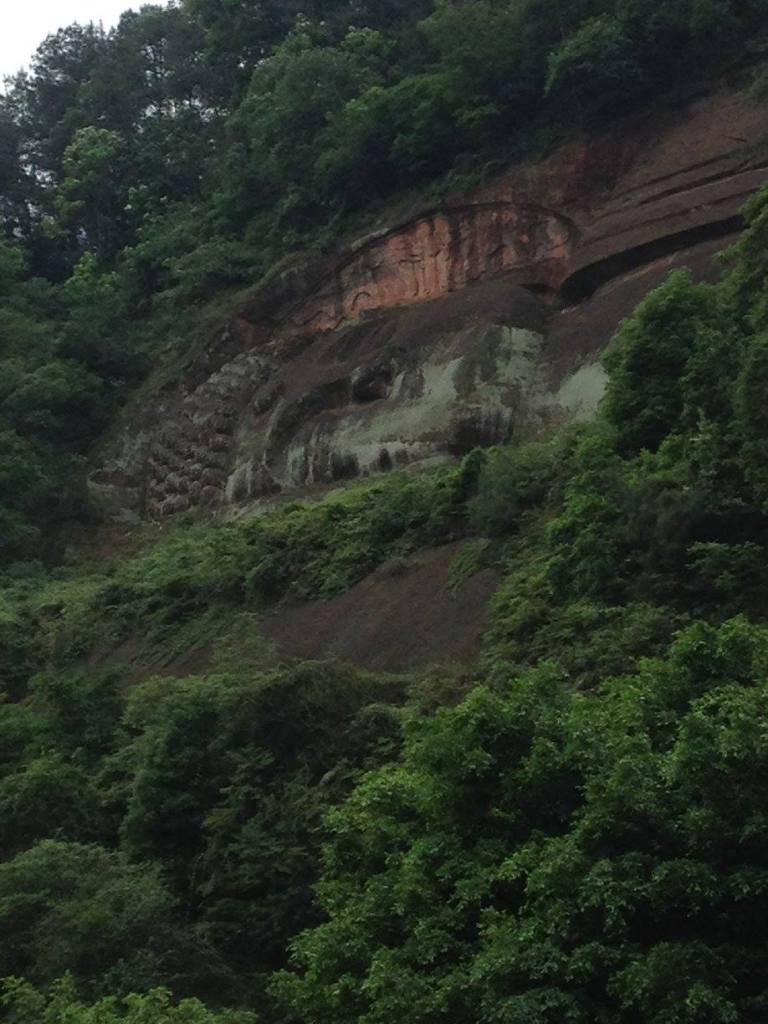
Can you find the Buddha in the mountain?
There are two entrance tickets that can be purchased at the ticket office in the front of the temple:
The Standard Ticket- 90 RMB. This is the basic entrance ticket that will allow you access to the temple and all of the site-seeing areas
The Cruise Ticket- 90 RMB + 70 RMB. This ticket will give you access to all of the same areas as the standard ticket plus it will allow you to take the boat tour on the river that runs in from of the world’s largest Buddha. It will cost an additional 70 RMB on top of the 90 RMB so it will come out to a total of 160 RMB.
Which ticket should to buy?
The standard entrance ticket is all that you’ll need to enjoy the temple. On the other hand once you reach the world’s largest Buddha you may regret not getting the boat tour ticket. There are two main reasons why.
The first is because of the extremely long line that you will have to cue up in to even see the Buddha. Be sure to make friends with the person in front of you because you’re going to be seeing a lot of him/her. The line starts at the top of the mountain near the head of the Buddha and works it way down to the feet of the Buddha (by the river). To get from the top of the mountain (the head) to the feet of the buddha should take 5 minutes. However, due to the unfathomably large amount of people that are there it will take approximately 1 1/2 hours! In my experience it was raining almost the whole time, but that didn’t deter anyone from lining up. So, by taking the boat cruise you can circumvent this line. You may have to wait for space on the boat but that will be no where near the amount of time of 1 1/2 hours.
The second reason the boat tours may be a good idea is because they can take you to an appropriate distance and angle where you will be able to take the perfect picture of the world’s largest Buddha. While on land you can take good pictures of the Buddha but it will pale in comparison to one taken from the river boats. Additionally, the boat will drop you off at the dock (located near the feet of the Buddha) afterwards. This will give you more time to admire the Buddha from a close up point of view. So, if you are looking to take the perfect picture of this wonder of the world the boat tour will be your best option.
The Grottoes
One of the halls within the Grottoes.One of the massive statues in the grottoes.Another one of the huge statues in the grottoes.
All of these statues were surrounding the Happy Buddha that was located in the middle of the hall.One of the Buddha statues in the grottoes.Another portrayal of the Buddha in the grottoes.The walls are filled with depictions of monks and buddhist figures.The walls of the grottoes.These faces were craved into the walls of the grottoes.
The Grottoes in the Big Buddha Temple are almost as impressive as the big Buddha itself. There is so much historical and cultural significance within those walls. There are several halls and rooms in the grottoes that are interconnected. Each room appears to be more impressive than the last. For those that have an extensive knowledge of the Buddhist religion this is definitely the place for you.
The grottoes often have tour groups passing through, which may disturb and moments of tranquility or pictures you may want to take. But with the exception of the tour groups that will be conducting slow speed chases with you, it is a very harmonious place to be.
The World’s Largest Buddha
A head shot of the world’s largest Buddha.A picture taken while heading down towards the feet of the Buddha.A shot from the feet of the Buddha.
This will make any hardships encountered on the journey well worth it. This is the main attraction in a place that appears to be full of main attractions. It is quite the site to be seen and highly recommended for a visit.
The sight of this jaw dropping Buddha will leave you speechless. However, the line to see the world’s largest Buddha will leave you swearing underneath your breath. What you may not see in the pictures above is the 1 1/2 hour long line that needed to be cued up in to even get to the feet of the Buddha. The stairway that is built into the mountain aside the Buddha is very thin and when hundreds of people all want to go to the same place it gets quite congested. While this does take away a bit from the overall experience, the miraculous effect that the Giant Buddha has is still felt.
I personally recommend seeing all of the statues, temples and grottoes before going to see the world’s largest Buddha. Besides, the world’s largest Buddha is located in the back of the park. But the world’s largest Buddha will also serve as the climax and be the most memorable thing that you see there.
How to get there?
Le Shan is about 2 to 2 1/2 hours away from Cheng Du. So, the best way to do this is to head down there for a day trip from Cheng Du. From Cheng Du you will need to catch a bus down there, inquire with the employees from your place of lodging as to pick up times and locations.
Another option would be if you went to E Mei Mountain first and departed from there (in the morning) to return to Cheng Du. Le Shan is in between E Mei Mountain and Cheng Du (closer to E Mei Mountain). It would take 30 minutes for the bus to take you from E Mei Mountain to Le Shan.
How long should you spend here?
Plan to make a day out of this trip. Most of the time will be spent on the bus to and from Le Shan, but it will be 100% worth it in the end.
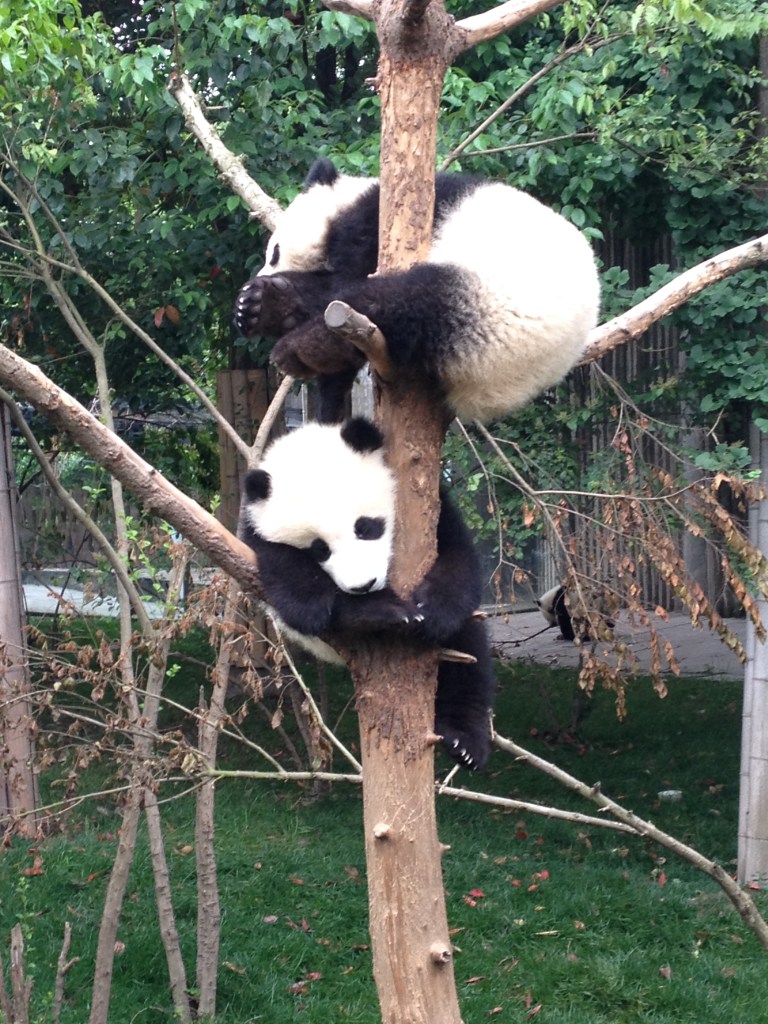
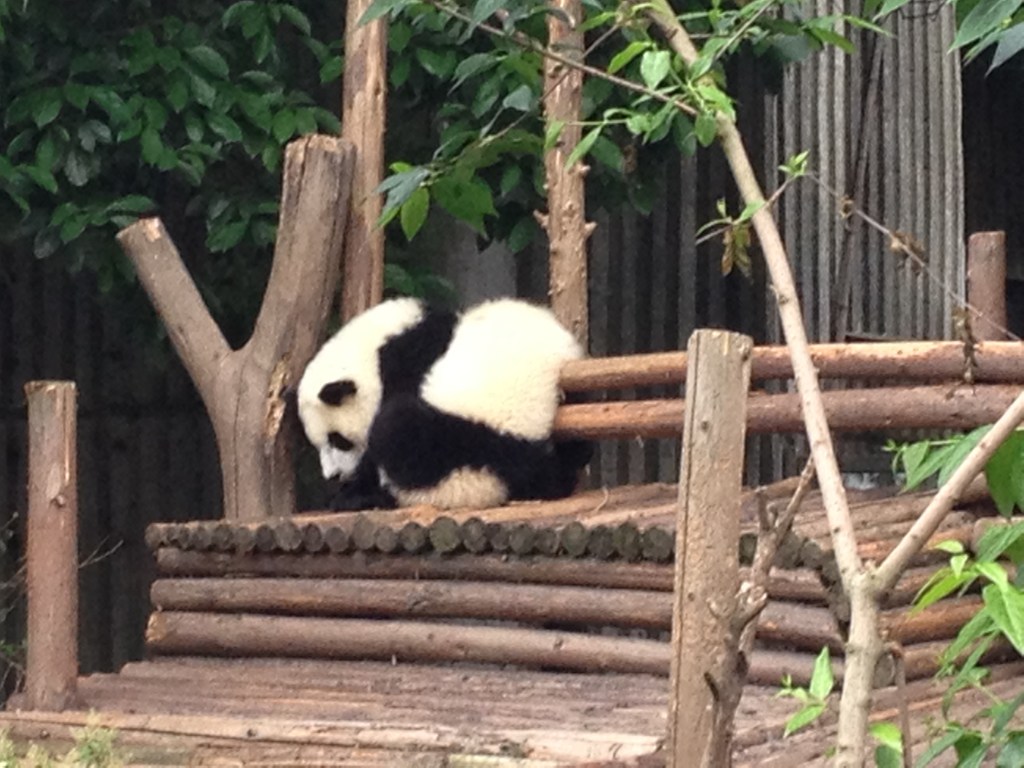
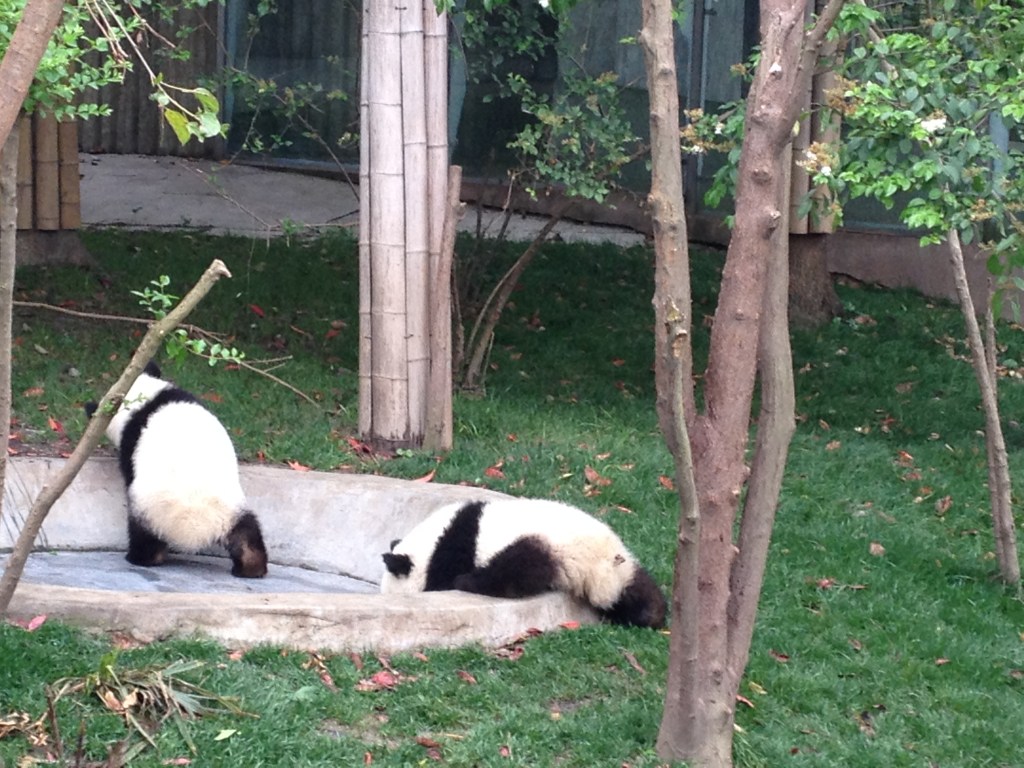
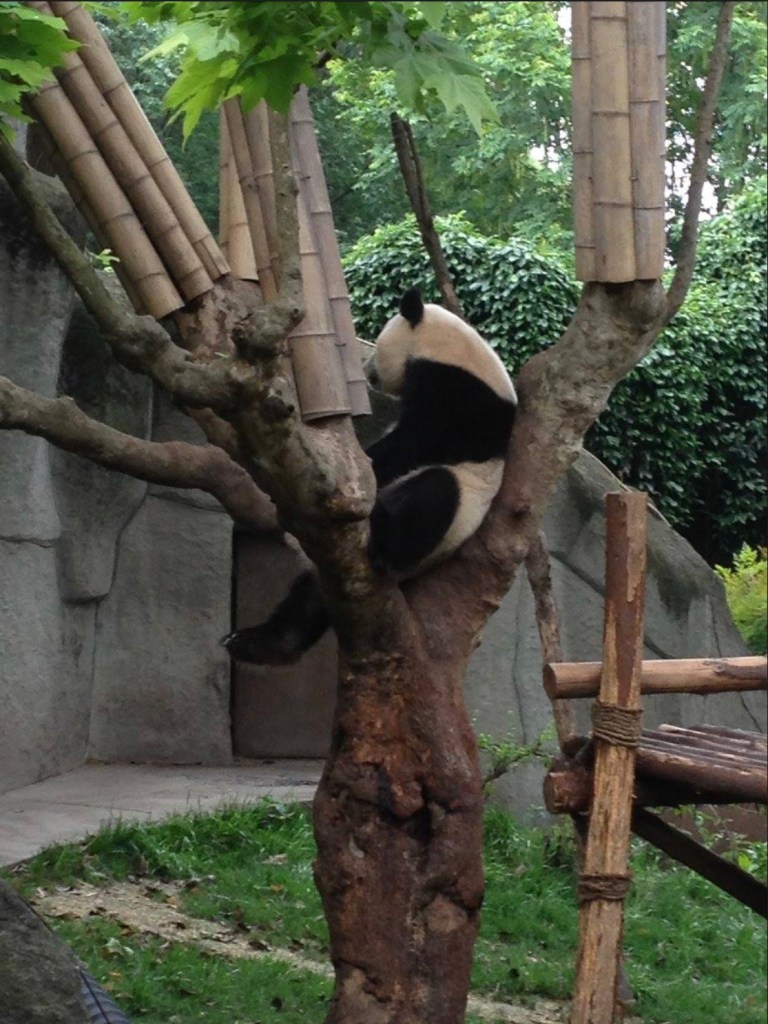
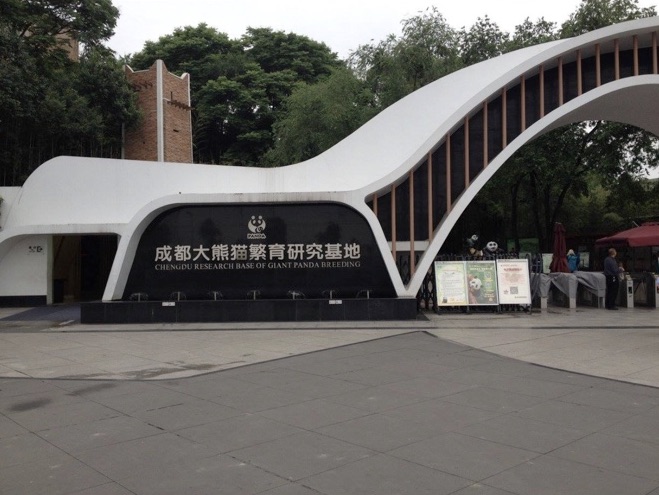
The Panda Research Base.Apparently pandas can climb trees.Two baby pandas wrestling.This is the natural feel that can only be found in Si Chuan. At the Panda Research Base.
To start off it should be known that Cheng Du is not a city as developed as Beijing or Shanghai. However, Cheng Du along with Chong Qing have the most metropolitan feel of the region. There are some areas of the city that are very metropolitan, which gives Cheng Du the big city feel. At the same time there are other areas of the city that have a much more natural feel due to the rivers, mountains and greenery. The cost of living is not expensive in Cheng Du, which means that the cost of traveling in Cheng Du is also relatively cheap. So, getting a cab or booking a hostel/hotel in Cheng Du is much more affordable than one in Beijing or Shanghai.
Fun Fact: In most other parts of China they view people from Si Chuan Province as lazy. This would be the equivalent of Americans thinking that all New Yorkers are pushy and rude. There is not a lot of truth to it. The pace of the city of Cheng Du is a bit slower than other big cities. However, not being rushed doesn’t make you lazy in my opinion. In Si Chuan they are a bit more laid back but I see this as very refreshing. So, in the event that you hear the stereotype that all Si Chuan people are lazy just understand that this is just how other Chinese people view them and there is not much validity to the claim.
Local Cuisine
There are plenty of local dishes that you should try while in Si Chuan. They are most known for their spices and peppers though. So, if you like eating spicy food, then this is the place for you.
Here are two specific dishes that are recommend:
Dan Dan Noodles 担担面
Hot Pot 火锅
Must Do! The Panda Research Base 大熊猫繁育研究基地 (dàxióngmāofán yù yǎn jiǔ jī dì)
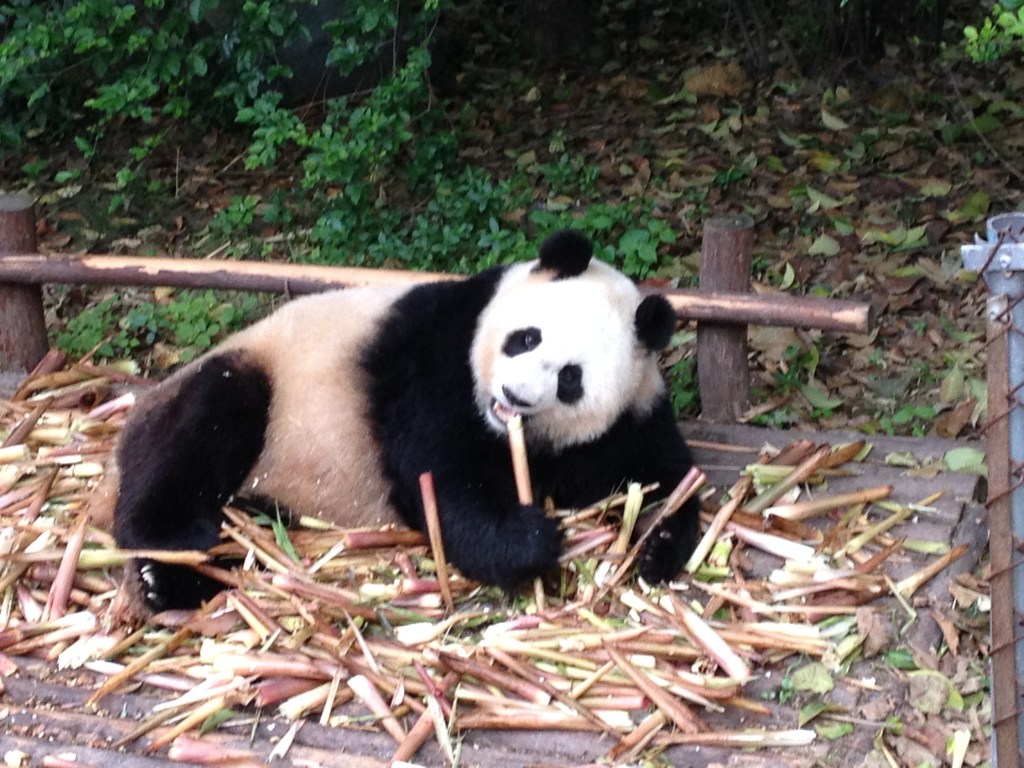
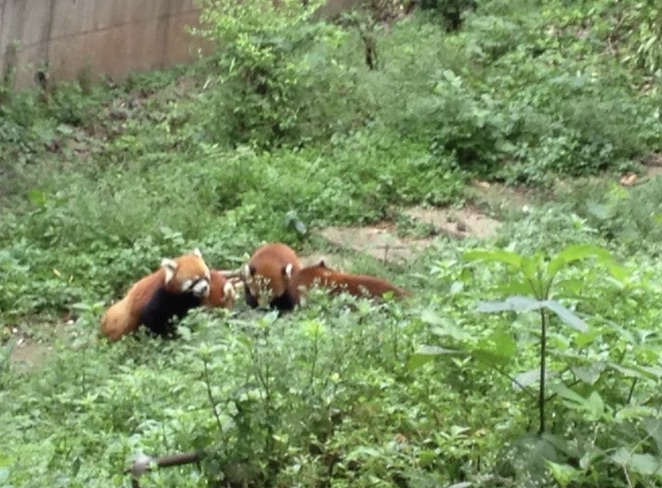
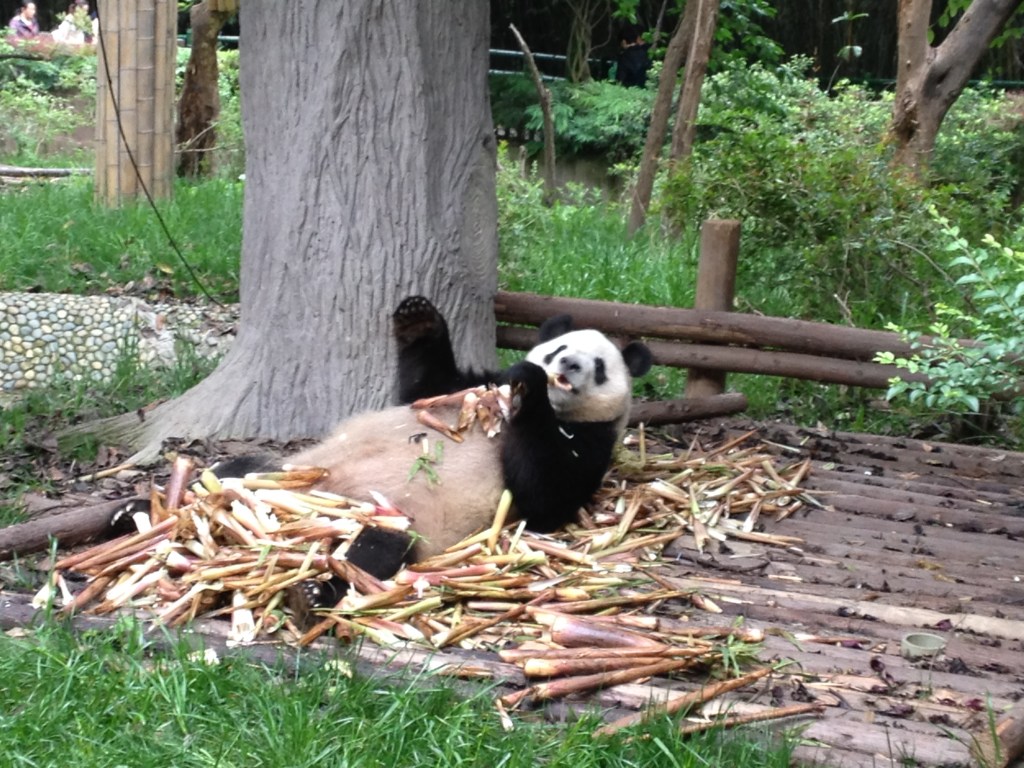
A large panda enjoying his bamboo meal.The Red Pandas.Baby pandas playing with one another.One of the baby pandas hanging in a tree.One of the small Red Pandas.The entrance to the Panda Research Base.
The Panda Research Base is the main attraction that draws people to Cheng Du from around the world. This is not one of your usual run of the mill zoos. These pandas are well taken care of well fed and well looked after. This is one of the few places one earth where you can see pandas and observe how they interact with one another. The Panda Research Base is one of those places that you’ll be anxious to go to and hate to leave. This place will make your trip and whatever expenses incurred worth it.
One of the security guards for the Panda Research Center.
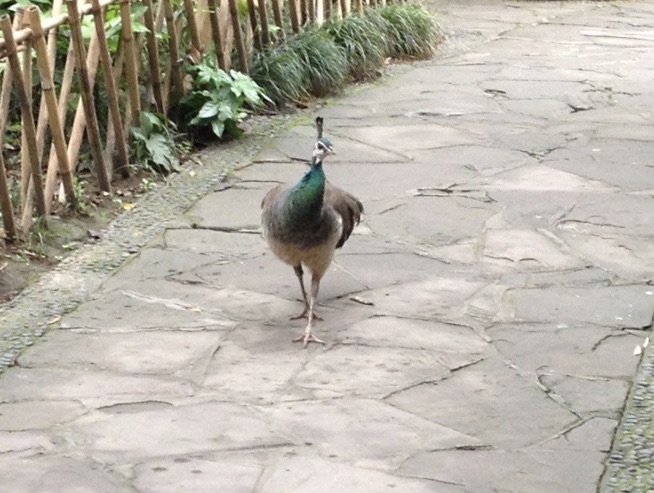
Be aware that pandas are not the only things that you’ll find in the Panda Research Base. There are also things like peacocks that roam around the area. They will walk right by you. They vigilantly patrol the premises, but not to worry they keep to themselves. It is not advisable to pet them or attempt to scare them off though.
What time should you go?
It is said that the best time to visit the Panda Research Base is in the morning. The reason is because the pandas are said to be more active in the morning than in the afternoon or evening. However, the adult pandas will be mostly inactive and lazy throughout the day. The main attraction will be the baby pandas and they are much more active during the morning.
Some of the baby pandas playing around.
There really is nothing quite like watching something as rare as pandas playing happily with one another. Being here is like stepping into an Animal Planet program, few people have seen pandas interact like this in person and that makes it all the more unique and superb of an experience.
The Red Pandas 小熊猫
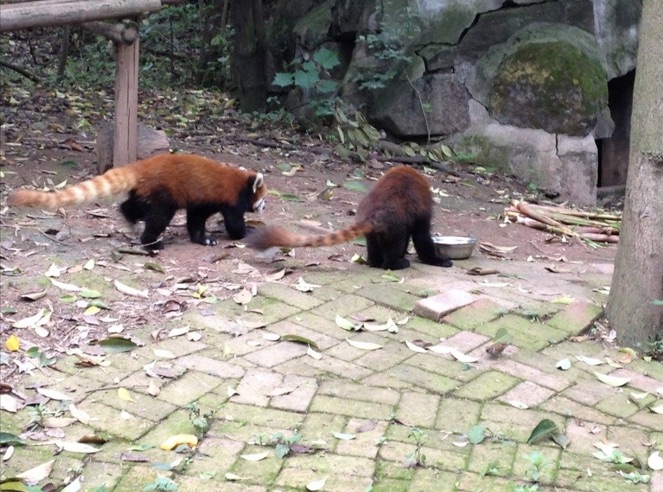
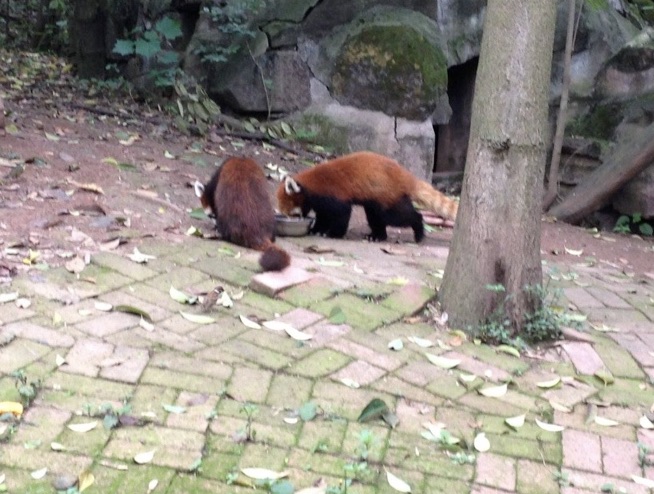
Some of the Red Pandas during feeding time.Notice how they will hold their food with those large paws. Notice the distinct stripes and large paws.The resemblance to a raccoon is uncanny.
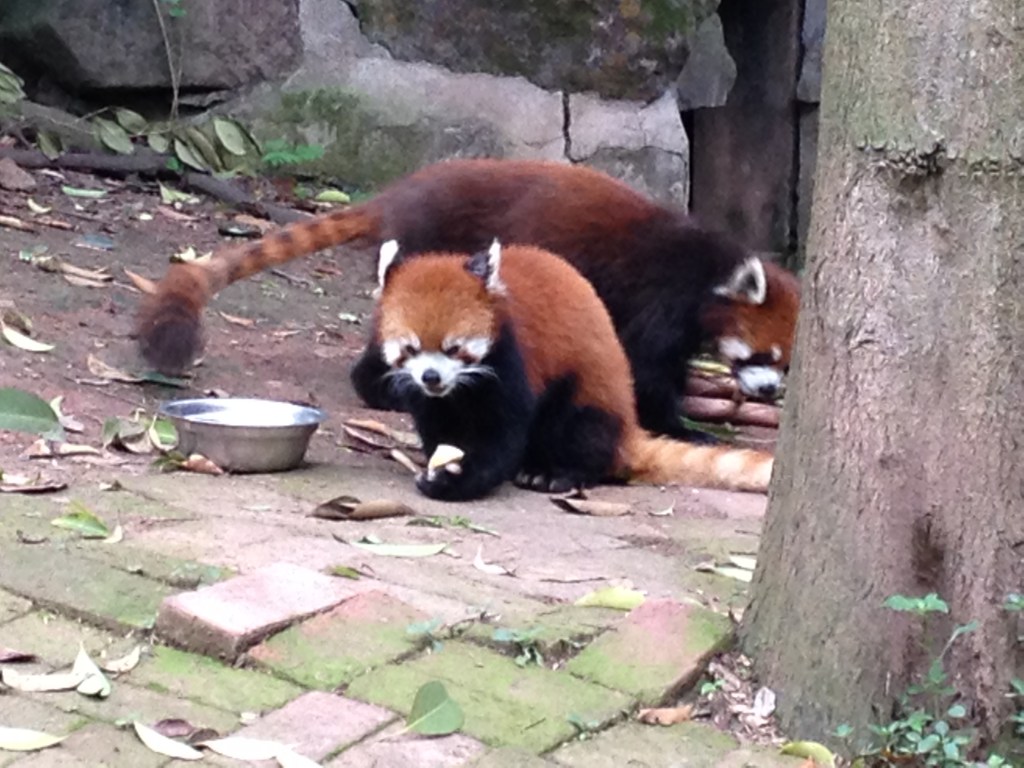
The Red (or Lesser) Pandas are present in the Panda Research Base as well. They look more similar to red raccoons than pandas. Due to their small size they could be a bit more difficult to spot in their environment, however they will be the first to come out during feeding time. These animals are very rare, and honestly, before going here I didn’t even know they existed.
Side Story:
One of the funniest things that you could see while wandering around in the Panda Research Base are impatient visitors scolding the animals to “get up” and “move” or “do something”, so that they can get the picture that they want. One thing that you will come to realize about the nature and behavior of pandas is that they couldn’t care any less about any commands, insults or sounds that you direct at them. They spend most of their day sleeping and most of their waking hours eating…
A panda relaxing while eating.
…And there is nothing quite as funny as impatient tourists yelling at this guy (above) to “do something” and having him look them right in the eye right before eating another 20 bamboo shoots. Never have people had less of an influence on this animal’s behavior than those tourists.
The Infant Pandas
The research center focuses mainly around breeding the pandas to populate the species. There is a section where you can also see the new born infant pandas. They are about 3 inches in size and look very cute. There is not supposed to be any pictures taken of them due to their fragile state. This is the reason why there aren’t any pictures of these tiny sized pandas here. Be aware that these pandas are not in a cage they are swaddled in blankets in a facility that has a glass partition for the public to view.
The Scenery
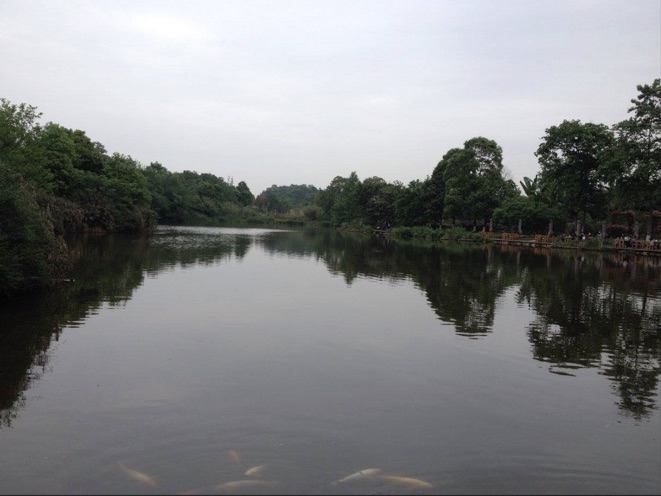
The scenery in the Panda Research Base.A lake in the Panda Research Base.Some more views of the scenery in the Panda Research Base.
The scenery here, much like the scenery in all of Si Chuan province is magnificent. It would be very easy to forget where you are and wander around enjoying all of the sights. The scenery makes the Panda Research base go from great to spectacular.
How much time should be spent here?
This depends on how much you’re enjoying the area. The Panda Research Base can be completed and thoroughly enjoyed in about 1/2 of a day. However, spending an entire day here would not be considered a waste of time by any means.
How to get here?
There are 2 main ways that you can get to the Panda Research Base. One is to take a bus. This is the cheap option that will not cost you more than 8 or 10 RMB. I am not sure what the number of the buses that you will need to take (being that there are several starting points depending on the location of your lodging). However, if you do take the bus you should be comfortable and confident in you’re ability to transfer buses. There is one transfer at a relatively large bus station.
The other option is to take a cab there. The Panda Research Base is located a bit far from the city center, thus making the ride more costly (even for Cheng Du). On the other hand, if you would like to save yourself the hassle of changing buses, then this might be your best bet.
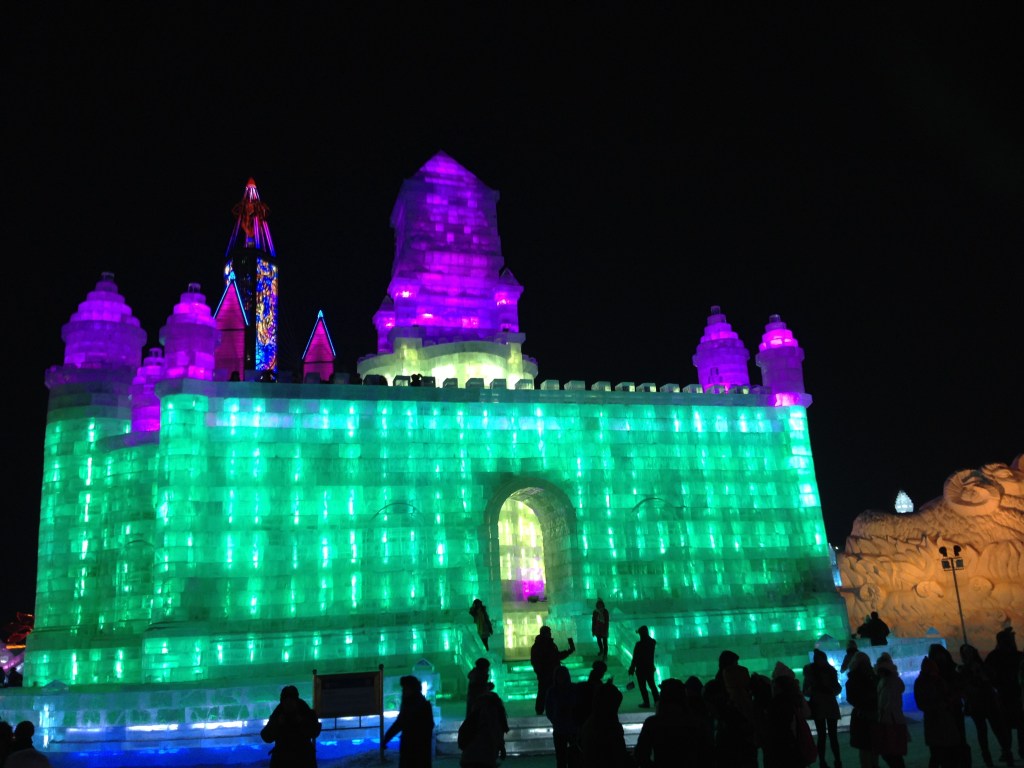
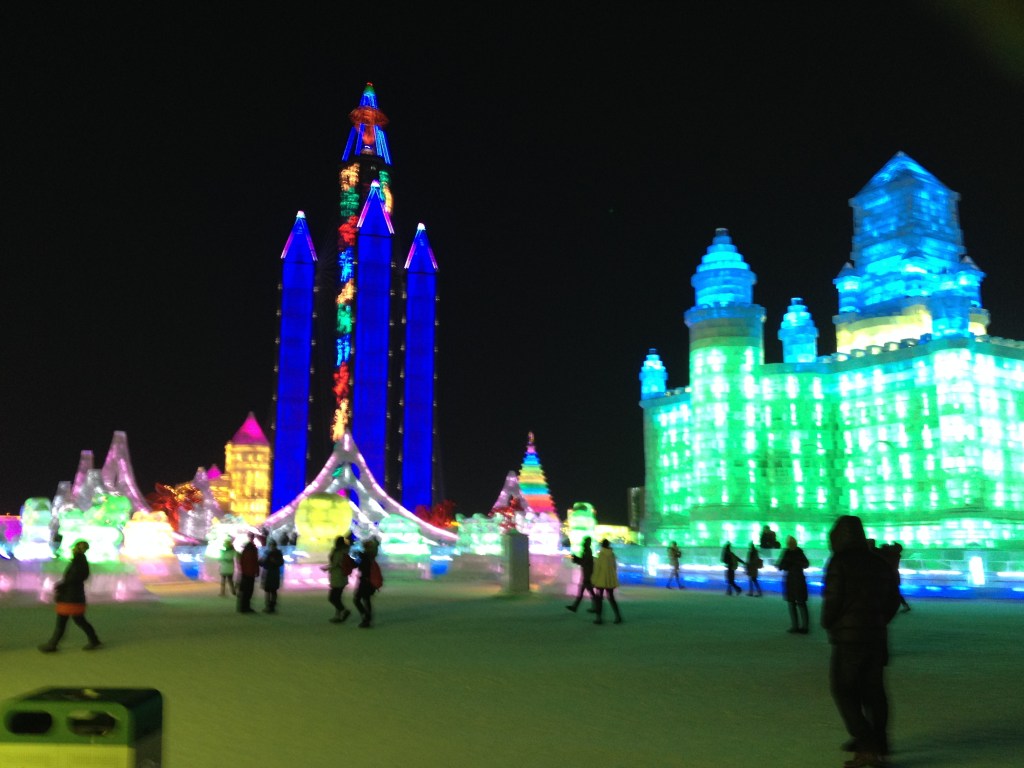
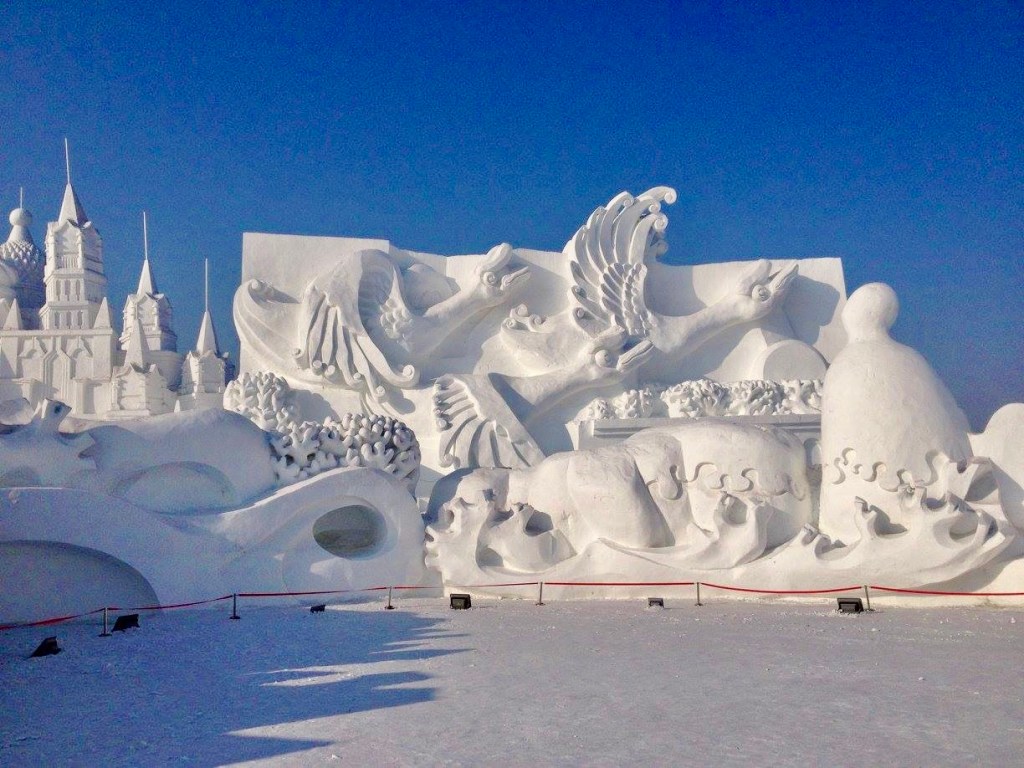
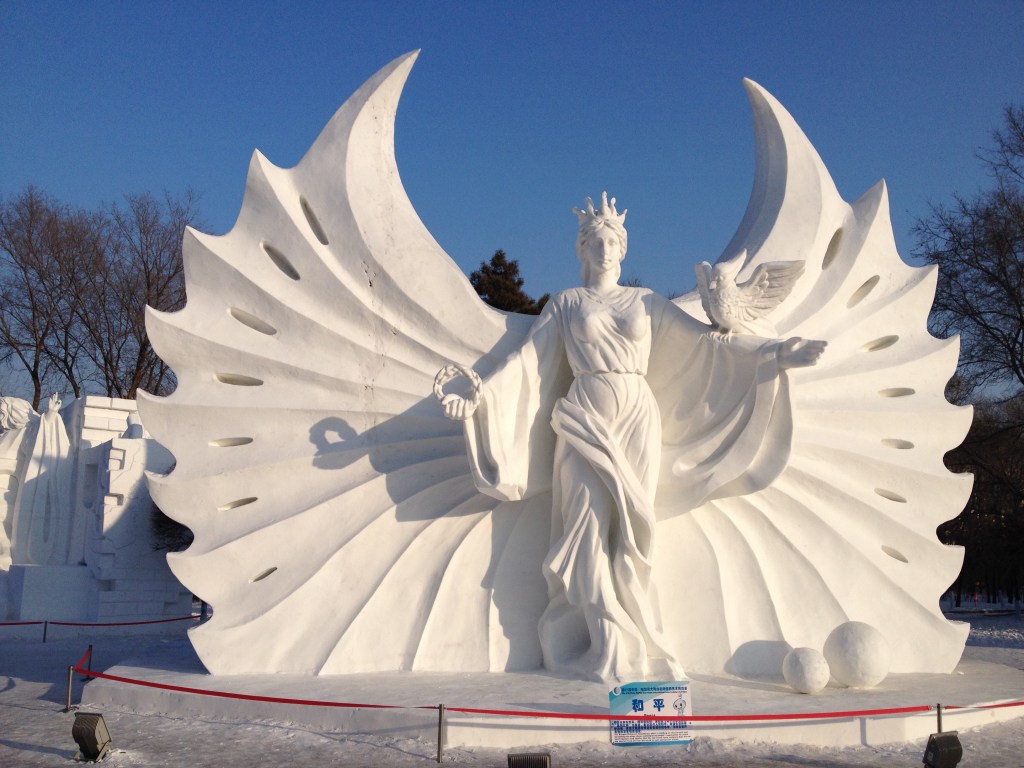
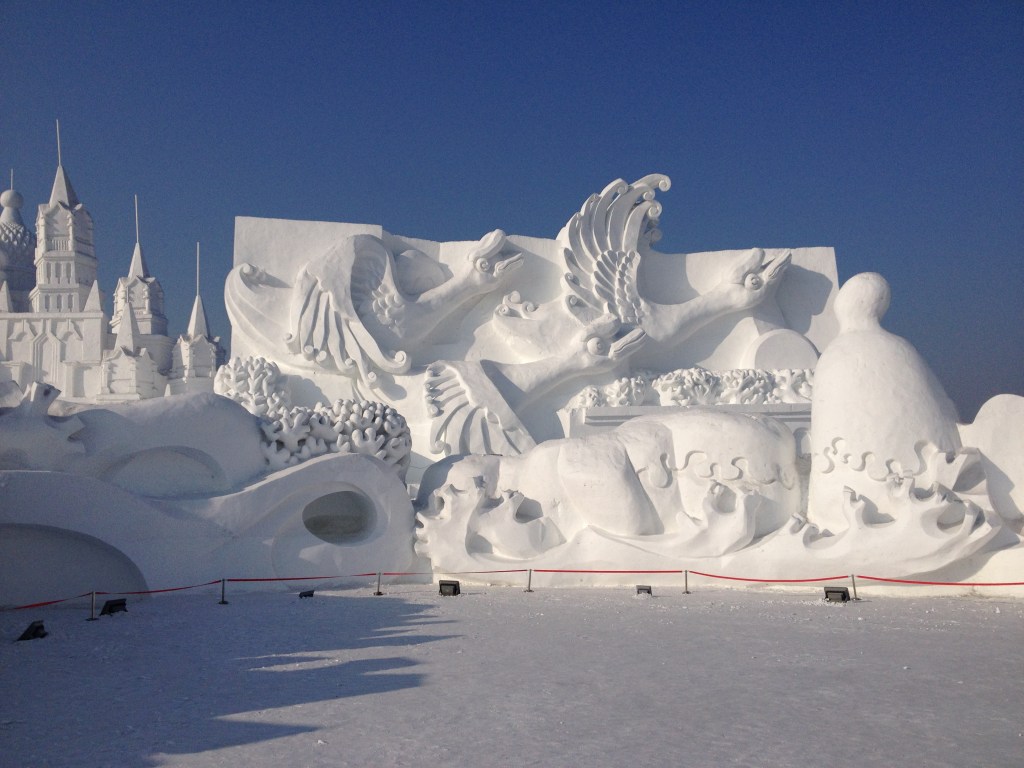
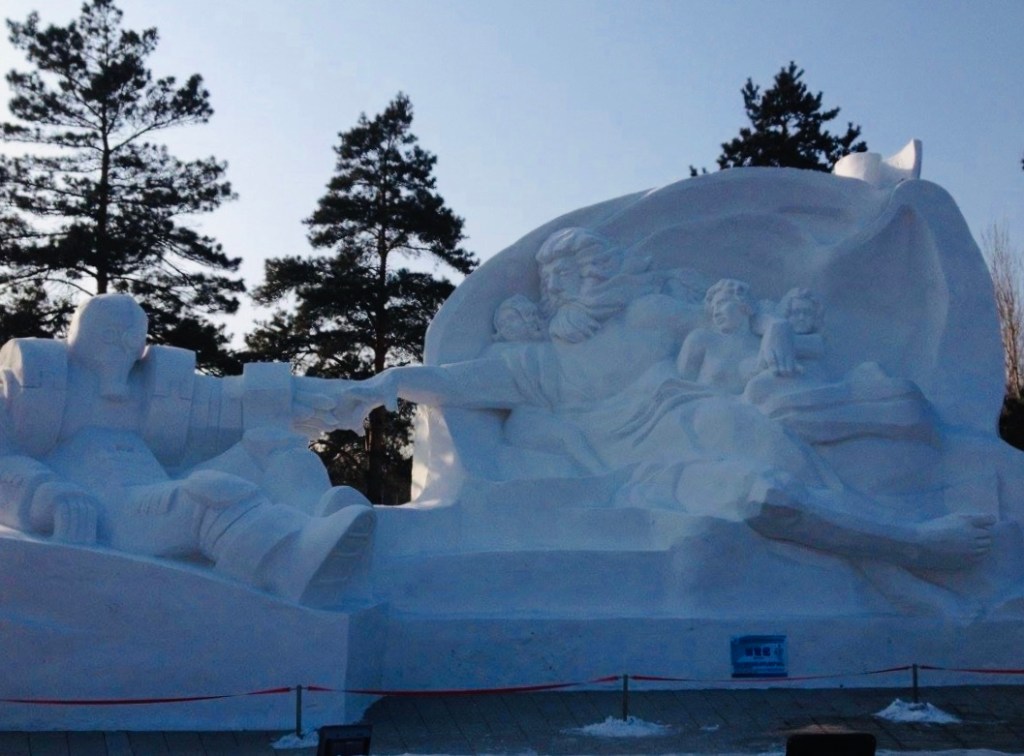
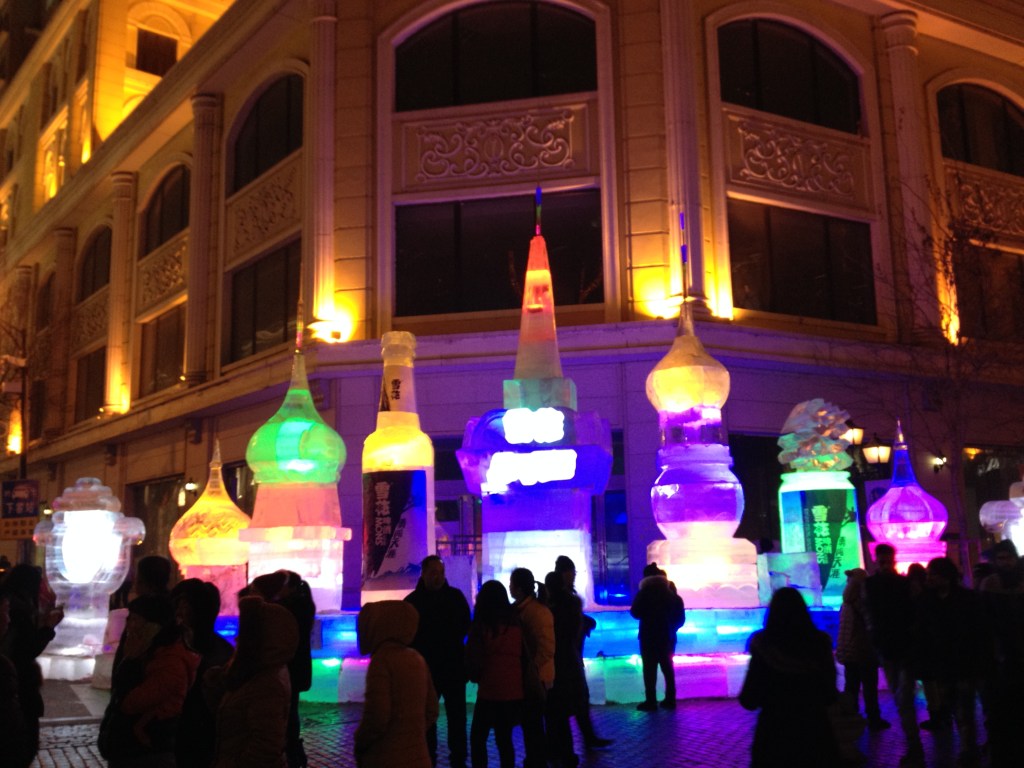
The ice building have lights running through them allowing them to light up at night. All of the structures in this photo are made of ice. Located in the Ice and Snow World.The ice building have lights running through them allowing them to light up at night. All of the structures in this photo are made of ice. Located in the Ice and Snow World.The ice building have lights running through them allowing them to light up at night. All of the structures in this photo are made of ice. Located in the Ice and Snow World. All of the lit up buildings in this photo are made completely out of ice. Located in The Ice and Snow World. This entirety of this snow sculpture could not be captured in just one picture, the second part is below. Located on the Sun Island.This entirety of this snow sculpture could not be captured in just one picture, the third part is below. Located on the Sun Island. A beautiful snow sculpture on the Sun Island.This is an enormous snow sculpture of well a little bit of everything. Located on the Sun Island. The snow replica of the Forbidden City. Located on the Sun Island. This is an interesting take on the Sistine Chapel. Located on the Sun Island.
This is without a doubt one of the most beautiful places that I have ever been. It is also without a doubt the coldest place I’ve ever been. Despite the Arctic temperatures that Harbin can reach, the winter is certainly the best time of the year to visit Harbin. Trust me it will be well worth the trip despite anything you hear to the contrary.
When should you go?
A trip in the winter months around the Chinese New Year is unquestionably the best time to take a trip to Harbin. Around January or February is the best time, but check what day and month the Chinese New Year falls on because that is when this city is at the height of its beauty. All of the snow and ice sculptures are made leading up to the Chinese New Year. After the Chinese New Year they slowly start taking these scupltures down. There is about a month and a half where I would highly recommend going to Harbin, either within 3 weeks before Chinese New Year or within 3 weeks after Chinese New Year.
The Local Cuisine
One thing that you should try while in Harbin is the Spring Wrap. Do not get this confused with Spring Rolls, they are two completely different things. It more closely resembles a soft taco, but the add-ins are different. Be sure to give it a try while in Harbin, they are known for this as one of their specialties.
A Friendly Reminder:
Around the January/February time in Harbin you very well may experience some of the most bitter cold temperatures that you’ve ever experienced. Do remember to bring your thickest jacket, thermals, wool socks, a face warmer, hat, snow pants, snow gloves and anything else you can think of to keep you warm in a frozen tundra environment. Hand warmers (those little bag things that when moved from one hand to another) will also be an invaluable asset.
When outside in Harbin it is not advisable to stay out for an extended period of time. Do not plan to spend all day outside. Go out for anywhere from 2-4 hours at a time and then find somewhere warm to recuperate (like a restaurant or a pub) before heading out again. If you are not familiar with how your body does in cold temperatures, then do not ignore or try to tough it out. That is how people get frost bite and hypothermia. The extremities (toes and fingers) will be the first parts of your body to feel either very cold or numb. Once you feel some of your gross motor skills are hindered, it is best to go inside and warm up for a bit. If you are well acquainted with cold weather, then you will know your body’s limits and be quite familiar with them.
Also, the cold weather will affect your temperament. So, you may find yourself being very easily agitated. This is very likely due to the frigid temperature that surrounds you. Try to keep that in mind before losing your temper at someone unnecessarily.
On a similar subject the cold weather may hinder the use of your cell phone. This is for a couple of reasons, firstly, because most cell phones nowadays are smart phones with touchscreens. With gloves on you may find yourself removing your gloves to use your phone or take pictures. This will make you hands colder faster. Or the cold temperature could wreck havoc on your phone’s battery. Just like the battery on your phone overheating when in hot climates the battery of a phone can also freeze, causing it to turn off or limiting functionality. Just keep that in mind if you’re feeling irritable from your hands feeling cold and your phone not working.
In addition there is something that may happen to you while in Harbin (if the temperature is cold enough). When outside in a very cold environment is is highly recommended to wear a mask to keep your face warm. However, once you wear a mask and exhale through your mouth, your breath will head upwards. What happens next is that the condensation of your breath turns from an air to a solid in the matter of seconds and will freeze on your eyelashes. This will result in the forming of little icicles on your eyelashes. It’s not a big deal nor does it affect you that much I just thought it would be interesting to know.
中央大街 (ZhōngYāngDàJiē)Zhong Yang Street
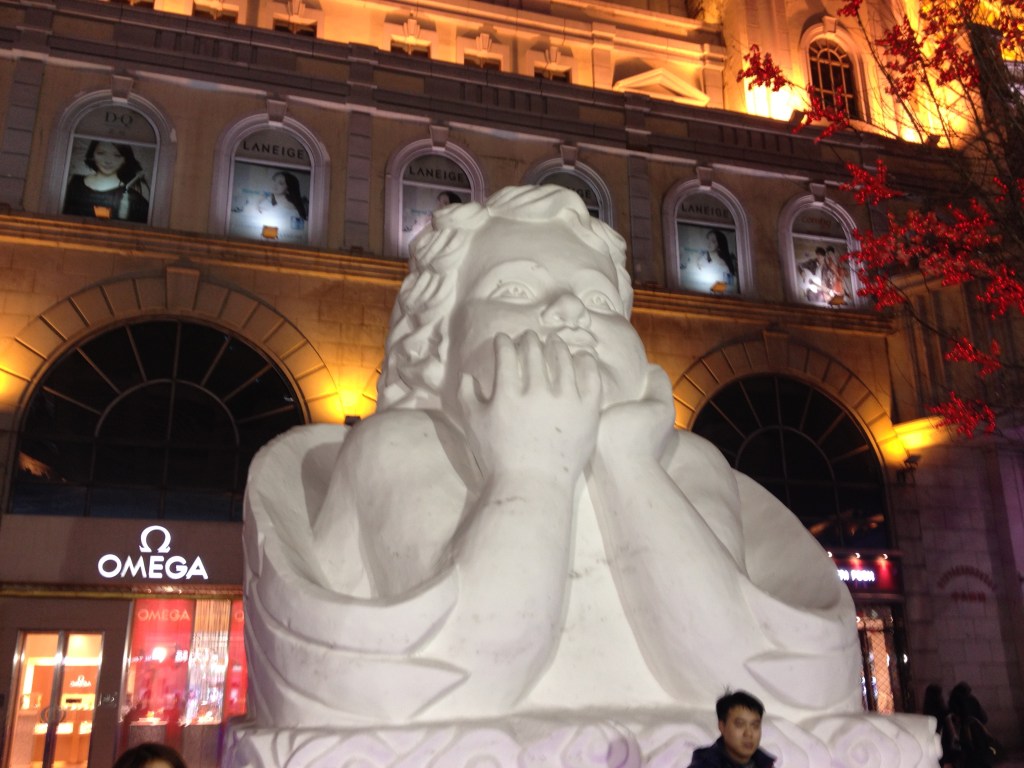
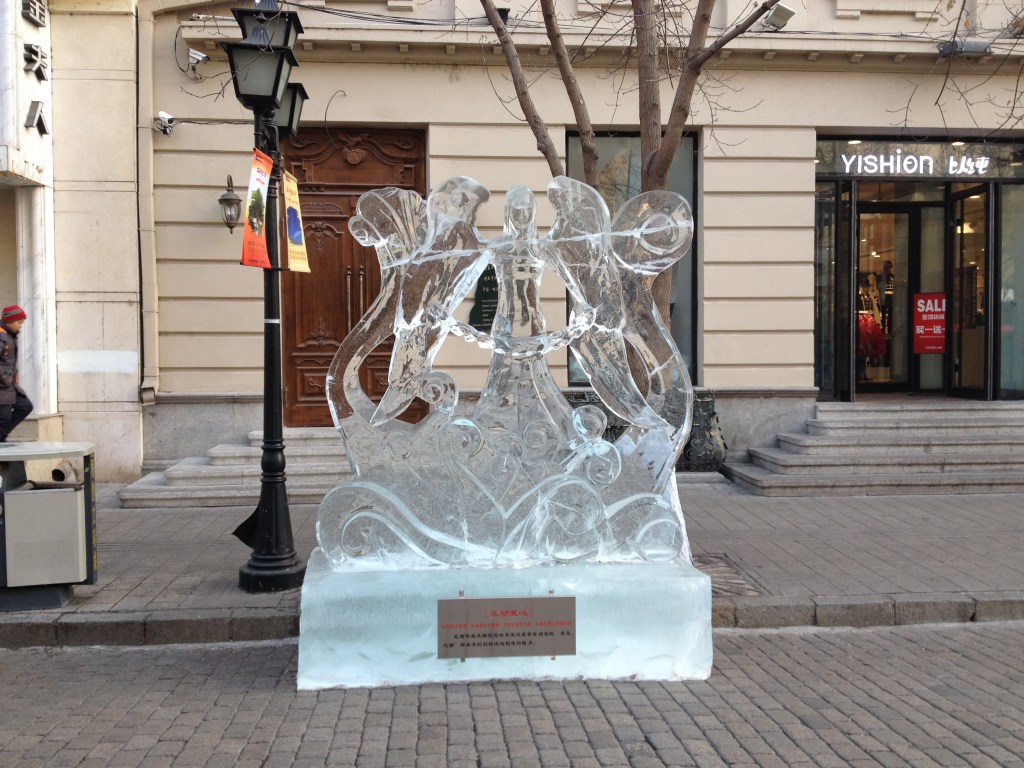
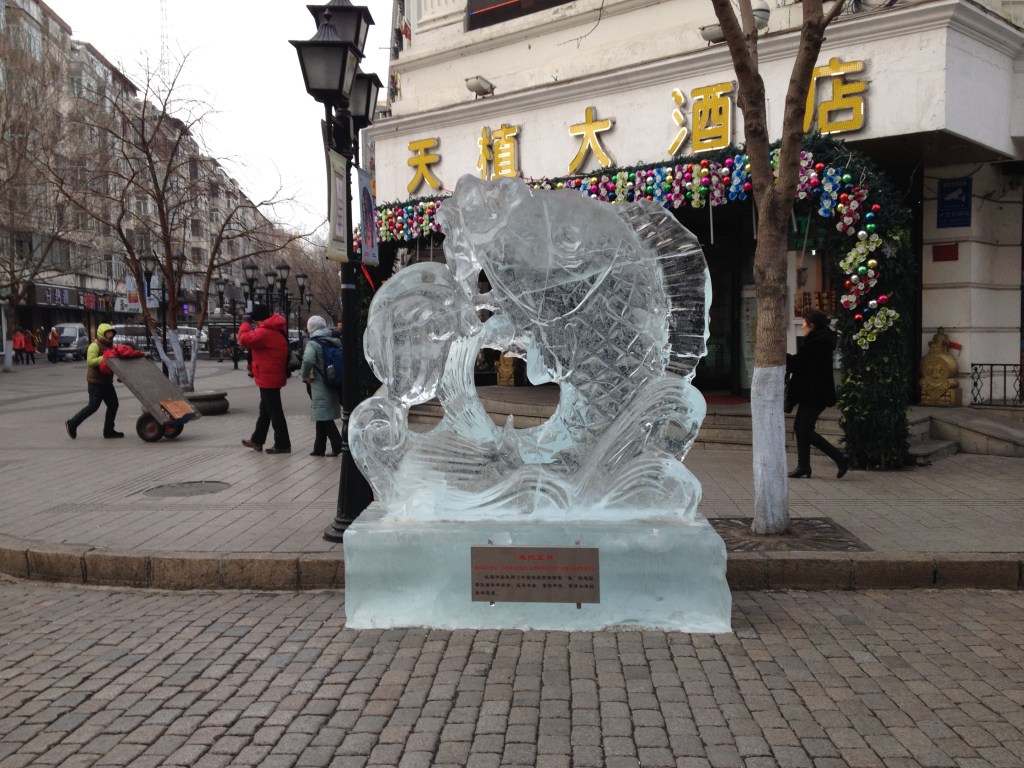
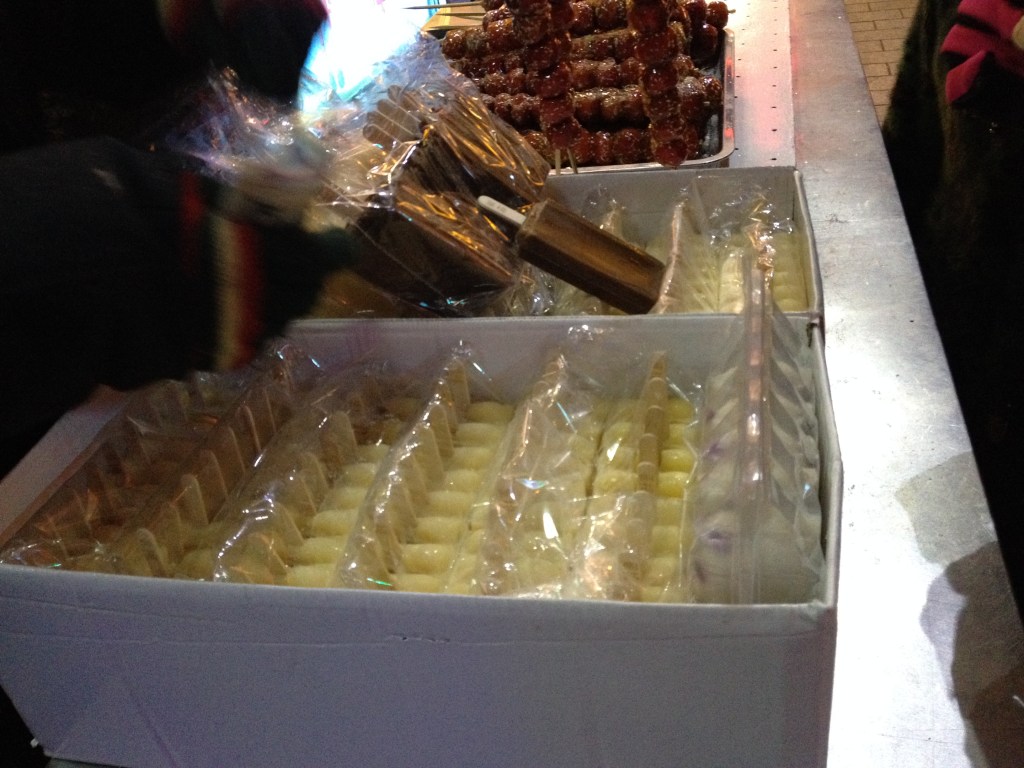
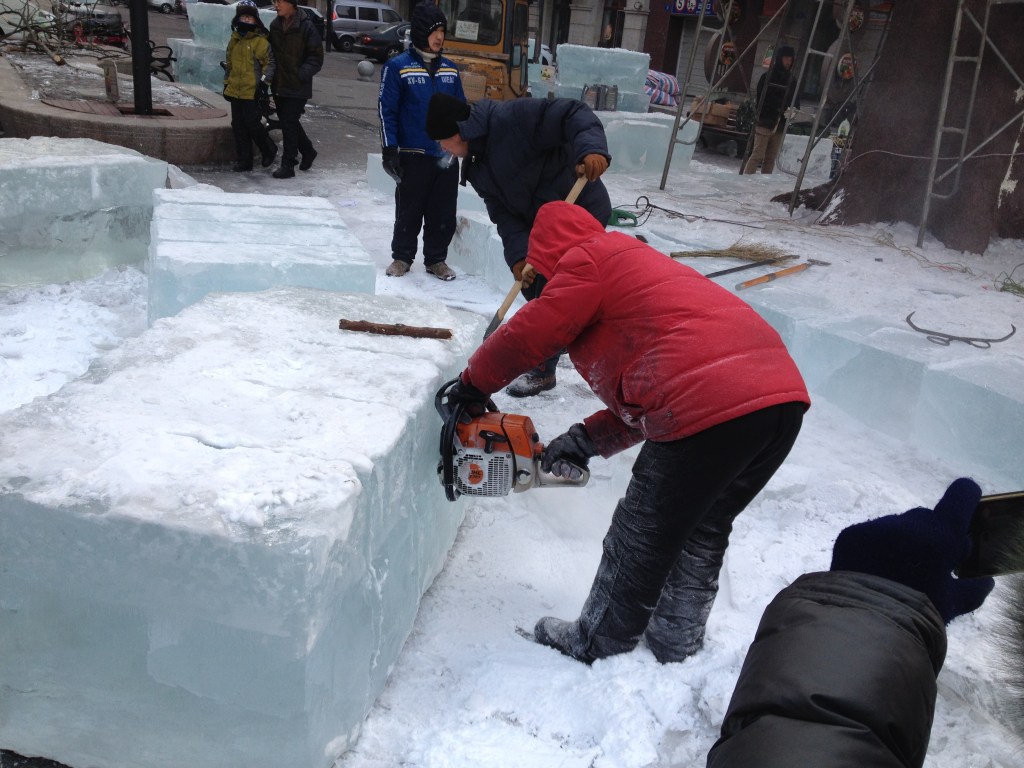
The ice sculptures lit up on Zhong Yang Street at night. A very large snow sculpture of the Coke Polar Bear. This large snow sculpture was on Zhong Yang Street. It looks like a fat baby angel? Your guess is as good as mine. An ice sculpture of (what appears to be) an angel on Zhong Yang Street.An ice sculpture on Zhong Yang Street. An ice sculpture of an anchor on Zhong Yang Street.Ice cream being sold out of the box on Zhong Yang Street. Workers sculpting the ice.
This is an excellent place to get your steps in for the day. Zhong Yang Street is a walking street with both sides of the street filled with shops and restaurants. In winter there are also snow and ice sculptures all up and down the street. What makes this walking street so unique is the European style architecture of the buildings. If you’re observant you will also notice that some of the street signs are in English, Mandarin and Russian. Zhong Yang Street ends at the bank of the Song Hua River.
There is something interesting that you will see on Zhong Yang Street that you may not see in many other places, which is ice cream being sold. You may be thinking “what’s so special about that?”, well it isn’t being refrigerated or kept in a cooler. Due to the frigid temperatures vendors can sell ice cream straight out of a cardboard box. I would recommend getting some, its a different experience and something that not everyone can say they’ve done before. Also, the ice cream will probably be the warmest thing outside, some people say it actually warms you up a bit. I’m not sure if I believe that but whatever.
The Song Hua River 松花江 (SōngHuā Jiāng)
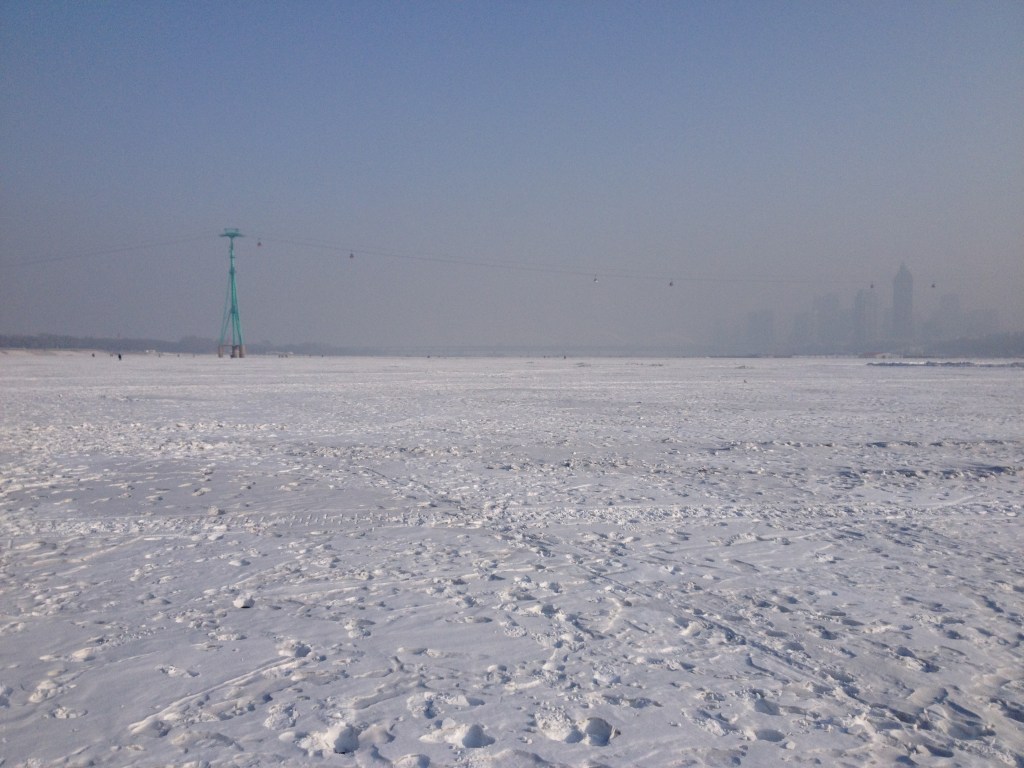
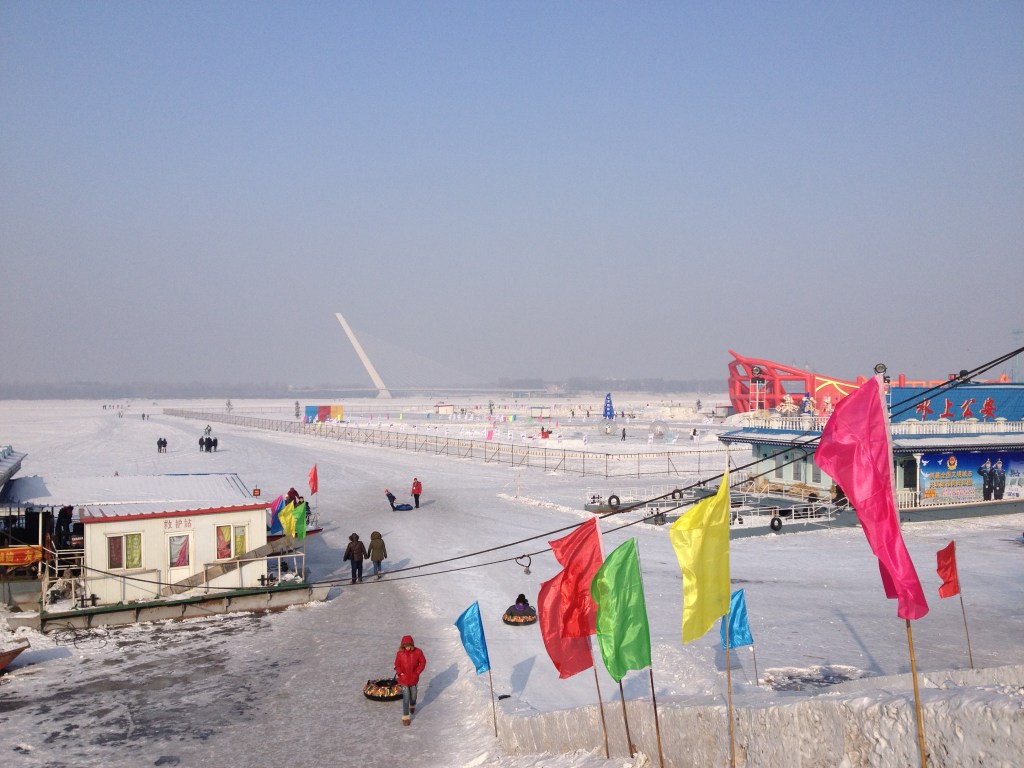
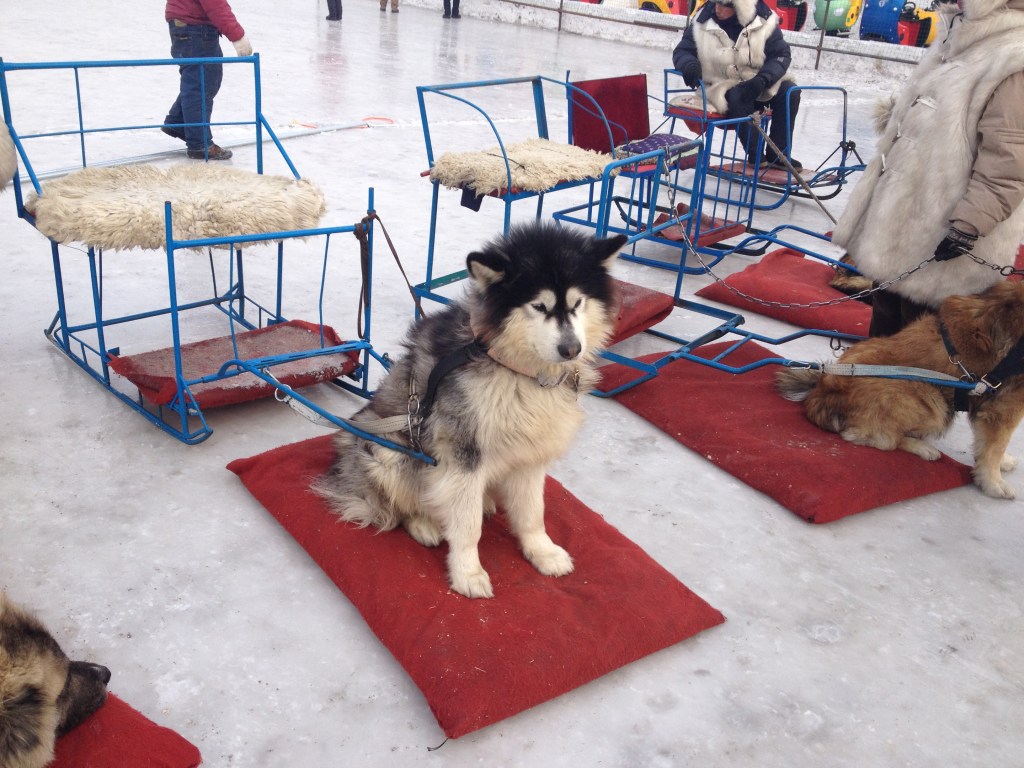
This photo was taken of the Song Hua River, while standing on the Song Hua River. It really does look like a frozen tundra. The entrance from Zhong Yang Street to the Song Hua River. Kids are enjoying the tire sledding while people are ice skating in the background. It may not be advisable to pet these dogs. Not my cup of tea to take a dogsled ride but to each their own.
There is no way that anyone should miss going to the Song Hua River. This is a very wide river that lies at the end of Zhong Yang Street. Normally, this river serves as a short of divider between the two parts of the city. However, during the winter months this river is so far frozen over that not only could you walk across it, you could even drive a car across it. There are all types of activities to do at the Song Hua River. Such activities include tire sledding, (regular) sledding, ice skating, driving an around a car track (made of snow) in an actual car, taking a dog sled ride or cross the river on foot to reach the other side of the city. It is like a carnival has been set up on the frozen over river and anyone can go either in the daytime or at nighttime. I think it closes at 10 if I’m not mistaken.
Image taken from Ctrip.I’m going to be completely honest… I didn’t take this picture and while it looks incredible I cannot verify how close to the picture the actual place looks.
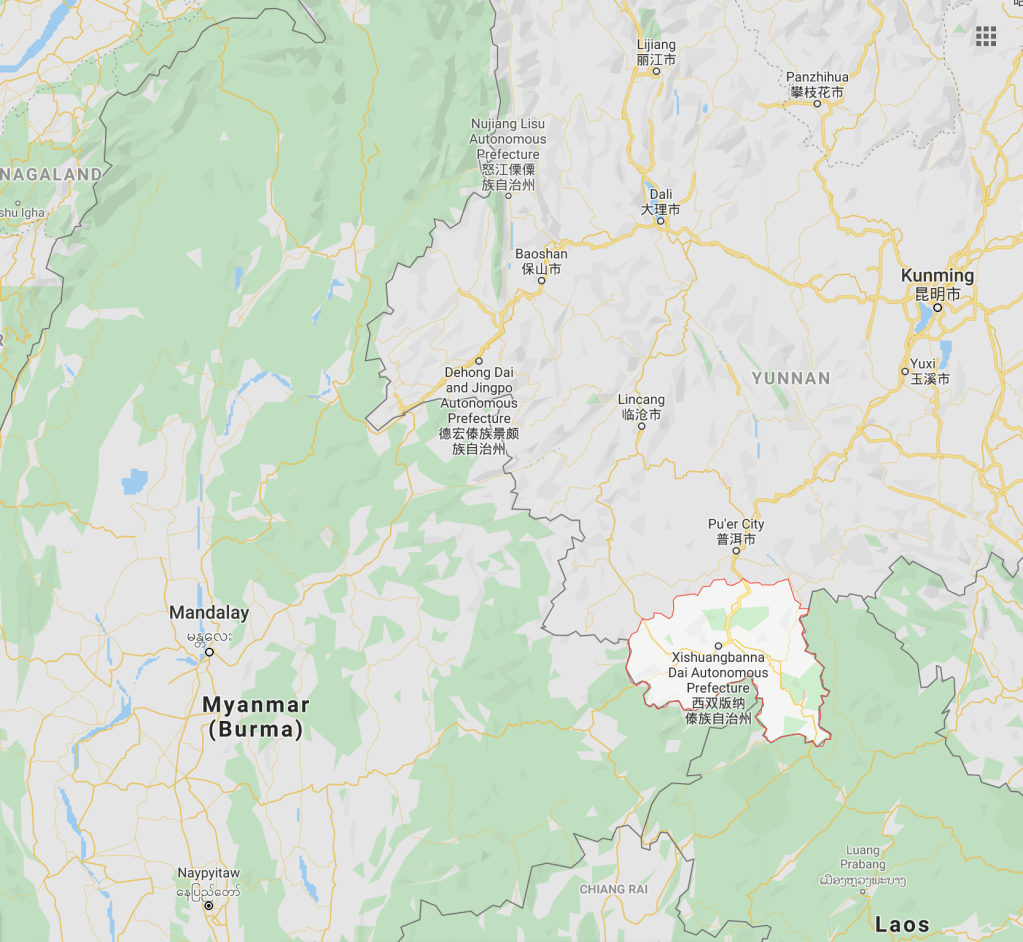
This is another potential destination in Yunnan. Xi Shuang Ban Na is located in the south of Yunnan Province close to the border of Laos and Myanmar. I have never been there before but many people have told me that it is well worth the trip. Xi Shuang Ban Na is supposedly very similar to Thailand in regards to the environment and wildlife in the area. This place enthralls me because of its remote location, close proximity to other countries and surrounding environment.
A view of the location of Xi Shuang Ban Na on Google Maps.
I think that Xi Shuang Ban Na is well worth a visit and will definitely be a destination on my next trip to China.
How to get there?
As I said I have never been there, however, I have heard that the only way to get there is to take a bus from Kunming. If you look at Kunming’s location on the map above you could probably guess that it will be a long bus ride.
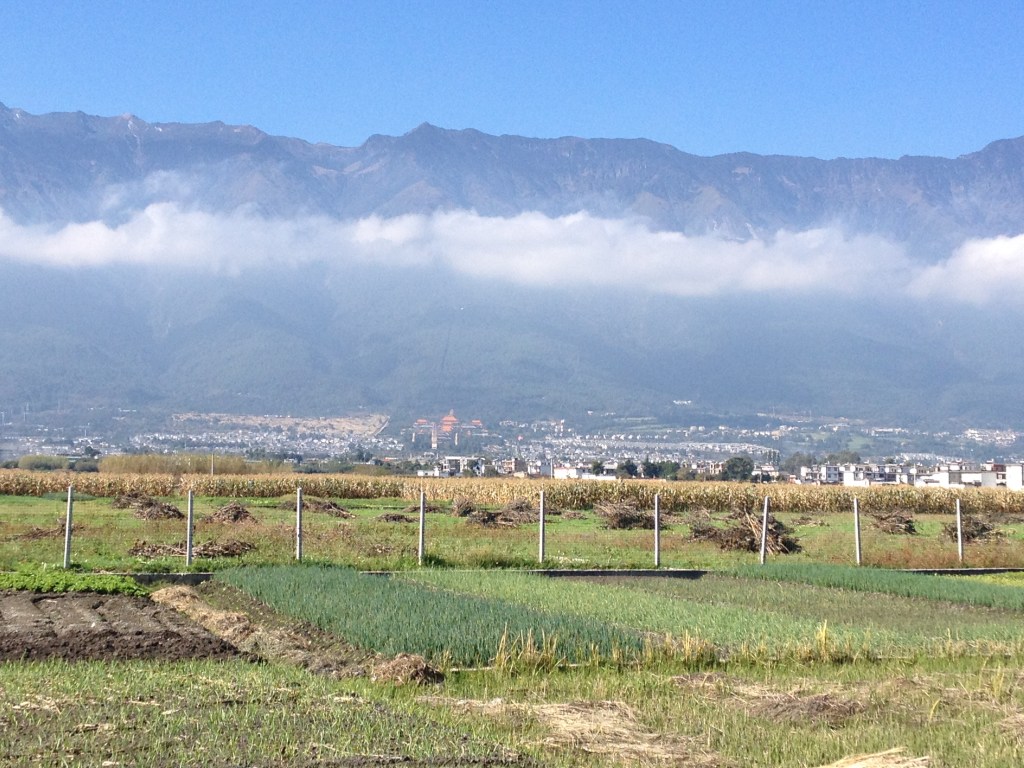
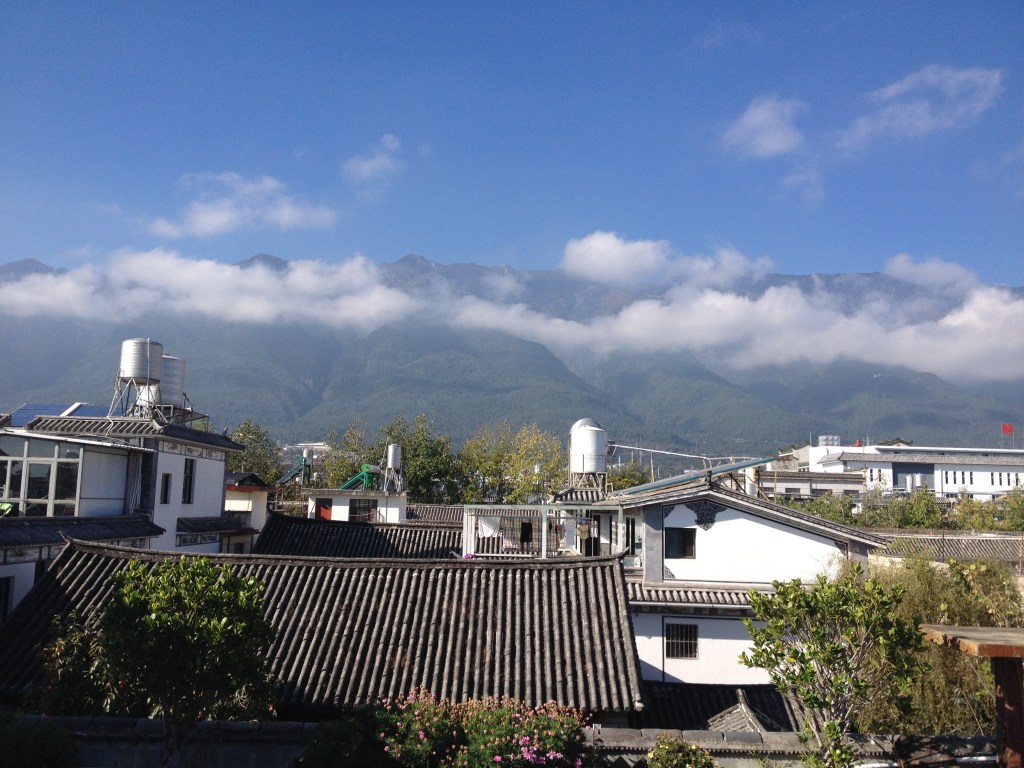
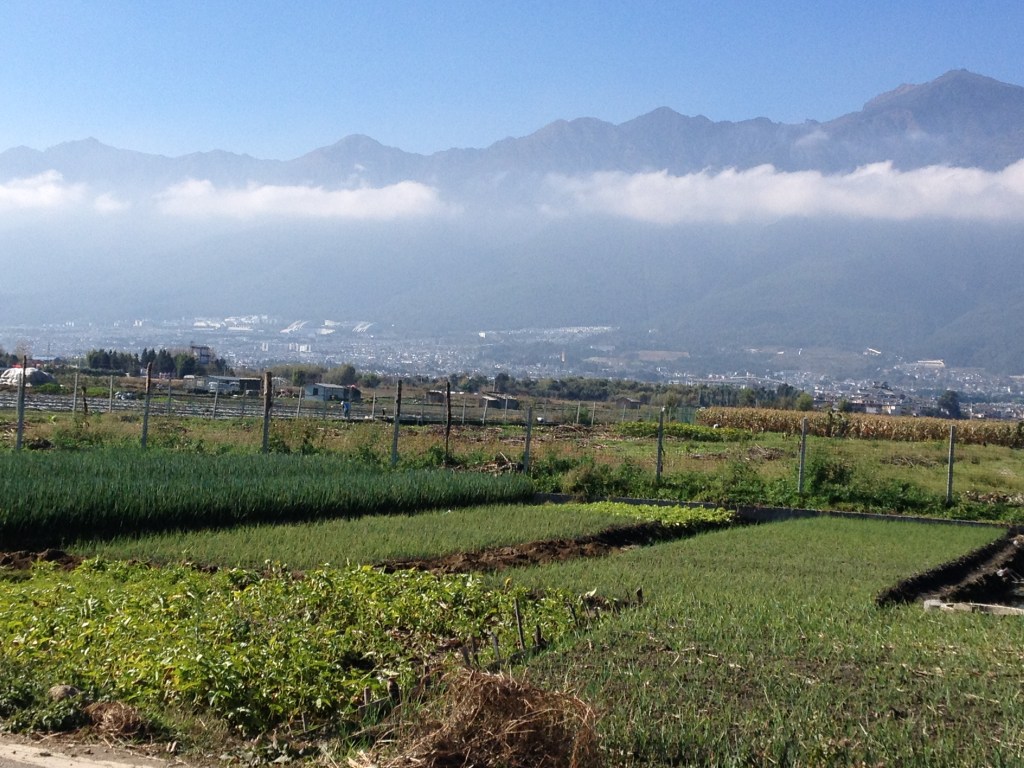
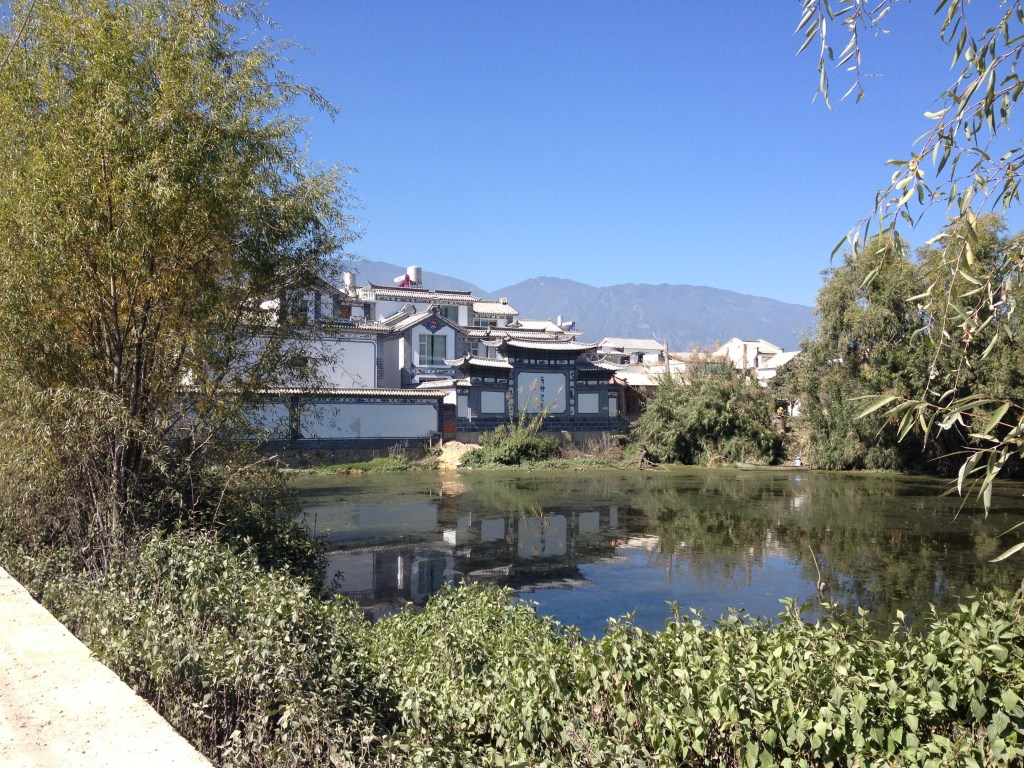
Some of the sights of the mountains surrounding the city.Some of the sights of the mountains surrounding the city.Some of the sights of the mountains surrounding the city.Some of the infrastructure is built right on the water.A view of the infrastructure with a pond in the forefront and mountains in the background.
This city is astounding. Well to be honest the city isn’t the most impressive sight it’s the surrounding environment that will take your breath away. Once you get to the outskirts or near Lake Er Hai everywhere you look will be a pleasant experience. Honestly, before living in China I had an image of what it might look like in my head. Having watched way too many Kung Fu movies I thought there would be rice field, mountains, lakes, streams and people living simpler lives. It was only once I got to Dali that I found out that places like this still exist in China. This city left a very deep and memorable impression in me.
Now Dali is also known as one of the famous party cities in China. Apparently around Lake Er Hai there are quite a few nightclubs and bars. It is almost philosophical in how this one city can embody the changing of eras, when the old traditions meet the new customs.
Anyway what I am trying to say is that there is a peaceful side to this city and a party side. Pick whichever suits you best.
Lake Er Hai 洱海湖 Ěr Hǎi Hú
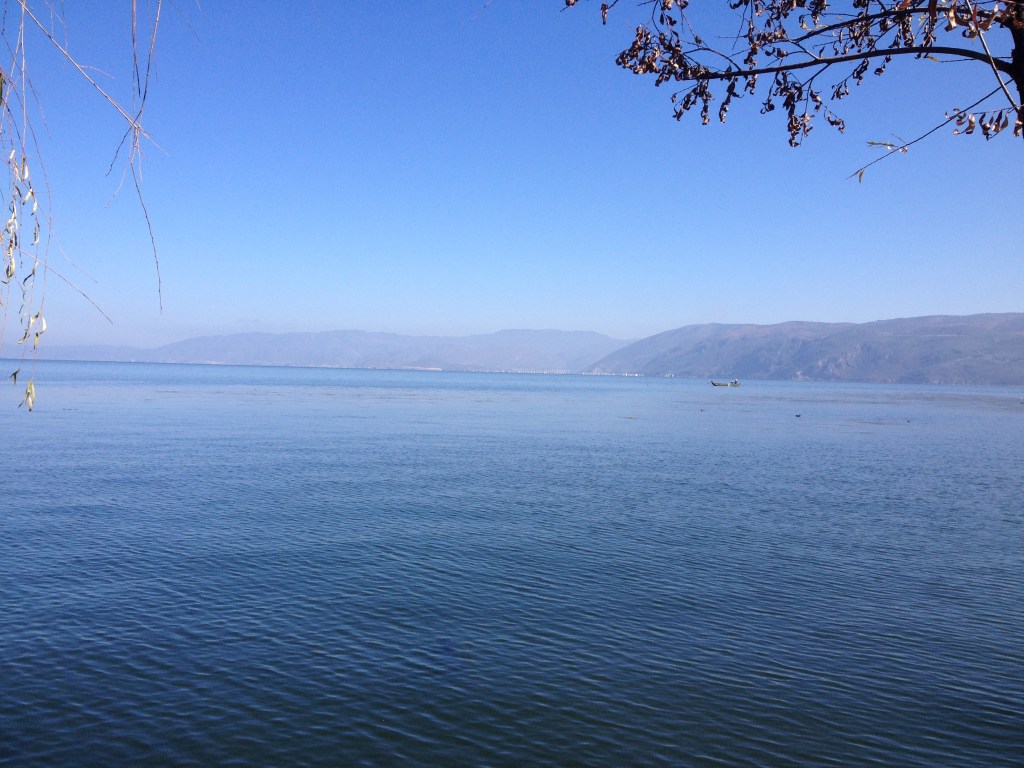
Lake Er Hai with mountains in the background. On the banks of Lake Er Hai. A tributary leading to Lake Er Hai.On the bank of Lake Er Hai.
Lake Er Hai is the main attraction in Dali. If you were to miss going to Er Hai you wouldn’t be able to say that you really went to Dali. While the nightlife in Er Hai is known throughout most of the country, there is more to this city than just the nightlife. There is also a subtle beauty to the area immediately adjacent to the lake, where farmlands meet the the wetlands and ponds. There is greenery as far as the eye can see.
Be aware of two things. First, everything that I describe above is based on my experiences at Lake Er Hai but I only ventured to the West side of Lake Er Hai. The second thing that you should be aware of is that Lake Er Hai is just under 25 miles long. Take that into consideration when selecting sights to see and deciding upon a means to get there.
This crude map shows some of the popular attractions around Lake Er Hai.Photo taken from the Old Town of Dali.
I did not get to visit to many sites while I was there. I passed by the old town, which was very nice, but it wasn’t a can’t miss place. It is a nice place to see if you are in the area or have the time. I passed by the three pagodas but didn’t have the time to stop and visit them. They seemed very nice but more like something that you could do if you had the time. It wouldn’t ruin your trip if you missed a chance to go there.
What I would highly recommend is that you rent a bike and take a ride around the lake. I can only speak for the beauty of the west side of the lake, the north, south and east sides I do not have first hand information of the scenery.
Or if you would not like to expend so much energy pedaling around the lake you could also rent a scooter. This would be a good way for you to cover more ground, see more of the surrounding area and save some energy.
How long should you stay in Dali?
If you would like to see the all sides of the lake, I would recommend staying in Dali for anywhere between 2-3 days.
During the days you can either go to Lake Er Hai or explore the mountains in the surrounding area. At night you could find yourself a bar or nightclub that suits you and relax a bit.
Helpful Tip
Like Li Jiang it is very expensive to fly into or out of Dali. You may want to consider flying into to Kunming and then taking a train to Dali.
Yunnan is a travel destination sought after by national (Chinese) and international travelers alike. This is one of my personal favorite places that I have been to in all of China. However, there are a lot of potential travel destination within Yunnan itself. If you’re trip to Yunnan is not carefully planned out, you could end up spending excess time and money without seeing some of the most desired locations in Yunnan.
In order to ensure that you get the most out of your trip to Yunnan please read the following tips below:
Helpful tip: It should be known that flying into Li Jiang or Dali is relatively expensive. If time is sufficient it might be a good idea to fly into Kunming and then take a train from Kun Ming to Dali or Li Jiang. This would be a much cheaper way to travel to either Dali or Li Jiang and gives you more money to spend during the trip. This is a good idea if time is sufficient. The train ride from Kunming to Dali is only about a 2 hour ride. From Kunming to Li Jiang is a 3 hour ride.
The Best Time of Year to go to Yunnan
In Chinese there’s a saying that it Yunnan is one of those places that only has one season throughout the year. While that is true and the temperature is similar to that of San Francisco it does matter what time of the year you venture to Yunnan.
In my opinion the best time of the year to go to Yunnan is in the winter months. The reason is because around the end of autumn (November-ish) the first snow will fall on the mountains in northern Yunnan, where Li Jiang is located. This will change the peaks of the mountains to snowcapped peaks and make pictures of Li Jiang and the surrounding area that much better.
Also, the temperature will be like spring time in the winter months, cool in the mornings and evenings and warm in the afternoon. While, this might make packing light a bit difficult it is very conducive to traveling because it neither get uncomfortably hot nor cold.
Traveling to Tiger Leaping Gorge
How to Pack and what to do with the luggage
One of the obstacles with arranging a hike and on the same trip that you will tour cities is that you will either pack to heavy to hike or too light to dress appropriately in social settings in a new city. To mitigate this problem I suggest that you adhere to the following suggestions.
First I suggest that you pack a suitcase (either large or small it depends on you and how much stuff you would like to bring) and a backpack/hiker’s bag. On the flight you could put the backpack in the suitcase, so that you don’t have to pay extra for luggage. The suitcase will contain all of the clothes that you’re comfortable wearing for the city and urban setting.
Once you decide to go to Tiger Leaping Gorge you can pack all of your essentials in a backpack or hiker’s bag. The suitcase can be stored at your place of lodging. At any rate you will need to go back to Li Jiang anyway because it is the closest major city to Tiger Leaping Gorge. This way you will carry less weight with you during your hike through Tiger Leaping Gorge.
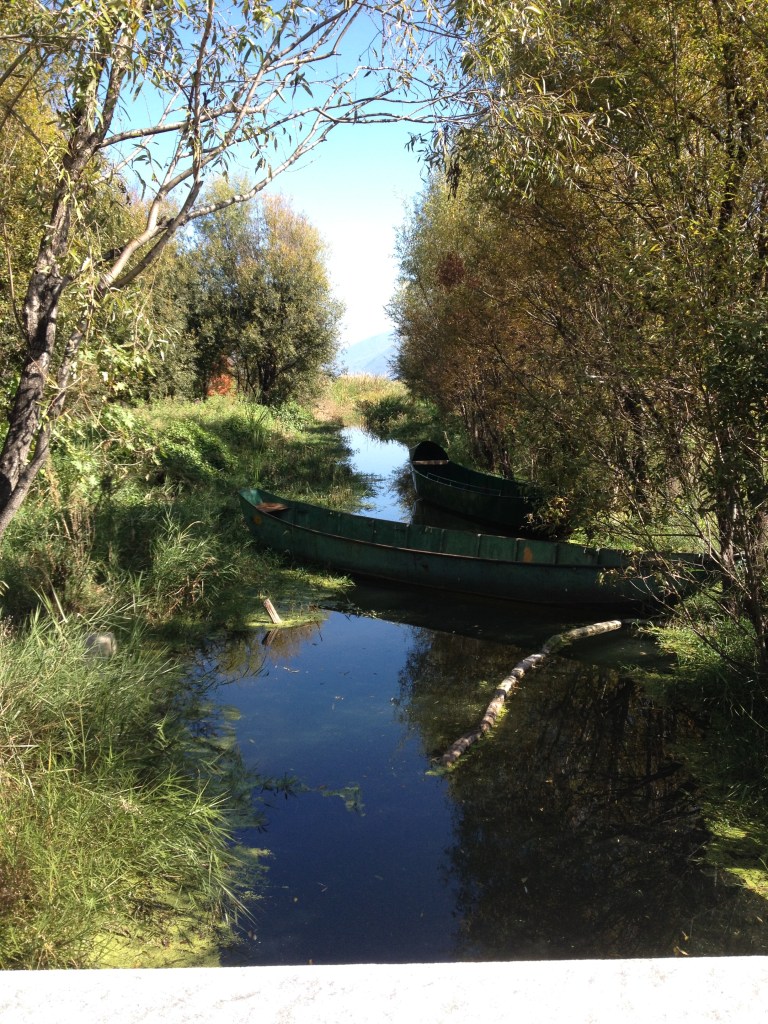
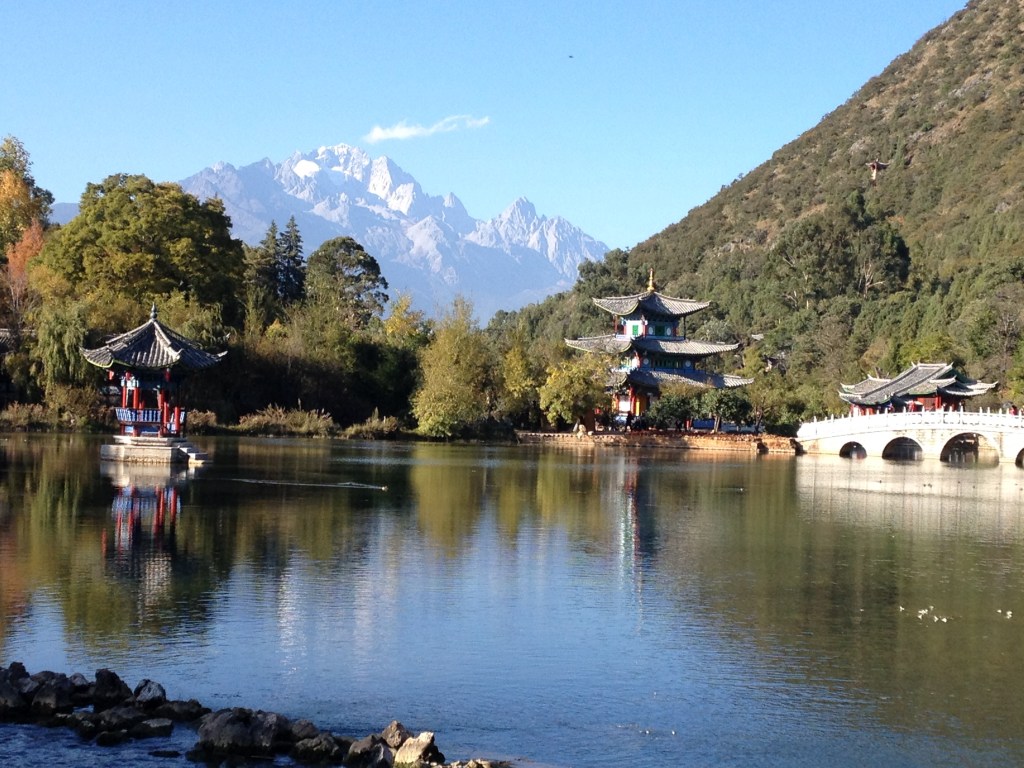
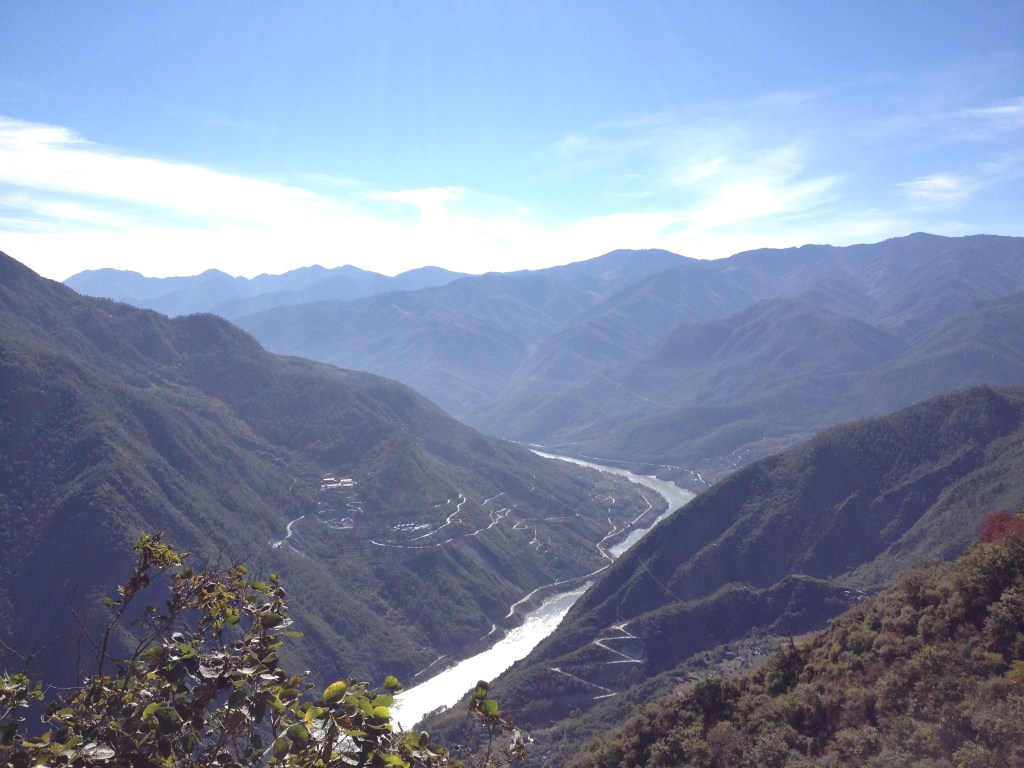
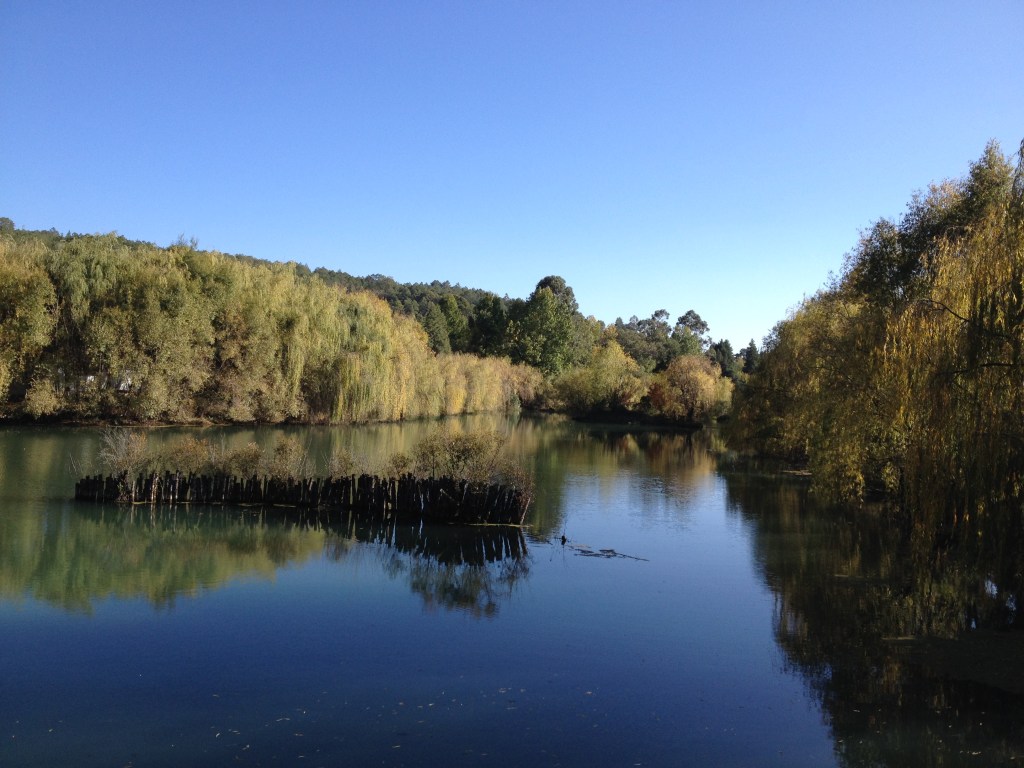
A photo taken in Hei Tan Park. A photo taken from Tiger Leaping Gorge. A photo taken from Tiger Leaping Gorge. A photo of the Jade Dragon Mountains. A photo taken from Tiger Leaping Gorge. A view of Li Jiang from inside the city.
Li Jiang is a city that travelers around the world yearn to go to. This is one of the most popular destination of not only Yunnan Province but also all of China. Li Jiang is in the northern section of Yunnan Province surrounded by a couple of different mountain ranges that make the city look like something out of a painting. The mountains become snow capped around November (depending on when the first snowfall is on top of the mountain occurs), making the scenery look even more beautiful.
The climate of Li Jiang is very unique. It rests at an altitude of approximately 7,900ft above sea level. In the winter the temperature varies widely. In the winter months it can go from the high 30s (Fahrenheit) in the morning to the 70s in the afternoon and then right back down to the 30s by the evening. In the summer Li Jiang is usually much warmer though. So, if you go in the winter prepare to pack accordingly.
Helpful tip: It should be noted that flying into Li Jiang is very expensive. If time is sufficient it might be a good idea to fly into Kun Ming and then take a train from Kun Ming to Li Jiang. This would be a much cheaper way to travel to Li Jiang and give you more money to spend during the trip.
The Old Town of Li Jiang 丽江古城 Lì JiāngGǔChéng
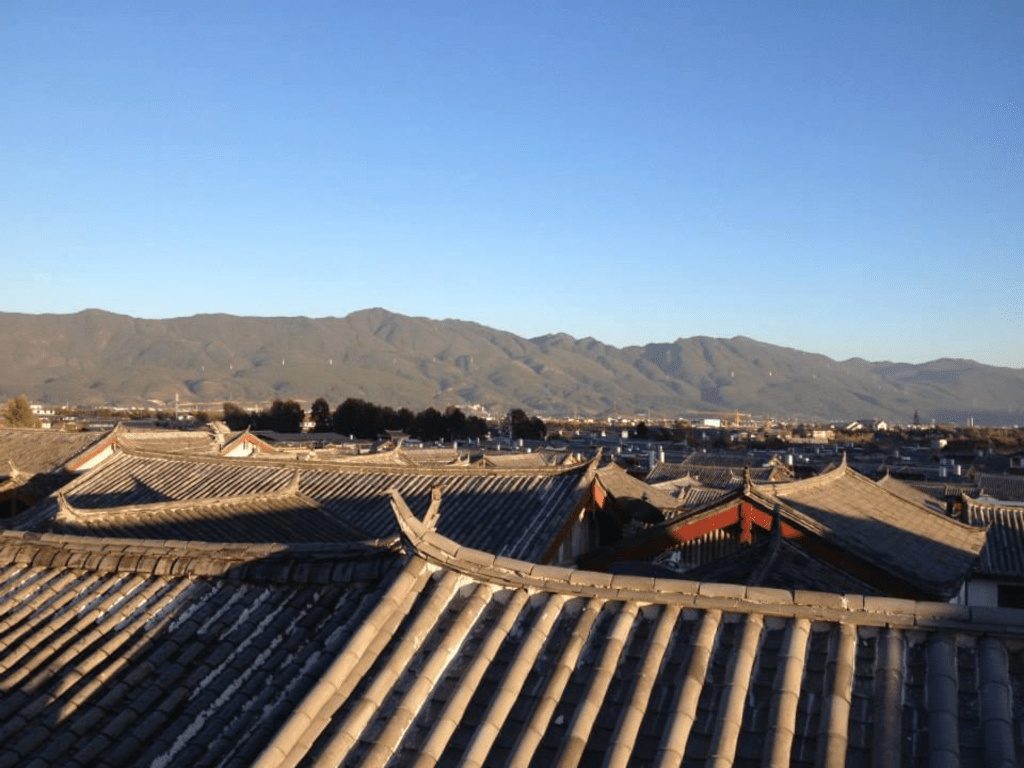
A photo from the streets of the Old Town in Li Jiang.A photo from the roof top of the Old Town in Li Jiang.
The Old Town of Li Jiang looks very impressive. It resembles how China may have looked in the past and it could only be compared to Beijing’s Hutong(s) or Shanghai’s Lilong(s). One of the great things about the Old Town is that it is very scenic. You could spend all day just wandering around and it would not be a wasted day. The Old Town is also very lively. There are restaurants, bars and night clubs all throughout the Old Town. I will say that the Old Town is very commercialized and has shops all over. The biggest take away from the Old Town (besides the scenery) is to experience some of the minority ethnic culture.
I would definitely recommend staying in a hostel or hotel in the Old Town. The main reason behind staying in the Old Town is that regardless of which sight you’d like to see you can get to all of them from the Old Town. Pick up and drop off points are either within the Old Town or adjacent to it.
The Black Dragon Pond Park 黑龙潭公园 Hēi LóngTánGōngYuán
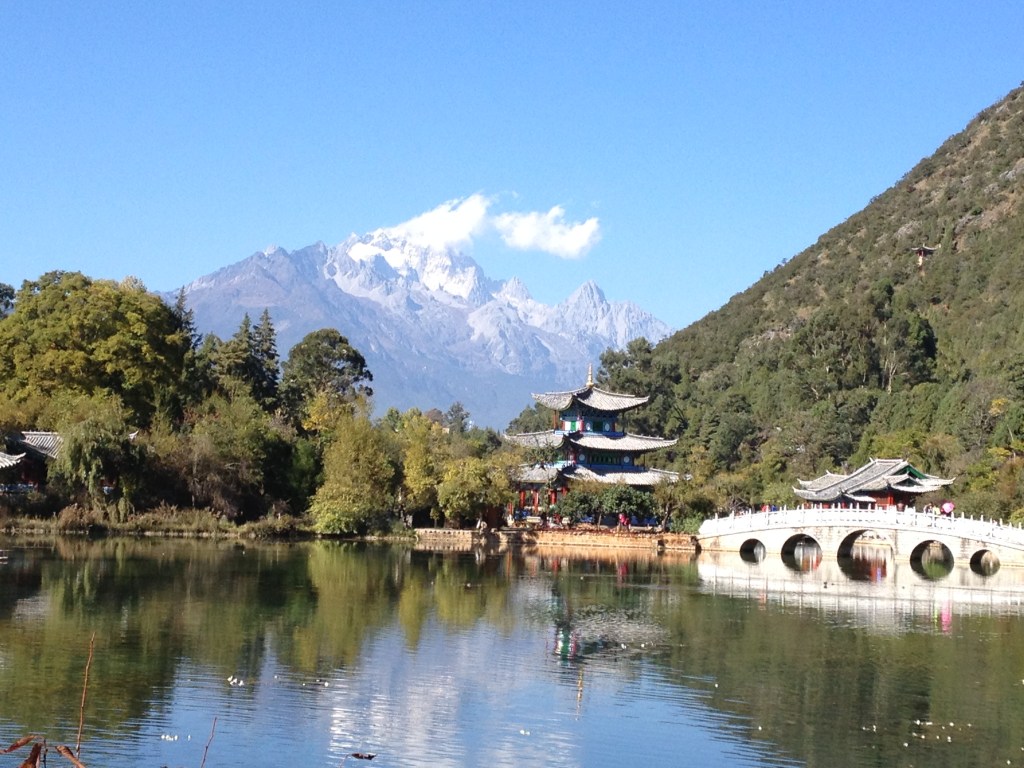
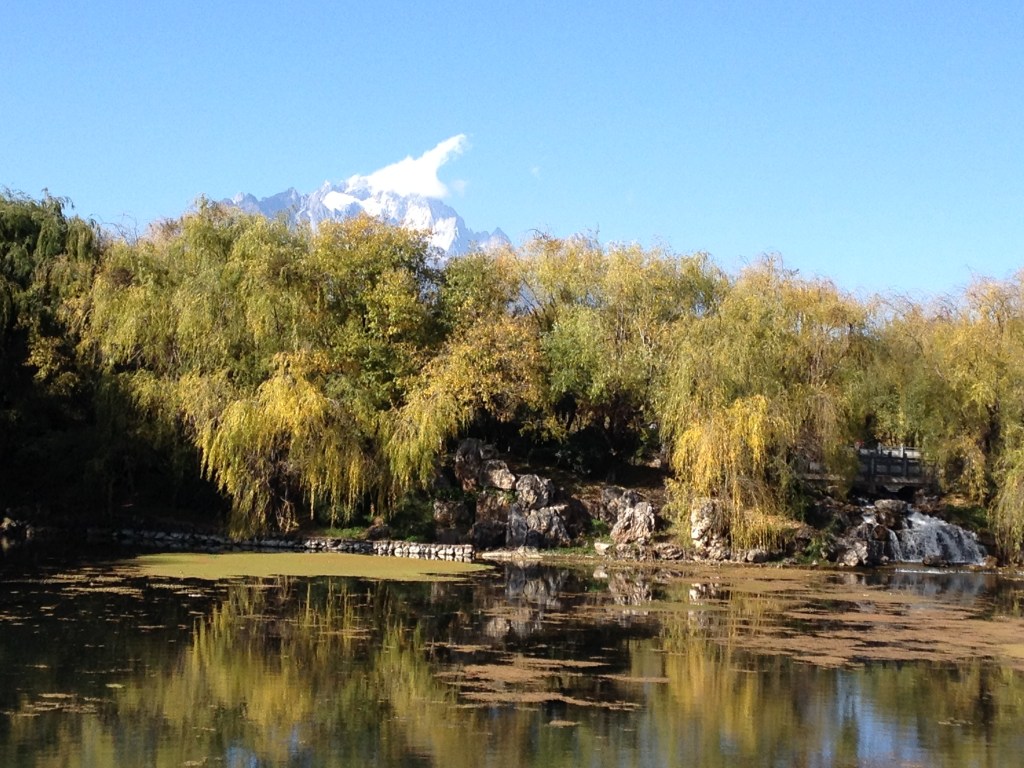
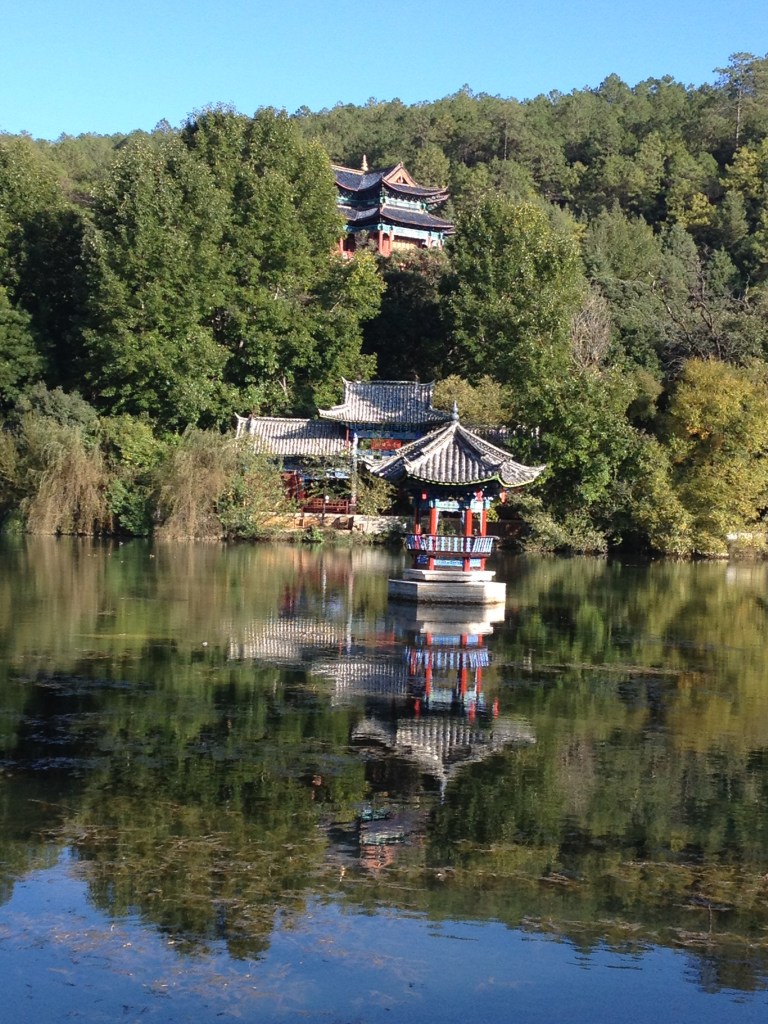
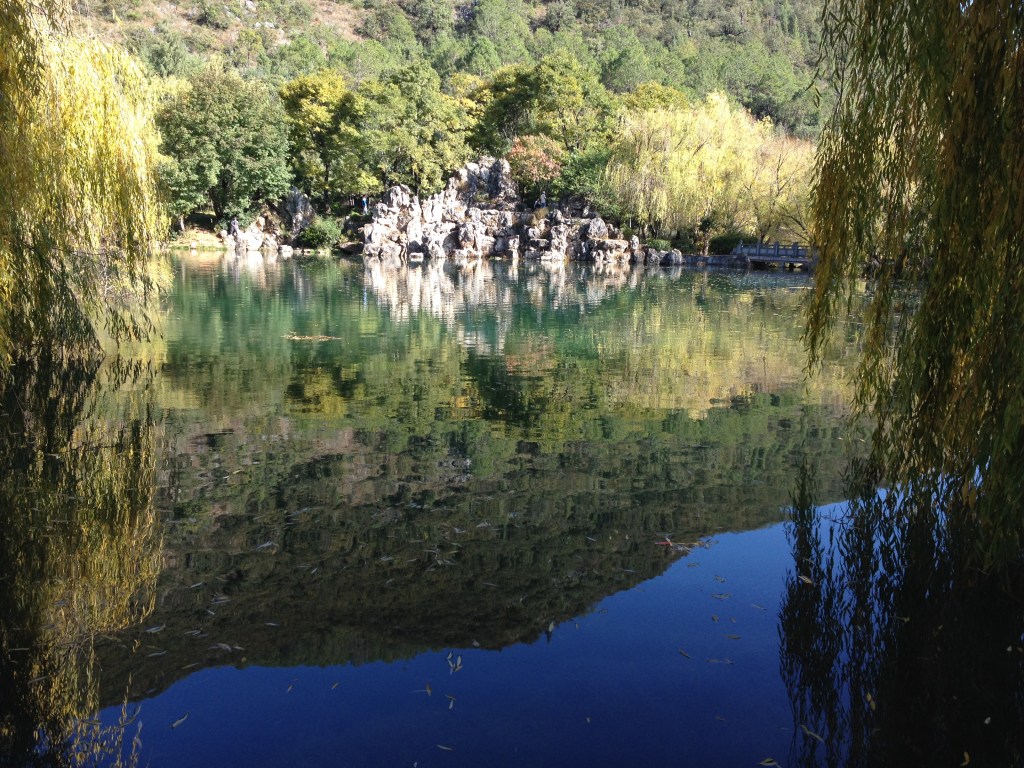
This photo was taken in Hei Long Tan Park. The mountains in the background are the Snowy Jade Dragon Mountains. This photo was taken in Hei Long Tan Park. The mountains in the background are the Jade Dragon Snowy Mountains.This photo was taken in Hei Long Tan Park. The mountains in the background are the Jade Dragon Snowy Mountains.This photo was taken in Hei Long Tan Park.This photo was taken in Hei Long Tan Park.This photo was taken in Hei Long Tan Park.
A visit to Hei Long Tan Park is highly recommended. This park is like something out of a painting. At the time that I went the price of an entrance ticket was 80RMB. In the background of Hei Long Tan Park are Jade Dragon SnowyMountains, which gives the overall scenery an added aspect of beauty. The park is not particularly large and the path has a circular shape. So, you could walk one way and as long as you stay on the path you can continue walking and see the entire park.
How to get there?
Hei Long Tan Park is relatively easy to get to, it is only about a 10 minute drive from the old town. Taking an Uber or cab would be a quick and easy way to get to the park.
How much time should be allotted to be spent here?
Given that the park is not that big and that it does not take a lot of time to get there I would say that you allotting 2 – 2 1/2 hours time to visit the park should be sufficient. The truth is that 1 hour would be sufficient if time was being crunched, however, if you really enjoy the scenery and would like to take your time and view the park 2- 2 1/2 hours would be a great amount of time to take plenty of pictures and enjoy a stroll in Hei Long Tan Park.
The Jade Dragon Snowy Mountains 玉龙雪山 YùLóngXuěShān
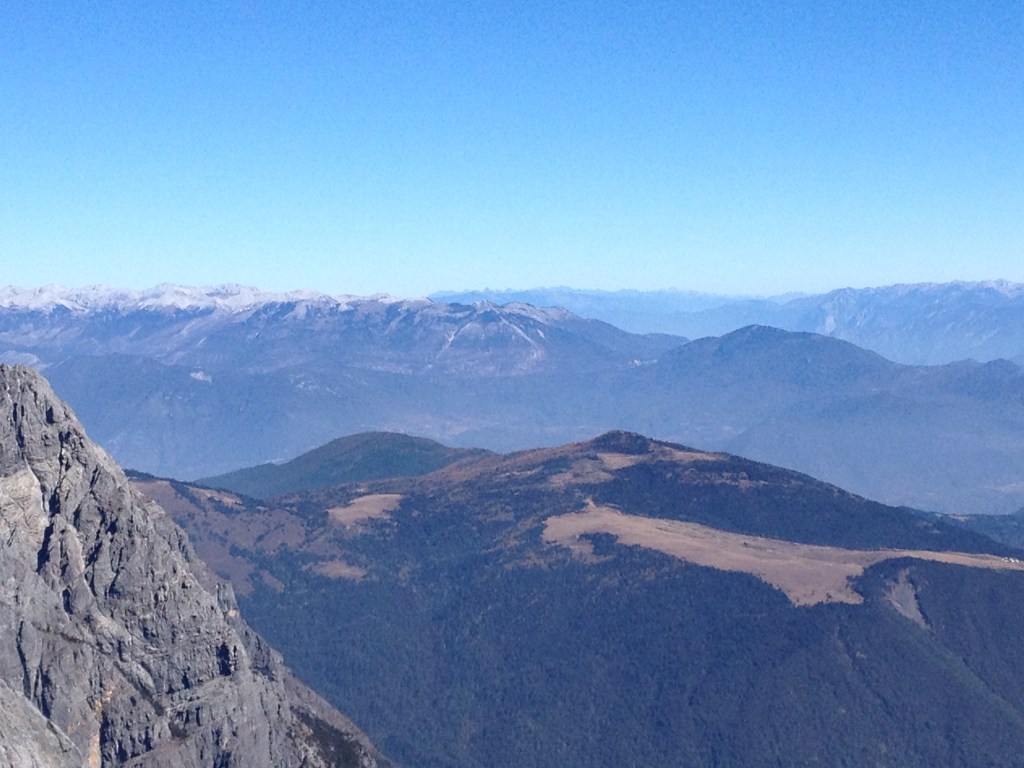
A view from the top of the Jade Dragon Snowy MountainA view from the top of the Jade Dragon Snowy MountainA view from the top of the Jade Dragon Snowy MountainThe stone marking the altitude from the peak of the Jade Dragon Snowy Mountain
The Jade Dragon Snowy Mountain is an incredible place to visit and highly recommended. The altitude is very high and the scenery is extraordinary. The altitude at the top if the mountain as you can see from the picture above is 4,680 meters above sea level, which equates to 15,444 feet above sea level.
Be aware that there is no direct (or safe) hiking route to the peak of the Jade Dragon Snowy Mountain. This mountain can only be climbed if you have very professional hiking equipment, knowledge and a significant amount of time. Even with the resources and the know how it could still take a day or days to reach the top. The only way to the top is to take the cable car.
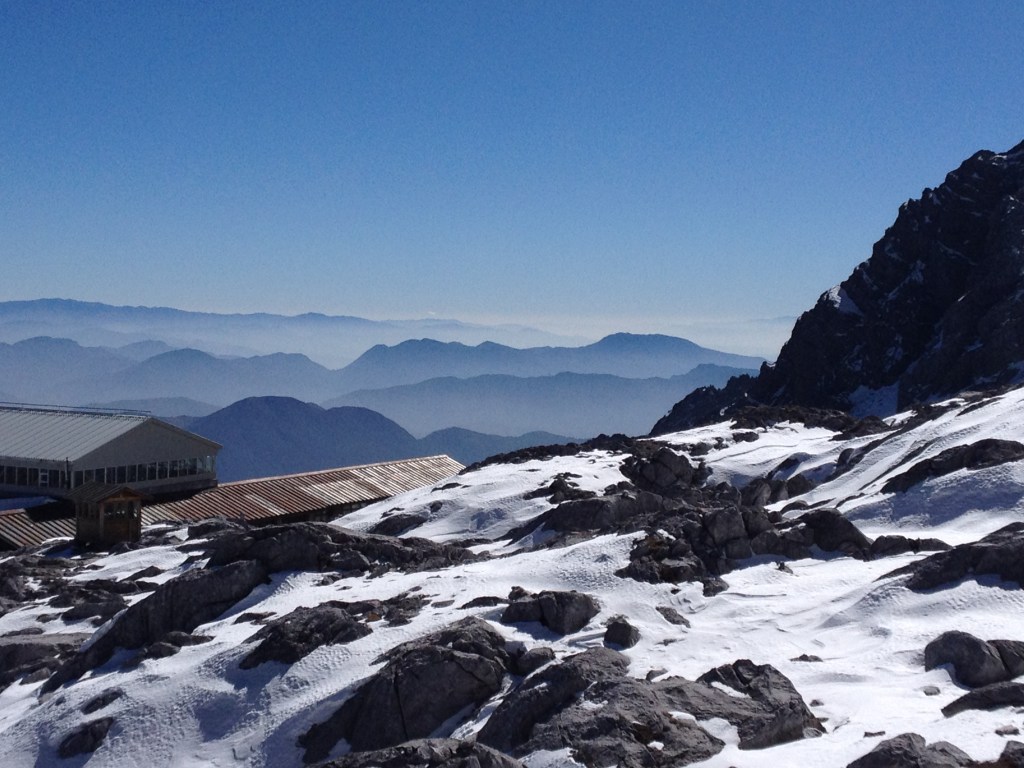
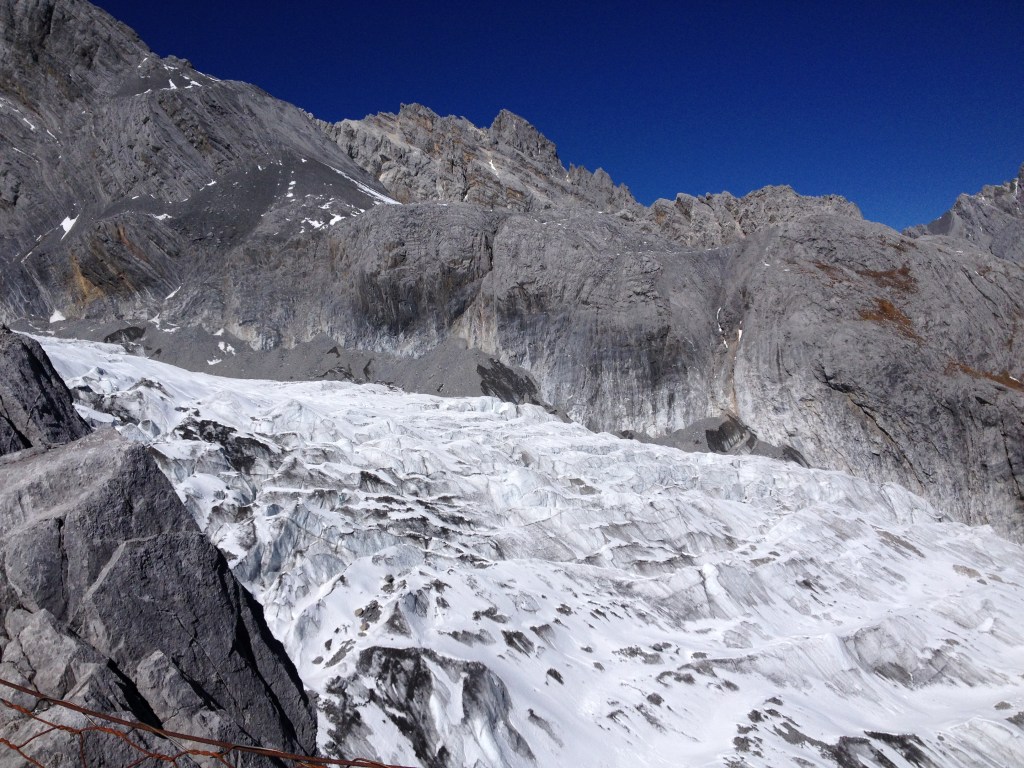
A picture of the glacier covered in snow at the top of the Jade Dragon Snowy Mountain.
At the top of the mountain there is also a glacier. Regardless of what the season is or ground temperature the glacier will remain frozen. That being said it should be obvious from the snow on the ground and picture of a glacier that the temperature on top of the Jade Dragon Snowy Mountain is drastically different from the ground temperature. I would even go so far as to say that it is frigid up there. So, pack a thick jacket and warm pants.
The next thing that will become immediately apparent to you once you’re at the peak of the mountain is the altitude. You will be very high up and your body may not be used to such a high altitude. It will be harder to breathe and take more energy to do even seemingly effortless activities such as walking or climbing stairs. Me personally, I am prone to altitude sickness, I was stricken with altitude sickness when I was there but it didn’t become that much of a nuisance until it was time to leave.
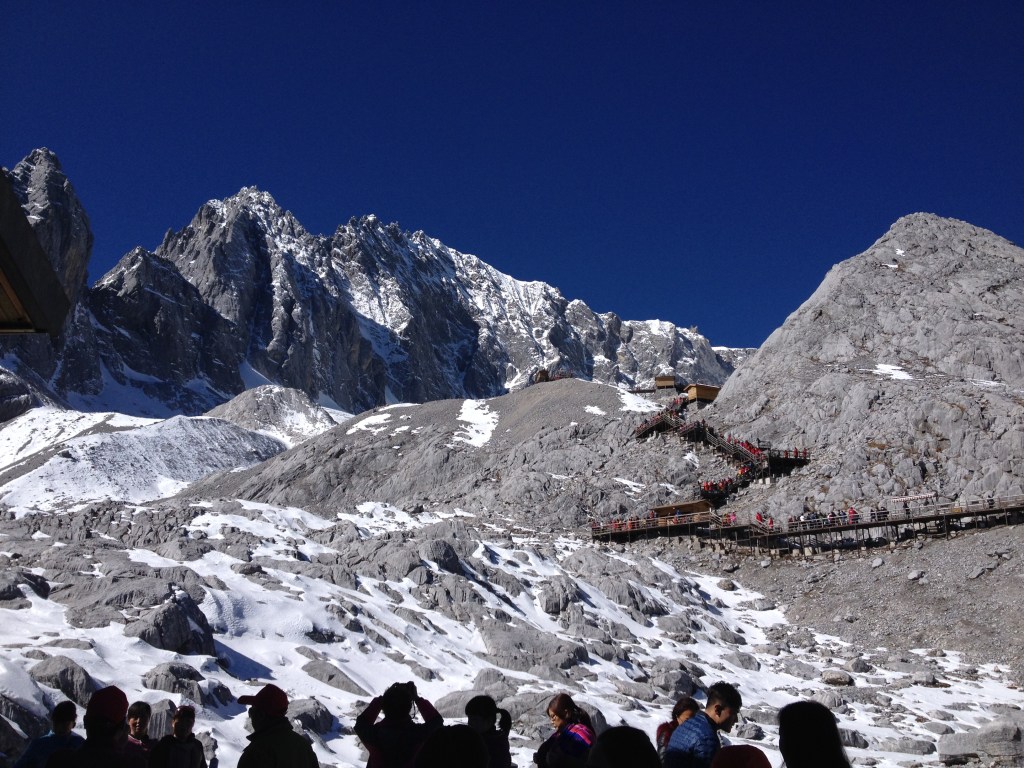
A view from the top of the Jade Dragon Snowy Mountain
Once you’ve reached the top of the chairlift that does not mean that you have reached the highest point on the mountain (or highest visitable point). You will still need to climb the wooden staircase seen in the picture above. Due to the altitude this could be quite the difficult task. Be sure to have water with you and take breaks. Do not try to get up to the top in one shot, while it is possible you will find that catching your breath afterwards will not be easy. Slow and steady wins the race in this instance.
How to get to the Jade Dragon Snowy Mountains
You can get to the Jade Dragon Snowy Mountains from the old town pretty easily. There are vans that operate from just outside the old town that head to the mountains. The best way to figure out the closest pick up location to your place of lodging is to speak with the employees hostel/hotel/guesthouse. It is likely that the staff at your place of lodging will be able to arrange for you to be transported by the van service.
Taking the vans to the mountain is the cheapest way to make it to the mountain. You could also take a cab, but the ride is approximately 30 minutes, which would make the cab ride a bit expensive (depending on your budget). If you take a cab, you will also have to worry about the return trip from the mountain. The van will take you to and from the mountain and the cost is only about 20RMB.
On the journey there you will need to stop at the ticket office and purchase your ticket both for the mountain and for the cable car. In total I think the two tickets will be around 200RMB.
Tips for going to the Jade Dragon Snowy Mountain
There will be several places in route the mountain to buy bottles of oxygen. If you know that you are prone to altitude sickness I highly recommend that you take the opportunity to purchase some oxygen. It is not very expensive, anywhere from 25-50RMB depending on the size of the bottle. Even if you are unsure about whether or not you will have altitude sickness, I would still recommend that you buy a bottle of oxygen. It is better to stay on the side of safety and if you don’t need to use the oxygen while on top of the mountain then you’ll know that you’re less prone to altitude sickness.
A Brief FYI About Altitude Sickness
It may be important to know that altitude sickness affects everybody differently. It is said that altitude sickness is all in your head and that if you don’t think about it you won’t be affected as severely. My personal opinion is that claim is true to an extent. I believe that you can resist altitude sickness in a similar way that one can resist seasickness. However, once you’re starting to feel the effects of the sickness it is too late and it will only get worse if nothing is done.
There is also a claim that healthy people or people with a lower Body Mass Index (BMI) will be affected more by altitude sickness. In short the claim is that is you are a more muscular person and have less fat, then you be affected more. The reason I think that this claim has merit is because muscles need more oxygen than fat. If you have ever watched a competition/boxing match or UFC fight, you’ll see this for yourself. Often times the more muscular opponent will lead to muscle fatigue because the muscles lack oxygen. Once the muscles are low on oxygen it makes the simplest of moves difficult. In an area of high elevation there is less oxygen in the air. So, the muscles will fatigue faster. There is also less oxygen going to the brain as well, this leads to one of the symptoms of altitude sickness which is the sudden onset of a headache.
I furthermore believes this claim to have merit because every time I have gone to a location that is above 3,000 meters high I have difficulty coping with altitude sickness. My Body Mass Index is relatively low as well. However as stated previously, this is not a universal rule, everyone is different and will be affected differently by the altitude. I included this section to inform, anyone who may not have been to an area of high elevation before, of some of the precautions that could be taken.
The Blue Moon Lake 蓝月湖 LánYuèHú
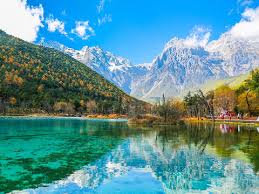
The Blue Moon Lake (image taken from Google Images).
On the way down the Jade Dragon Snowy Mountain there is the option to visit another site called the Blue Moon Lake. This lake is absolutely breathtaking. Unfortunately for me, I didn’t know about it until I was on the ride back from the mountain (someone else showed me pictures of the lake). I definitely regret not going there and given the chance to do things differently I would unquestionably go to that lake. I wouldn’t want anyone reading this blog to make the same mistake I made and overlook going to the Blue Moon Lake.
Continue to next page for information on Tiger Leaping Gorge.
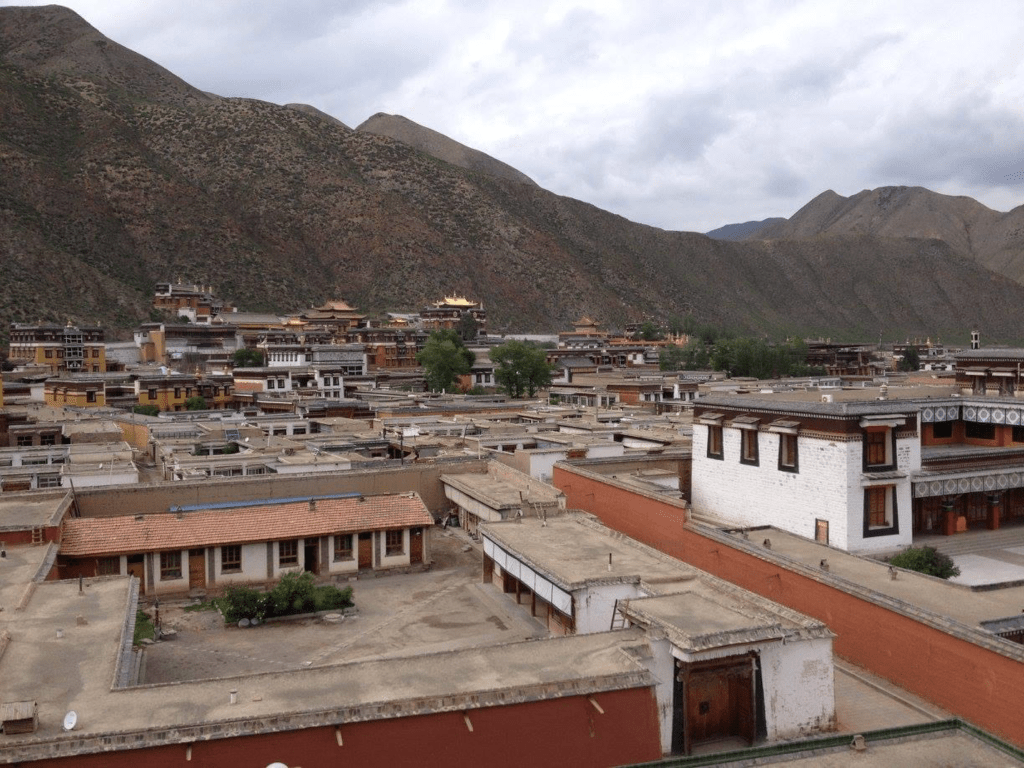
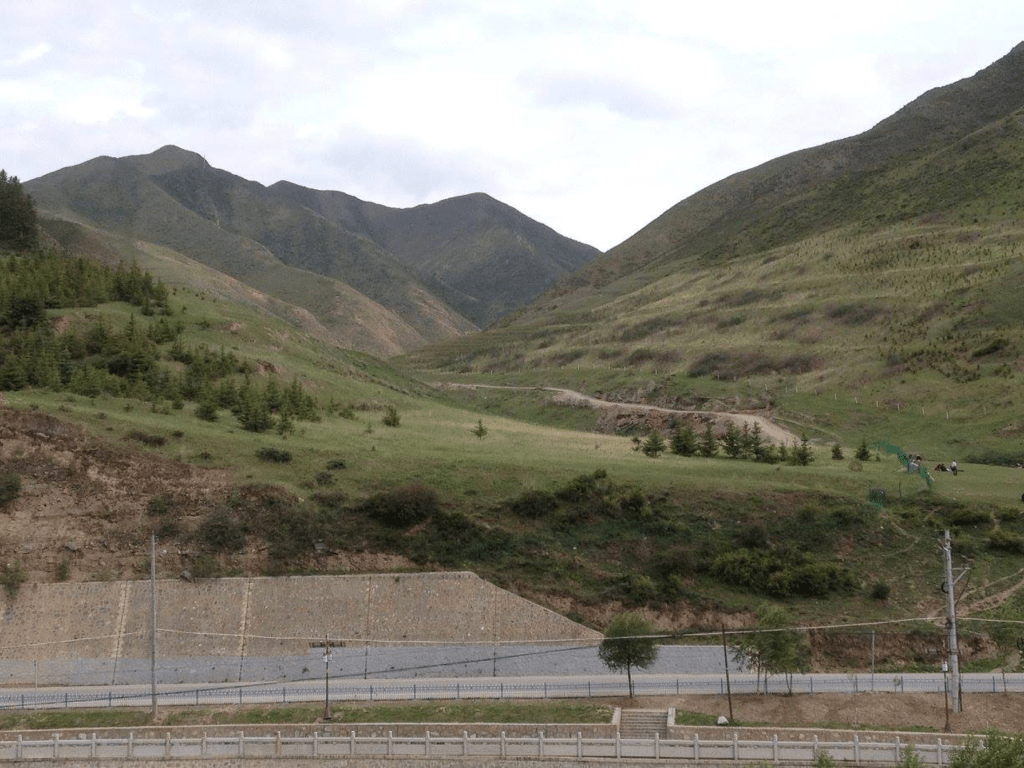
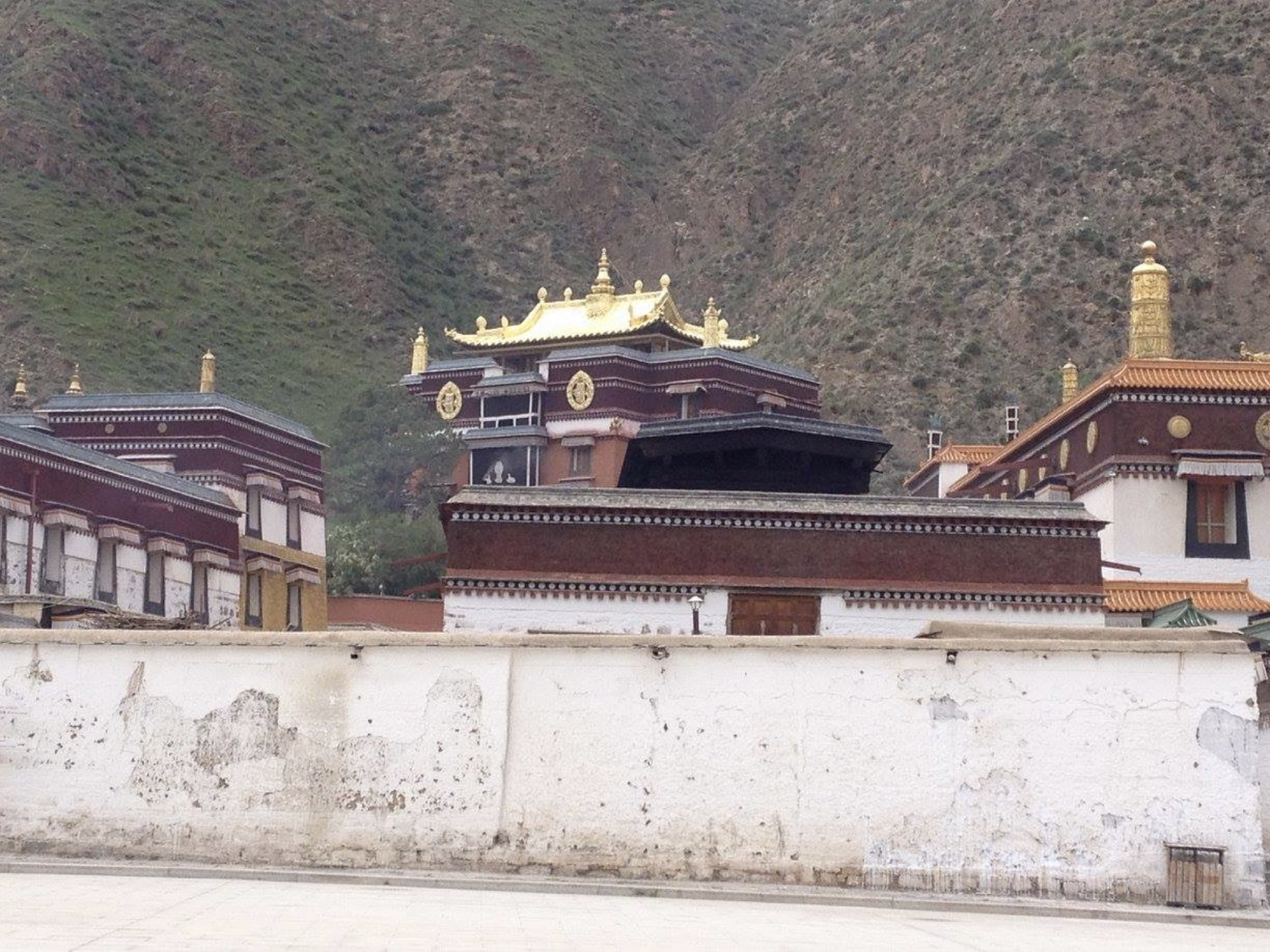
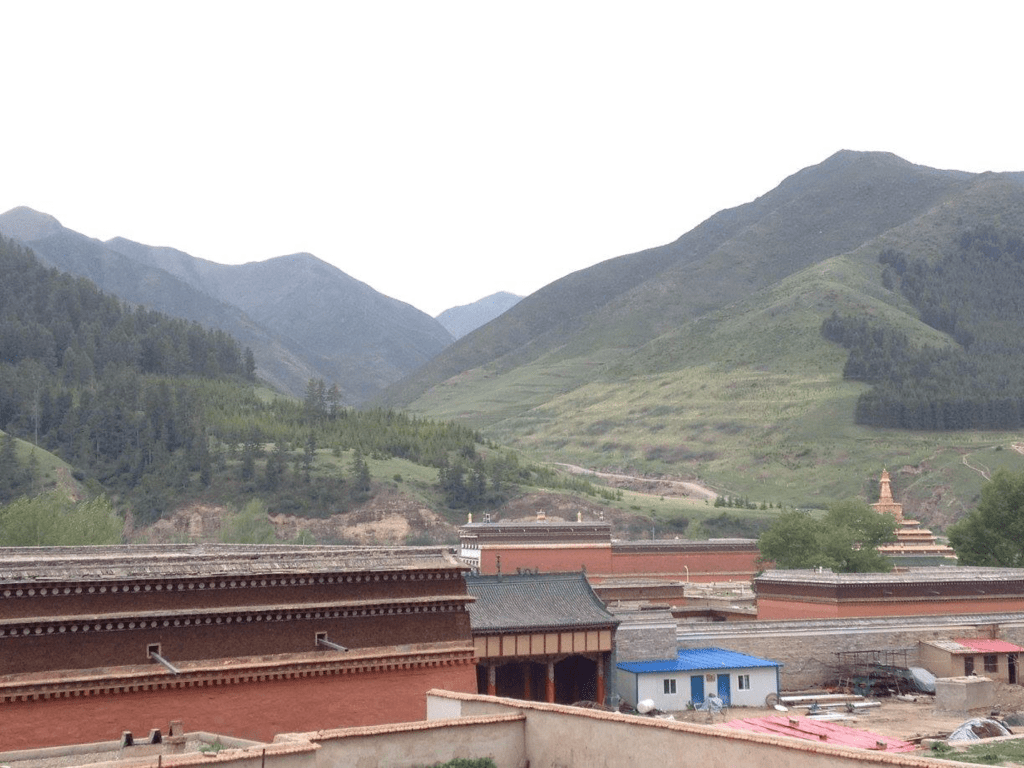
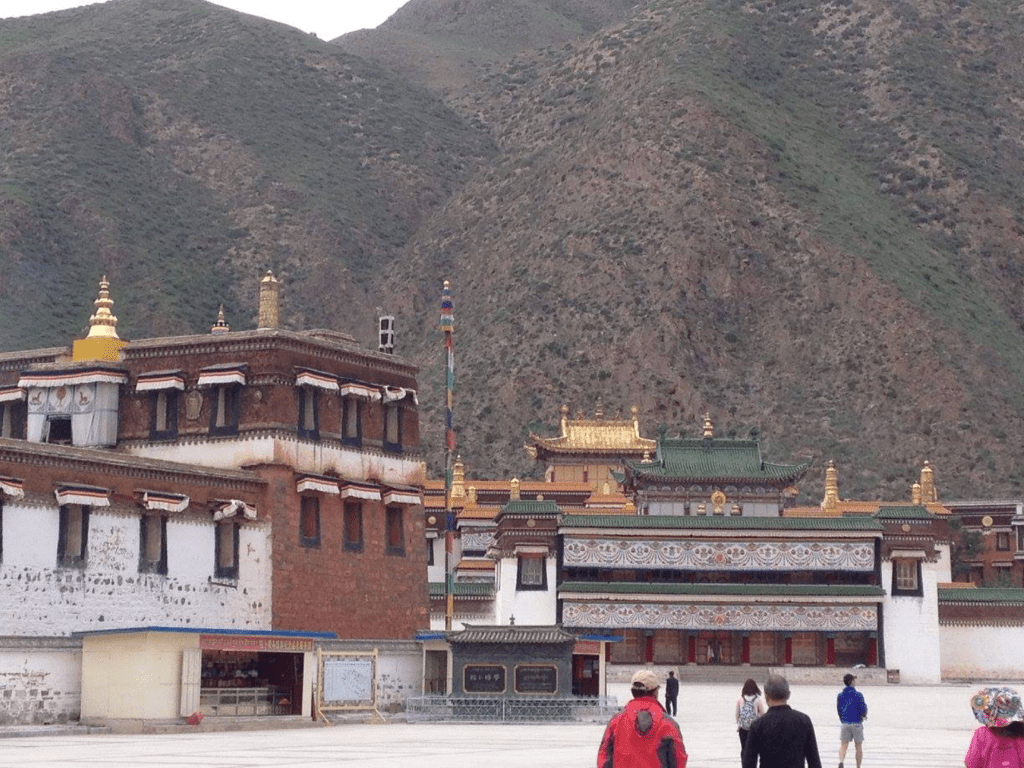
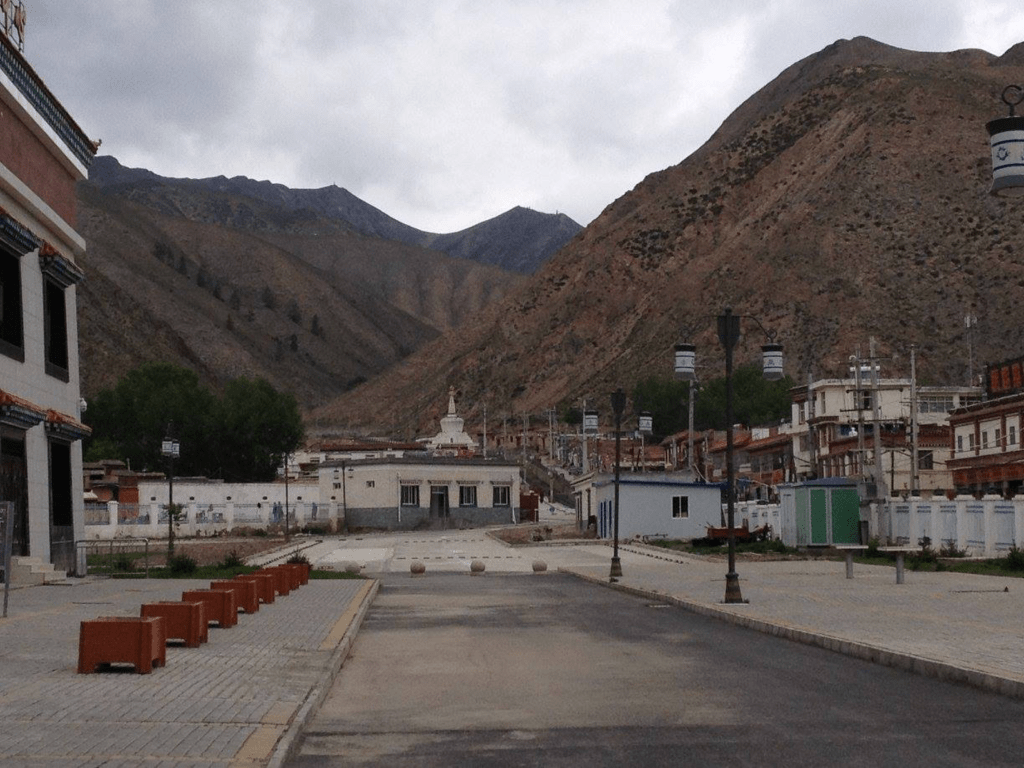
Some of the children outside of one of the temples.One of the temples in the monastery.A look of the monastery from one of the rooftops. The mountains surrounding the monastery. One of the courtyards in the monastery.One of the temples in the monastery.A look at the surrounding area from one of the rooftops. A look at some of the temples from the courtyard.A look at some of the architecture from the courtyard. The entrance/exit of the Labrang Monastery.
The Labrang Monastery is a Tibetan town in a very remote location of Gansu Province. There is just about no commercialization of this area. Honestly, it doesn’t get more off the beaten path than this place. Without a doubt during the entire time I spent I didn’t see any other Westerners and honestly there weren’t that many travelers there in general (Chinese or Western).
Once you enter the actual monastery you can easily spend a day or two going around and exploring all of the temples, prayer wheels and architecture. The surrounding area is also very beautiful. The altitude is not that high up, so walking around won’t leave you gasping for air.
The Tours:
I’m pretty sure that all visitors must join a tour to enter the monastery, however, once the tour is done you are free to walk around and explore the rest of the area by yourself. You should start out with a tour first though.
English tours: There may only be one or two English tours all day. That being said English speakers could always join a Chinese tour. The tours will take visitors inside what would be otherwise restricted areas. So, if the person didn’t mind not understanding the tour guide and just going along for the sights, this would be an option as well.
While exploring the Labrang Monastery please follow the appropriate etiquette so you don’t upset anyone and get yourself thrown out of the monastery. Here is a short list of some of the more obvious norms that should be respected while in the monastery:
Pay attention where you are permitted to walk and aren’t permitted to walk (in the temples).
Don’t interrupt or distract the monks during their prayers.
Don’t take pictures of the monks while they are engaged in their ceremonies (in the event that you do be 100% sure that. Your camera neither makes a sound nor has the flash on).
Be quiet while walking through the temples.
The monastery is holy place for these monks and should be treated as such, so not littering, spitting or other crude etiquette.
While on the tour, stay with the tour.
Side note: Bring water and a snack with you. There is nowhere to buy these things once you enter the monastery. Also, once you leave you need to pay the price of another entrance fee to enter again.
The Prayer Wheels:
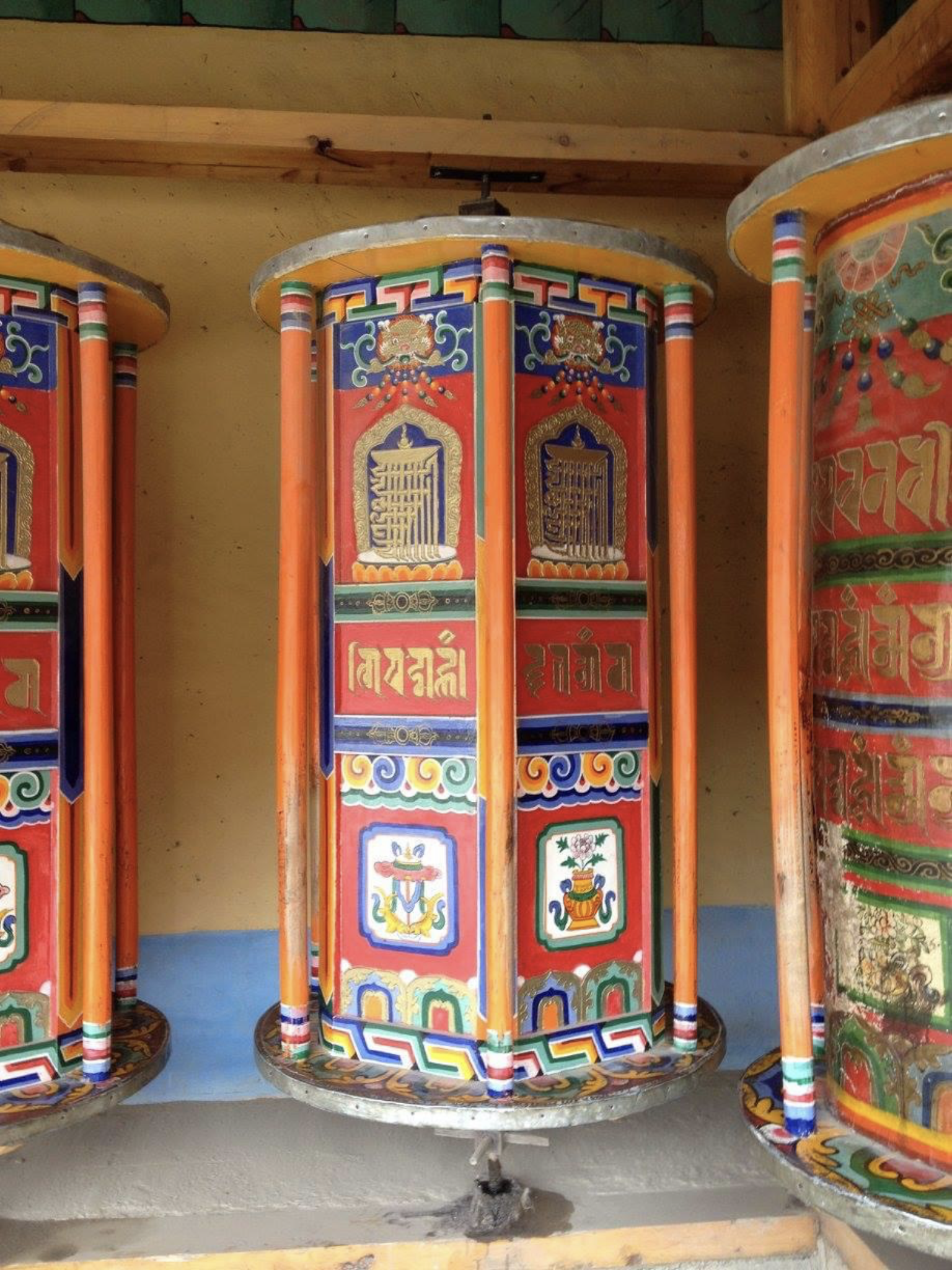
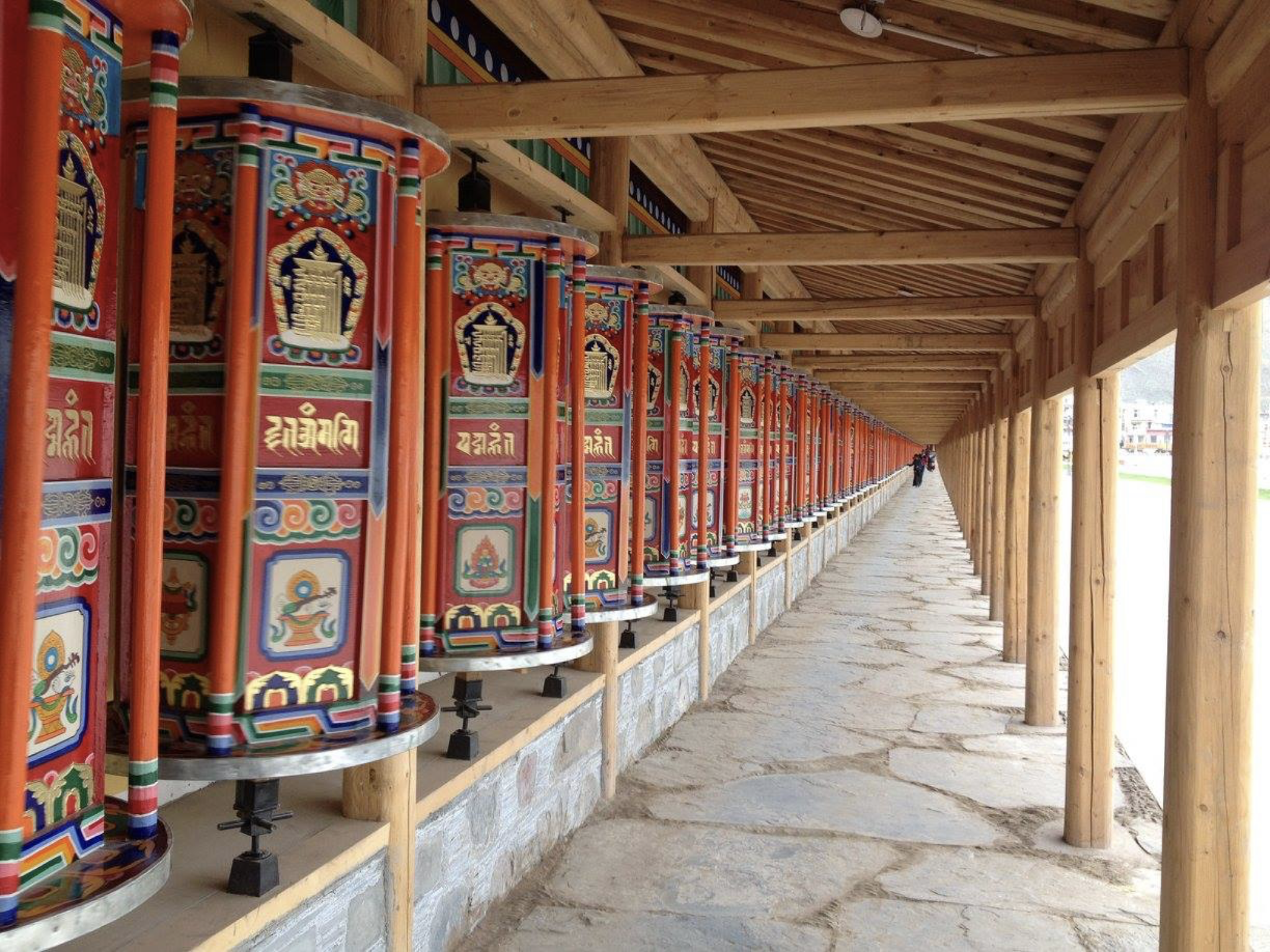
The prayer wheel.The prayer wheels.
There are hundreds of prayer wheels throughout the monastery. Be sure to say a prayer and bring yourself good luck by turning a few of them. The prayer wheels can be turned by visitors, just try not to be in the way of the native people. Taking pictures of the prayer wheels is also not a problem.
The Labrang Monastery is a very impoverished place and for that reason there are quite a few beggars there. The beggars here are a bit different than in other places, in that they will enter a restaurant that you are eating in to ask you for money. That was a bit unpleasant, but when beggars see westerners they think money.
It should also be noted you will not receive a warm welcoming from the town’s people. I personally felt that they were a bit cold to travelers and did really care much for anyone that wasn’t Tibetan. Maybe it was just my imagination because most of the people there were monks (or in training to become monks) but I didn’t exactly feel safe nor welcomed over there. Nothing happened to me while I was over there but the whole trip I was a bit on edge. It could’ve just been my imagination running wild though.
The signs are written in both Chinese and Tibetan.
When I say that this place is off the beaten path, I mean that there are quite a few people here that can’t even speak Mandarin. As you can see from the picture above many of the signs are in two languages Tibetan and Mandarin. English signs aren’t even in the conversation. Some of the store owners speak little if any Mandarin so buying little souvenirs might be a bit interesting.
The Sang Ke Grasslands (桑科草原)
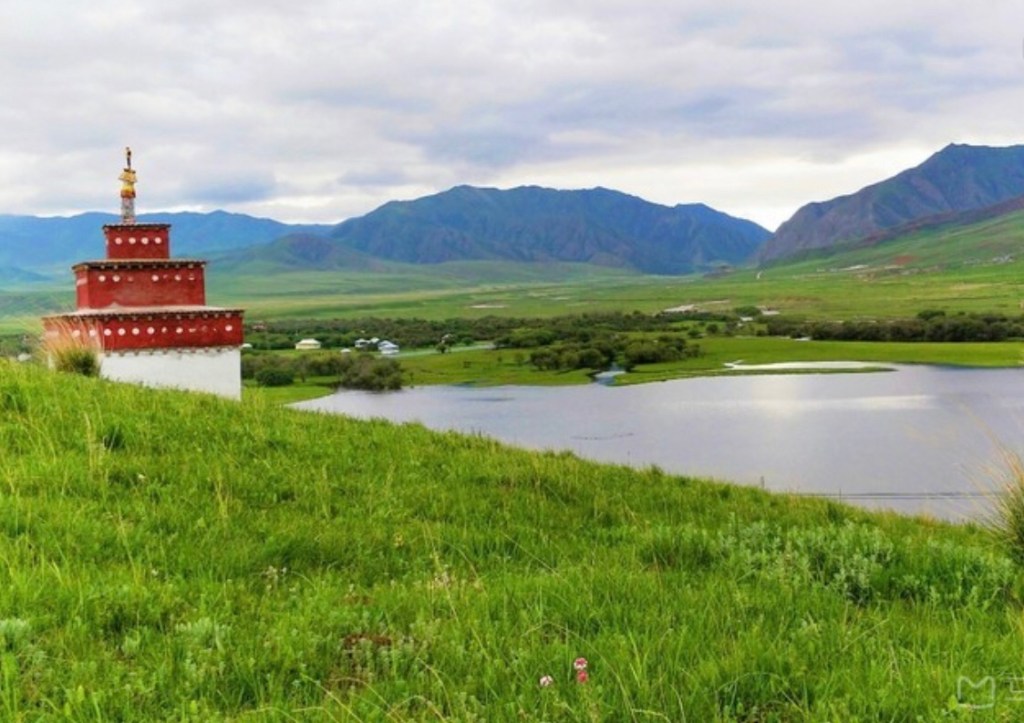
Photo of the Sang Ke Grasslands (photo taken from Ma Feng Wo).
There are grasslands that travelers can visit. It is about 15 kms away from the Labrang Monastery. There have been travelers that rented bikes and rode there. You can also arrange for a car to take you to and from the grasslands.
Full disclosure I have never been to the grasslands anywhere in China. The scenery of the grasslands is said to be breath-taking. It may be worth a visit, especially because it is so close to the Labrang Monastery. It is definitely something to consider.
How to get there?
To get to the Labrang Monastery you will first need to go to Lan Zhou. From the Lan Zhou bus station you’ll need to take a bus heading towards Xià Hé (夏河). There are normally fours buses that go to Xià Hé each day. The bus ride will take approximately 4 hours to get there.
The bus stop is about 2 kms down the road from the Labrang Monastery. There are very few roads so finding your lodging and heading to the monastery should be pretty straightforward.
Be advised that due to how remote Xià Hé and the Labrang Monastery are there are no planes nor trains that can take you here. Taking a bus is the only way to get there (unless you have your own car in China).
3-Day Itinerary for the Labrang Monastery
I would recommend spending 2 full days this area.
Day 1:
Use the entire first day to explore the Labrang Monastery.
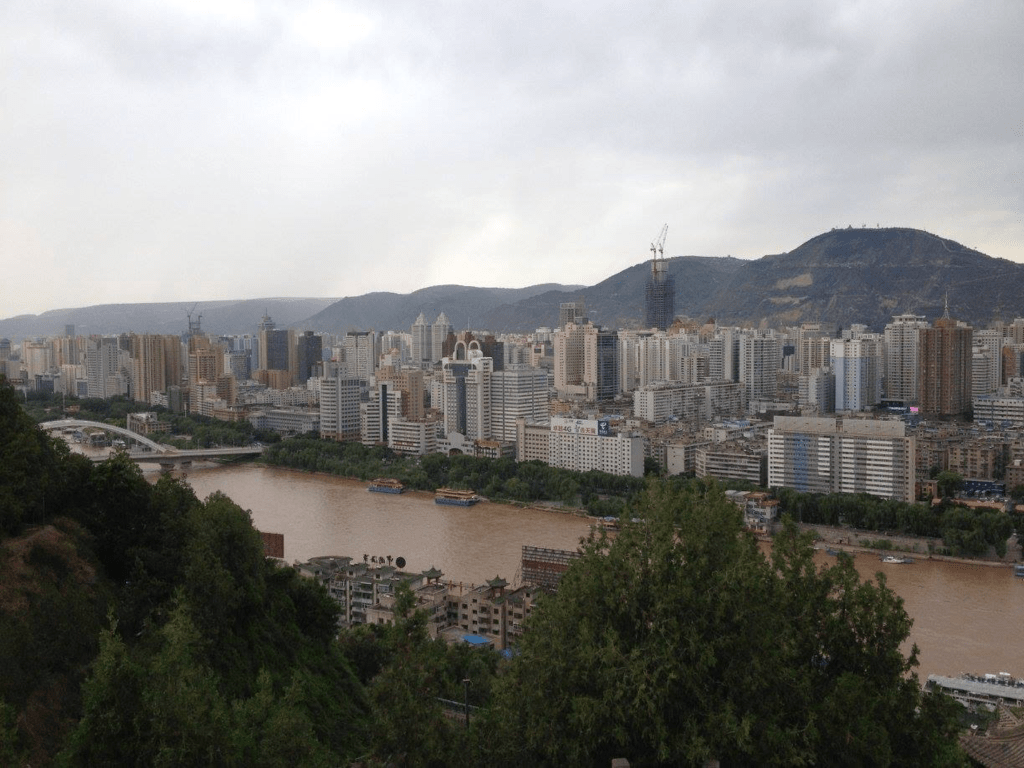
The Yellow River & the city of Lan Zhou.The Yellow River & the city of Lan Zhou.
Lan Zhou is a city that is used as a transportation hub that connects the East and Central China to West China. If you’re make a journey to West China you’ll either pass through or transfer at Lan Zhou (except if going to Tibet, for Tibet you’ll transfer at Xi Ning 西宁).
If by any chance you were thinking…
Well what’s there to do in Lan Zhou? And… Why are there so few pictures of Lan Zhou?
The answer is not much. Lan Zhou is a transportation hub it is a city that you pass through but by no means should you consider this city your destination.
A traveler’s time would be better served by passing through Lan Zhou instead of staying here for an extended period of time. There are more fun and interesting places within arms reach of Lan Zhou than in the city itself.
Sights
Bái Tǎ Shān 白塔山:
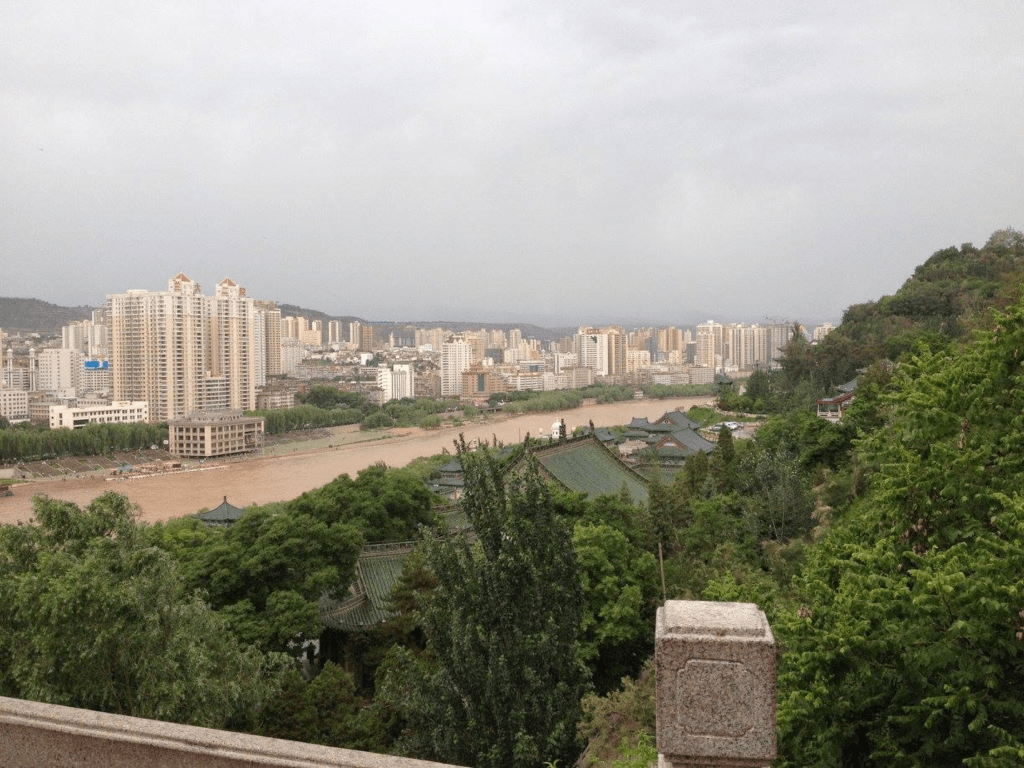
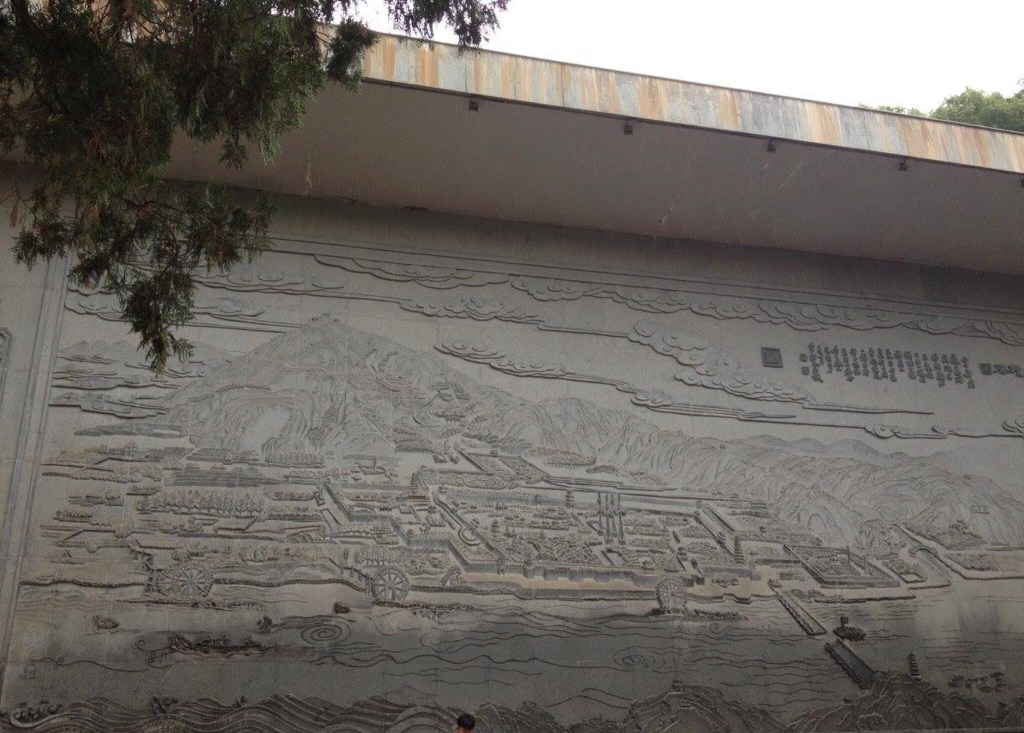
The view from Bai Ta Shan of Lan Zhou and the Yellow River.A sculpted map of how Lan Zhou used to look and the layout of the city.
This is the one sight that I will recommend if you’re in Lan Zhou and have to kill some time. Translated as the “White Pagoda Mountain” this park does display some great views of the City of Lan Zhou and the Yellow River.
It is not much of a hike per say but you will be going upwards to the top of the mountain. It is not very strenuous and there are plenty of elderly people that do this hike with little to no problems. The whole hike may take 45 mins to an hour. If you’d like to get a good overview of Lan Zhou this would be the place to go.
How long should you stay in Lan Zhou?
As I said this is a city that you pass through it is not exactly that the destination of a trip. So, staying for a half day or full day would be sufficient.
What foods should you try?
BBQ- The province of Gan Su is known for their spectacular BBQ. Their lamb and beef are among the top choices.
Lan Zhou Pulled Noodles- this is a bit less of a specialty because you can get these noodles just about anywhere in China. However, they did originate in Lan Zhou. Try the beef noodles.
Side note: Chinese BBQ is very different from American BBQ. While it is still very delicious, don’t expect to see ribs and hamburgers on the menu. It is more a combination of grilled veggies, naan bread, and meat.







































 International Kev